




Killing enemy leaders is an Israeli specialty. It did it with Palestinian terrorists, with Hamas, Hezbollah, the Houthis and now it is doing it with the Iranian regime in power after the 1979 Islamic Revolution.
The showdown with the Iranian leadership began on February 28 with the elimination of the big target, the Supreme Leader Ali Khameneihit by Israeli bombs during a meeting with senior regime officials, who were also left under the rubble. He may also have been injured in the attack Mojtaba Khameneison of the Supreme Leader, nevertheless appointed successor, but for now invisible.
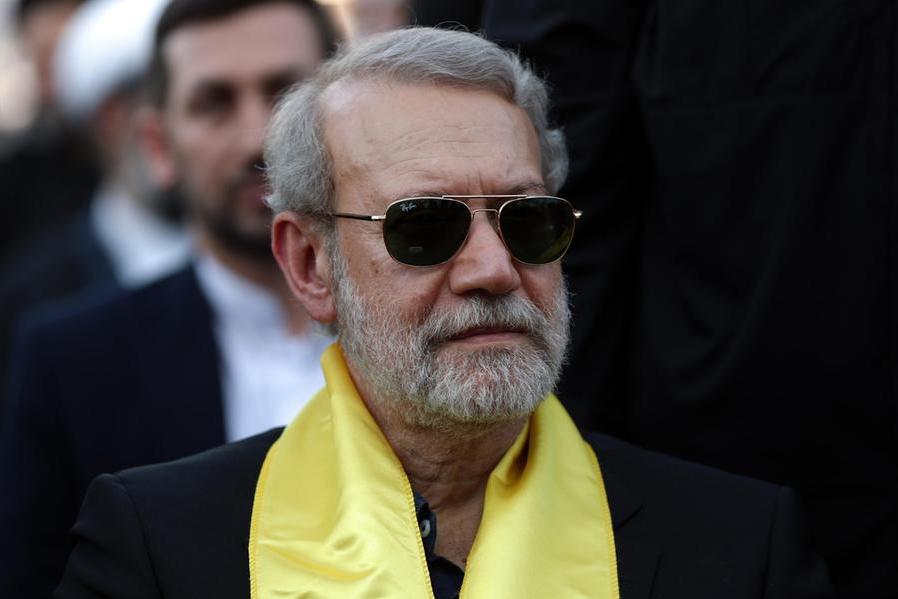
Is the new leader not showing himself in public because he is injured or just for security reasons? It is clear that Israel has a dense network of informants and spies present on Iranian soil (the successful television series Tehran was not a work of pure fantasy), furthermore every public outing by regime figures exposes them to risks. This was the case for the powerful Ali Larijani, secretary of the Supreme National Security Council, a key figure at the center of decision-making on war, diplomacy and national security. Larijani exposed himself last Friday by participating in a pro-government demonstration in Tehran. On Tuesday 17 March Larijani was killed under the rubble of an Israeli attack in which he also lost his life Gholamreza Soleimanileader of the Basij militias, a paramilitary force responsible for the repression against the Iranian population. According to the Israeli defense minister, Israel Katz, the Iranian intelligence minister was also “eliminated”, Esmail Khatibbut no confirmations have arrived from Tehran.
But despite being beheaded of such important leaders, the Iranian regime shows no signs of giving up. The war of Israel and the United States against Iran has now entered its third week and the regime, although weakened in its military capacity, is still capable of launching lethal attacks (Two Israeli citizens were killed in Tel Aviv by an Iranian missile on the evening of March 17). Furthermore, there are no signs of revolt from the population in Iranian cities. A pall of fear still reigns and, as a scoop of the Washington Postthe same Israeli government, while inciting the Iranians to revolt, confidentially confides to the United States that for the Iranian rebels to take to the streets today would mean facing a massacre.
As he wrote New York Times“Larijani’s death raises questions about whether Israel is killing so many Iranian leaders because this seems the safest route to achieving its military objectives — or simply because it has the ability to do so. This approach carries the risk of backfiring in unpredictable ways.” Danny Citrinowicz, former head of the Iranian section of Israeli military intelligence, where he worked for 25 years, is convinced of one thing: “I don’t think we’ve even scratched the surface in terms of Iran’s ability to find replacements who can take the place of the people who have been beheaded.” Citrinowicz himself, speaking with the New York Timesnoted that Israel has killed nearly all of the Hamas leaders in Gaza, as well as Nasrallah and his successor as leader of Hezbollah. Yet both organizations continue to function, although they have been significantly weakened. “It’s not that I don’t think decapitation is an important tool, but we can’t build a strategy based on that alone,” he adds.
Also an editorial from the Israeli newspaper Haaretz underlines that with the killing of Larijani the Iranian leadership is certainly weakened, but remains resilient.
“Hezbollah’s capabilities have not suffered any setbacks despite the military operations conducted by Israel,” observes columnist Amos Harel.
Many experts, since the beginning of this war, had warned about the solidity of the Iranian regime which has held a country with 90 million inhabitants in its grip since 1979. Netanyahu and Trump hoped that hitting the big target on day one would lead to the downfall of the ayatollahs and a quick end to the conflict. It wasn’t like that. And a sign of unease came from Washington, with the resignation of Joe Kentdirector of the National Anti-Terrorism Center. Kent resigned, citing concerns about the legitimacy of military strikes in Iran and saying he “could not, in good conscience,” support the Trump administration’s war. “Iran posed no imminent threat to our nation, and it is clear that we started this war because of pressure from Israel and its powerful American lobby,” Kent said in a statement posted on social media.