
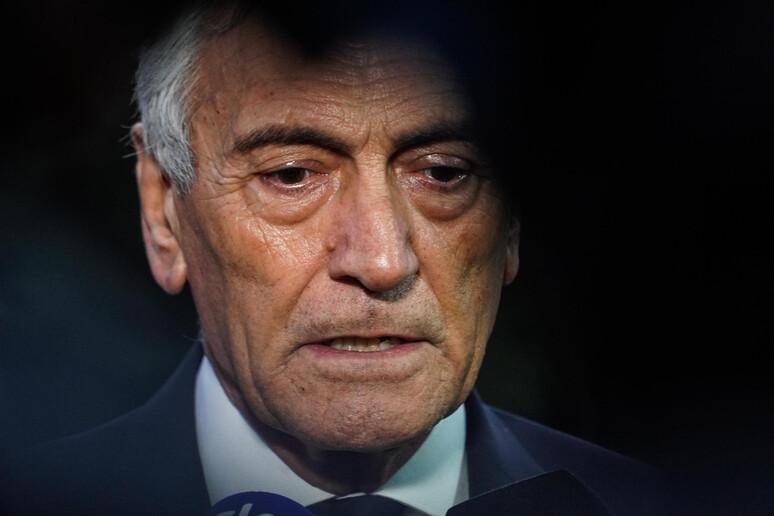


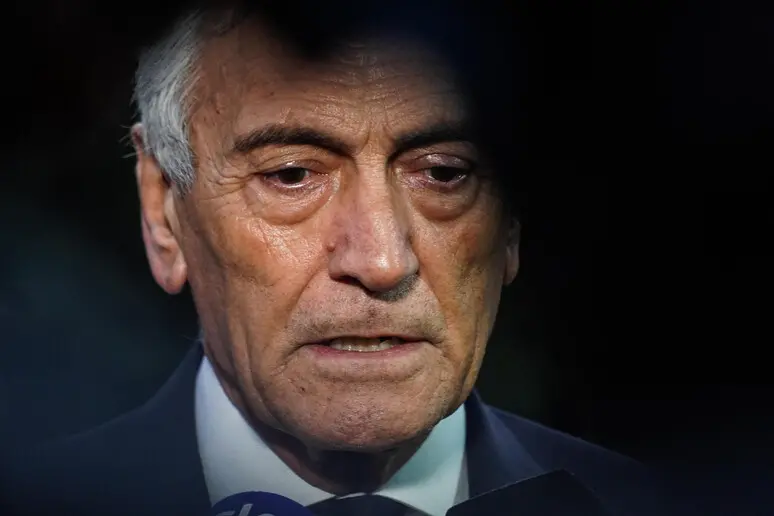
There is something melancholy, and at the same time funny, in the image of Gabriele Gravina who is preparing to go to Parliament to tell how Italian football is doing. Hat in hand, briefcase with twenty-seven pages of diagnoses, twenty-six attachments with tables and graphs. Resigned on April 2nd, still in office until June 22nd, like those general practitioners who are waiting for a successor and in the meantime continue to sign prescriptions. He resigned after third consecutive failure to qualify for the World Cupthe second during his mandate, with the last Italian appearance in a World Cup dating back to 2014, twelve years ago, another geological era of the balloon.

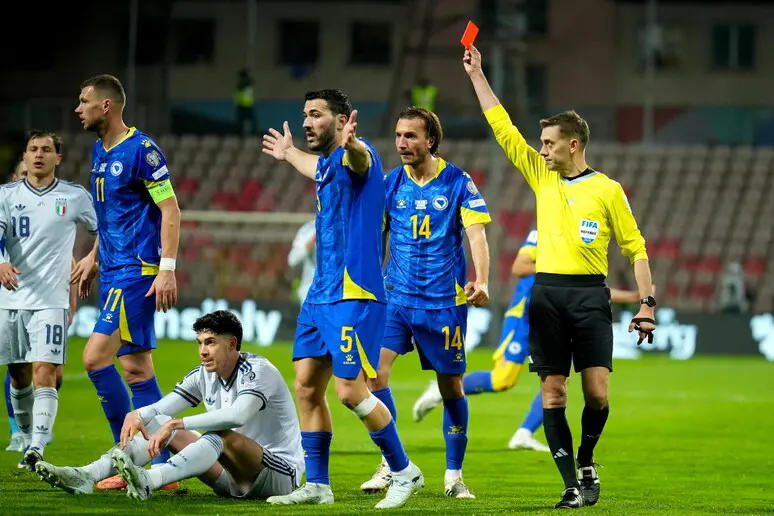
The appointment with the Culture Commission of the Chamber was set for 8 April. The day before, someone decided to delete it. There was no urgency, evidently. Italian football has been missing the World Cup for three consecutive editionshe didn’t go to Qatar, he didn’t go to Russia, he won’t go to Mexico-USA-Canada in 2026, and Parliament found better things to do. As Gravina himself wrote, with a coldness that betrays more bitterness than resignation, the session was canceled «as if the problems of the football movement were consequently solved». The president resigned, therefore everything is fine. Test the scapegoat, test the scapegoat, and the problem goes away. It is an ancient, proven, and completely useless mechanism. So Gravina did what crazy and stubborn people do: he published the report anyway, on the FIGC website, so that it could circulate. An act of small, stubborn dignity.

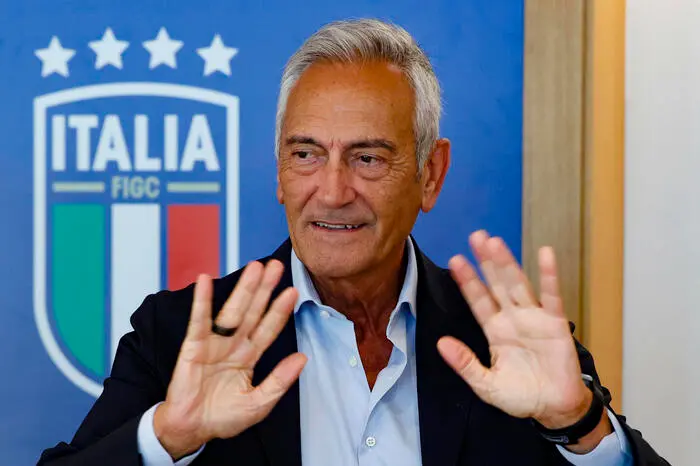
The scapegoats and their real faults
It must be said, first of all, that Gravina is to blame. Not symbolic: real. Eight years at the helm of the Football Federation, re-elected in 2021 with regime percentages, then again in 2025yes, even in 2025, a few months before resigning, with a system that has perpetuated itself without really questioning itself. The youth national teams were winning (the Under 19s were European champions in 2023, second place at the Under 20 World Cup), and this served to cover the structural crack that was widening underfoot. A bit like papering the walls while the foundations give way.
Then there is Luciano Spallettiwhich has more to do with this story than people say, and then Gattuso called upon to pick up the pieces of a playoff elimination against Bosnia, and Buffon in his role as head of delegation, a noble and decorative figure like a Murano chandelier in a shack. Buffon who talks about values and heart while the data says otherwise. Gattuso, a man with chest and running, called to manage a system that has the exact opposite problem: too much chest, too much running, too much tactics, too little football.
Recognizable, photogenic, useful scapegoats. You pay, you send it away, you feel better. But the problems remain thereidentical, ready for the next round.
The numbers that hurt
Gravina’s report is an unusual document. Those who expected the self-defense of a fleeing official found something else: a lucid, at times ruthless, analysis of the structural evils of Italian football. A clarity that is almost more impressive than the data themselves, because it comes from those who have managed, or not managed, those same problems for years.
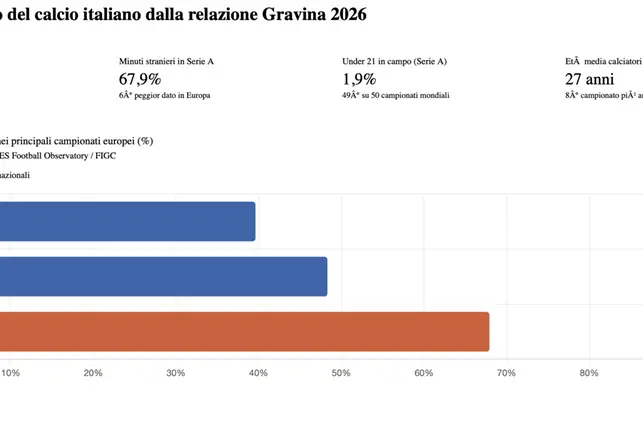
On the thirty-first matchday of Serie A, of the 284 footballers who played on average at least 30 minutes per match, only 89 were Italian, of which 10 were goalkeepers. Less than a third. And it’s not a problem of regulations, it’s a problem of the system: foreign players cost less, are more easily registered and are subject to fewer regulatory constraints. Serie A has stopped being an Italian championship in the most basic sense of the term.

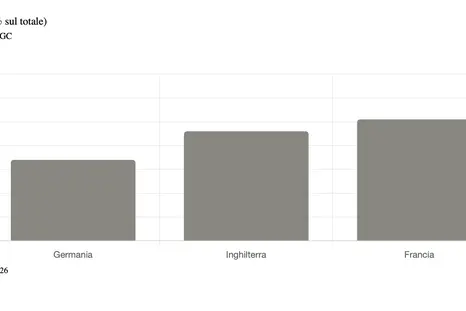
The most merciless fact, however, is another: Serie A is the 49th championship in the world out of 50 monitored by percentage of minutes played by Under 21 players selectable for the national team, with just 1.9%. Forty-ninth out of fifty. Worse than us, in the whole world, there is practically only one championship. Young Italians win European tournaments in the youth categories and then return to the bench, or on loan in Serie C, while their Spanish and French peers play in the first team. The Spanish players who played in the 2023 Under-19 European Championship, won by Italy, have accumulated almost double the playing time in the first division and almost six times more in European cups compared to the Italians who lifted that cup.
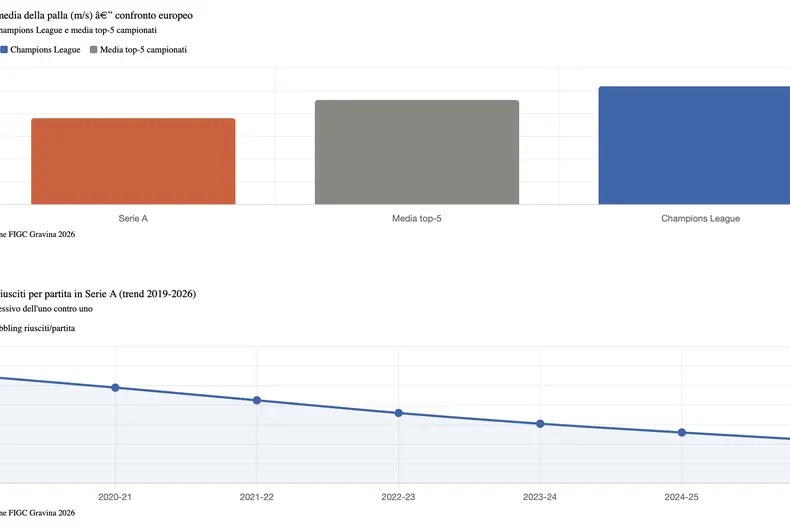
The football you see on the pitch is, consequently, increasingly slower and more predictable. The average speed of the ball in Serie A is 7.6 meters per second, compared to 10.4 in the Champions League and 9.2 on average in the other major European leagues. Successful dribbles per game have plummeted from 19.02 per game in 2019-20 to 12.36 in the current season. It’s a football that has stopped daring.

The structure that cannot be reformed
The most interesting point of the relationship, and the most uncomfortable, is the description of a system that no one is able to change not because there is a lack of ideas, but because no one is really interested in doing so. The FIGC must juggle between laws considered inadequate, international regulations, the autonomy of the Leagues and the reduced economic support from the State. The Sport Reform of 2023 it abolished the sporting restriction in the youth sectors, increasing the freedom of footballers but reducing the clubs’ incentives to invest in their youth teams. The Mulè Amendment of 2024 it strengthened the autonomy of the professional leagues, making any reform of the leagues essentially impossible without their consent.
In the ranking of top 50 youth sectors in the world by revenue from the sale of home-trained footballers, there are only two Italian clubs: Atalanta and Juventus. Inter are 53rd. And it is no coincidence that three of the four Italian clubs have a second team. The system does not reward those who train: it rewards those who buy. So why train?

The diagnosis of those who have nothing left to lose
Gravina closes the report with a phrase that sounds like a political testament: it is needed «a unity of purpose that goes beyond the boundaries of what is convenient and appropriate». He already knows he won’t arrive. He wrote it himself, with that sentence about the cancellation of the parliamentary hearing which is worth more than any editorial. Parliament preferred not to hear. The League presidents preferred not to change. The clubs preferred to buy foreigners. The technical commissioners took turns. And Italian football missed three World Cups in a row while everyone pointed to the culprit.
There Serie A has become increasingly “foreign-loving” not so much due to technical choice, but due to economic-bureaucratic convenience: today buying footballers from abroad is simpler and less expensive than on the domestic market, due to the Italian “clearing house” system, which imposes expensive and complex guarantees for transactions between national clubs, thus discouraging domestic exchanges. This imbalance has led to a record increase in foreigners (around 69%), with many more operations concluded with foreign clubs than Italian ones and billions invested outside the borders. A dynamic that penalizes the development of local talents and reflects a cumbersome regulatory system, on which the League is studying corrective measures (such as less onerous guarantees or incentives) to rebalance the market and also support the national team. Studying yes, but without applying the remedies.
There’s something almost let’s break in this story. The real scandal is not the defeat against Bosnia in the playoffs. The real scandal is that that match surprised almost no one. That it was, after all, waiting. That the system had already taken care, over the years, to build the perfect conditions to lose it. Gravina published his report aware that no parliamentarian will read it carefully. He reeled off data that everyone knows and no one uses to really change anything. He made the report of a patient who doesn’t want to get better, in front of doctors who prefer not to visit him.
The next defeat is already under construction. It takes time, method, and extraordinary consistency in inaction.