




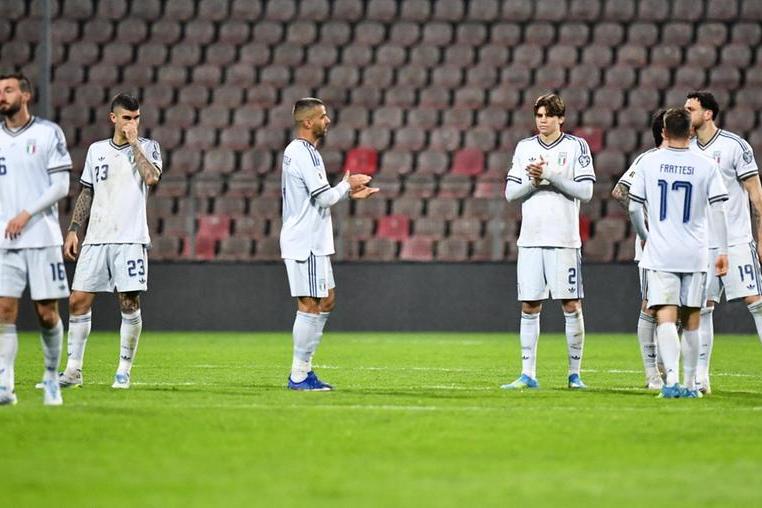
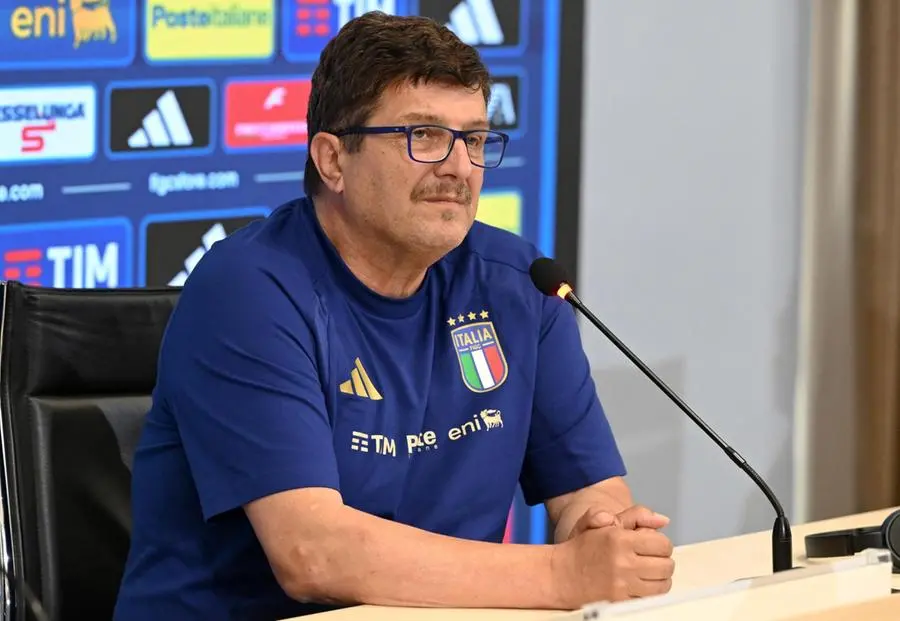
A concept resonates in the minds of the very young footballers who have been training on the Coverciano pitches for a few days: have fun. And don’t think about the result. This was the diktat of interim coach Silvio Balindini, 67 years old and technical commissioner of the under 21 team, called to lift the mood of a dead national team (sporting speaking) on 31 March 2026 at the “Bilino Polje” stadium in Zenica, when the penalty lottery sent Bosnia to the United States.
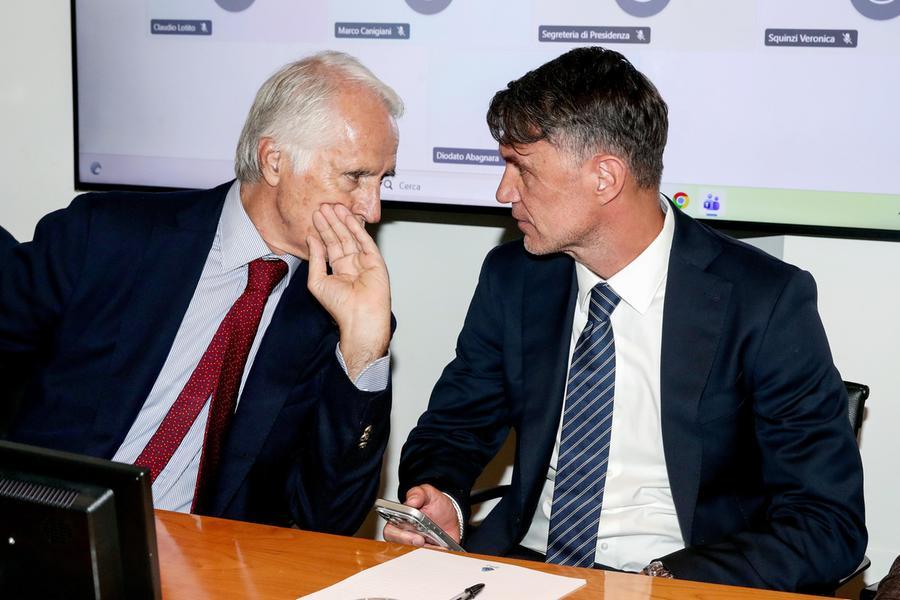
So let it be a revolution. All the faces associated with that defeat (some also with others) are no longer part of the national team’s organizational chart. No one between Gravina, Gattuso and Buffon no longer occupies their position, but for more concrete answers we will have to wait for the next federal elections. The date to be circled in red on the calendar is June 22nd, when one of Malagò (favourite) and Abete will be elected as the new president of the FIGC.
At that point the new technical guide will be chosen, called upon to modernize the national team to give it new lifeblood. The totonomist is already going crazy on social networks, between old acquaintances like Mancini and Conte and more complex operations like the one that would lead to Simone Inzaghi. There is a dream however, which warms the hearts of blue fans: Pep Guardiola. Very difficult, perhaps impossible. The former Barcelona, Bayer Munich and Manchester City coach has in fact declared that he will take a sabbatical.
Tonight, meanwhile, the Azzurri return to the field: appointment at 8.45pm on Rai 1 for the friendly match against Luxembourg. To analyze the current situation and get a more precise idea of what will happen, we have contact Alberto Molinariauthor, together with Massimo Cervelli, of the book The government of football. History of the Italian Football Federation.

After yet another failure to qualify for the World Cup, the Italians asked for the resignations of Gravina and Gattuso, like those of Tavecchio and Ventura ten years ago. But changing heads never seems to be enough. What have we continued to do wrong in these ten years?
«We must consider that the performance of the national team has always been the litmus test of the federation, but we must also consider that in recent decades the growth in power of the big clubs has severely limited the federal role. This does not mean that the accusations made against the FIGC are unfounded — to a large extent they are. What has remained as a line of continuity are strong limitations in programming. Gravina had a very ambitious program, but one that was difficult to implement. The technical choices were questionable. And then there is certainly the big problem, one of the fundamental issues: the training of the new generation of Italian football.
If you always think in terms of immediate contingency, you won’t get out of it. We need to prepare a long-term plan that focuses on relaunching the youth sector and which above all is not conditioned by the selfishness of the big clubs, who consider the national team essentially an obstacle to their interests. And then we need to try to make football a game again before a business.
The problem is that you can’t play in the oratories anymore, you can’t play in the streets. From an early age, kids are instilled with a way of playing that is a caricature of that of adults, with exaggerated tactics and very little attention to the technical part and to the valorization of the spontaneity and potential of those who are talented. If a kid starts to dribble, he likes to skip the man, after a while they tell him “you have to take two touches”. A coach said exactly a month ago that this is the most devastating thing that exists, because kids don’t get used to playing football while having fun. After the defeat against Bosnia, some very disturbing statistics came out: on fundamental technical values, for example jumping the man, we fell in the European rankings even behind Greece. Other topics that come up cyclically are the reform of the championship – returning to 18 teams to give more space to the national team – and the question of foreign players. However, we need to clarify the latter.”
The presence of foreigners in Serie A has always been at the center of the debate. But can it really be limited?
«The call to limit the presence of foreign players in Italy is unrealistic based on the legislation on the free movement of workers. In 1995 the Bosman ruling – named after a little-known Belgian footballer who went all the way to the European Court of Justice, which ruled in his favor on a contract issue – definitively established that the presence of foreign footballers cannot be limited. The real problem is another: the fact that foreign players are even recklessly appealed to, because they cost less or because they don’t really believe in the youth sector. We fill our mouths with nurseries, but then when it’s time to bring talent to the first team, we don’t do it. In other countries, where the exact same legal situation exists, the presence of young talents in the first teams exists. In our case we are in the situation where some teams play almost exclusively with foreigners. What could be done is a more balanced use and the ability to open our eyes to the resources that are at home, rather than always looking outside. There are market imbalances in which agents play a fundamental role – another major underlying problem in Italian football, which everyone now recognizes. There is a bubble in players’ wages that will sooner or later explode, which leads even players who are not of the highest level to have wages that are unacceptable for the majority of teams.”
“Let’s start again from the young” is the phrase we hear every time. Baldini has called up a very young squad, but they remain friendly. When the qualifiers for the European Championship restart, that block will not be possible again. What are the concrete steps that the federation must take?
«Going into specifics is complex. However, based on historical experience, one of the elements that is missing today is the presence of coaches trained in the federation, with a particular vocation for the specific training of a national team, which is completely different than coaching a club. I think of Valcareggi – European Championship of ’68, world final of ’70 – of Bearzot with the ’82 World Cup, of Vicini. Characters that no longer exist, because at a certain point that figure was no longer cultivated. Baldini, for example, has more of a federal coach’s attitude: he likes to train young people and is very organic in Coverciano intended as a place of training. This figure must be recovered. Then there is the topic of CT: we always think of the savior of the country. It’s called a great name and is thought to solve everything. But whoever comes must have experience of a national context, the ability to read situations quickly, and above all the right motivation – that of someone who really immerses themselves in the role. We should also have the courage to tell enthusiasts: don’t expect miracles, we are going down a long road, we need to experiment with different paths. The problems we have in the youth sectors cannot be solved by calling a different coach. There are steps, it’s a gradual thing. Then there is another contextual element that weighs heavily: the enormous external pressure on the national team. We experience victories with hyper-exaltation and defeats as national catastrophes. This negative climate is clearly experienced by players and coaches too. In other countries, even with great attention to football, there is not the same type of pressure. We should be able to communicate a path, not a promise of immediate results.”

The FIGC federal elections are on June 22nd. How does that mechanism work, and what might open up next?
«As in all components of sport, the elective principle applies, with the various components of the football world participating with different weights in the election of the president. The Federal Council – the executive body – is made up of 14 representatives of the leagues: 4 from Serie A, 2 from Serie B, 2 from Serie C and 6 from the Amateur League, plus 4 from the players’ associations and 2 from the coaches. These proportions are then reflected in the federal assembly which elects the president. The dialectic is essentially between the interests of the various leagues. The Amateur League alone carries six representatives — a very significant package of votes. It is a very delicate game of mediation and balance, because the president cannot go and say what the expectations are exclusively of the big clubs. He must make a program that takes into account the entire federal movement. The presidents who had the most tormented lives were the ones who failed to keep the movement together. After the election, the federal bodies will be renewed and that will be the moment in which the new technical leadership will be decided. But the president will have a whole other series of issues on the table: the big economic problem, the clubs’ deficits, television rights. The overall debt of Italian professional football in 2023-2024 was 5.5 billion euros — more than three times that of 2015. And then there is the economic and financial sustainability of the system, which remains the most complex challenge for all institutional actors, in the face of an acceleration of trends that have been underway for a long time. The first step will therefore be the election, in which the programs and above all this game of mediations, balances and compromises will be measured. Whoever is elected will have to present themselves with a wide-ranging program, capable of addressing all these issues and looking at the federal movement as a whole.”

What paths are realistically viable to revive Italian football? And when can a turning point be seen?
«We need to work in perspective, with a long-term plan. It’s not that football is transformed by calling a different coach – the problems come from afar and take time. One of the themes is the overall crisis of Italian football: the modest results of the clubs at European level cannot fail to have an impact on the national team. There is no automatic cause-effect relationship, but it is clear that if national football declines, the national team suffers from all points of view. Then there is a striking fact: this year the number of students enrolled in tennis schools has exceeded that of football schools. It’s sensational. But it’s not surprising, because football costs a lot for a family, and in the meantime the kids have lost that informal alternative that once made up for everything – playing in the parks, on the streets, in the courtyards. This impoverishes the base from which it draws. As for the turning point: it’s not possible to say with certainty when it will arrive. What can be said is that you need to have patience, understand that there are steps, that it is a gradual thing. And above all, stop thinking that it is enough to change something at the top to solve problems that come from much deeper.”