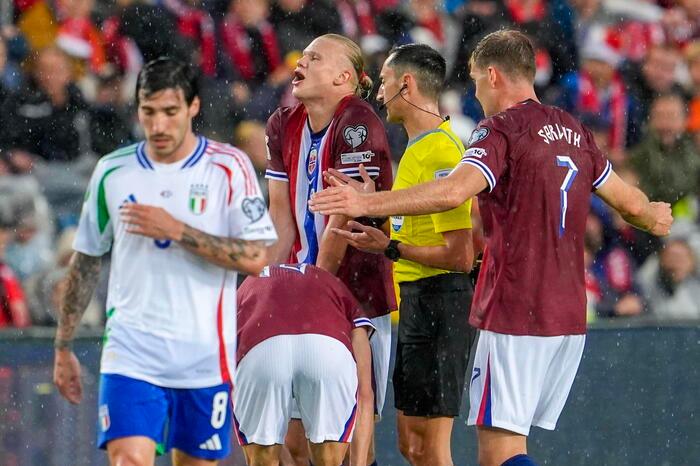





There is a city this evening that knows more than football. Bergamo, the city that saw too many people die in a spring already forgotten by a large part of Italy, is back on its feet. And tonight, at 8.45pm, at the New Balance Arena which was once called the Azzurri d’Italia, as if by a sign of destiny – it hosts the national team in one of those matches that never started. They are reckonings.
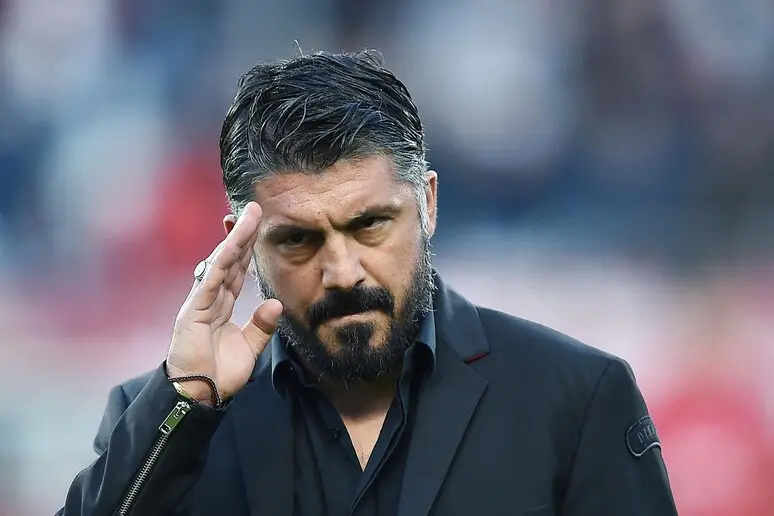
Gennaro Gattuso chose Bergamo himself. He said it with the no-nonsense clarity that is his trademark: «I chose to play here, and I thank Gravina for indulging me». A practically sold out stadium, twenty-three thousand tickets sold in a few hours. People understood before kick-off what was at stake.
Yet, if you listen carefully, under the voices of the fans, under the trumpets and the blue scarves, you can hear something else. A sixty-eight year old buzz. A ghost that walks the winter fields of Belfast and has never really left.

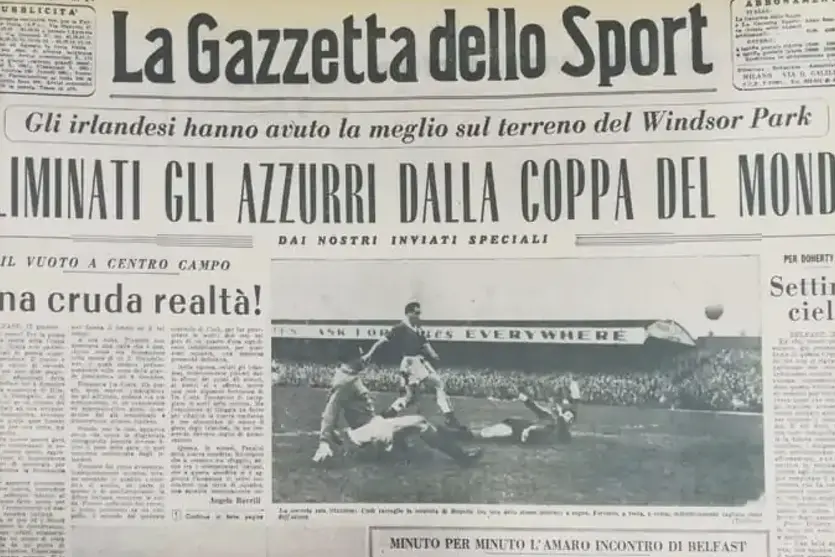
The Belfast Defeat: January 1958
We need to start from there, from that 15 January 1958, from a cold and hostile Belfast, to understand why this evening weighs so much. Because Italian football still bears that wound like a scar that has never stopped burning.
The situation was as clear as ice on the streets of that city: a draw was enough for Italy. Let’s reiterate it, because it is one of those cruelties that football dispenses with malicious generosity: a draw was enough. Alfredo Foni, the technical commissioner, a man of catenaccio, of defensive lines, of all-Italian pragmatism, showed up with four natives on the pitch, including the great Juan Alberto Schiaffino, already a protagonist with Uruguay of the legendary Maracanazo of 1950, when he had knocked out Brazil in the temple of the Maracanã. Talented people, in short.
The match was supposed to be played in December 1957, but the Hungarian referee was late and it was postponed. In the meantime, a sort of friendly match had been played which wasn’t a friendly match at all. The tensions were such that the issue even ended up in Parliament, in Rome, where deputies discussed the controversial episodes and the treatment received by the Azzurri. It is clear, then, what kind of atmosphere the Italians found when they took to the field that January afternoon.
But the hostile environment, instead of weakening them, galvanized the Northern Irish. The physique and pace of the British got the better of the Italian organization. McParland opened the scoring, Cush doubled the lead. In the second half Italy shortened with Da Costa, but it wasn’t enough. It ended 2-1. Northern Ireland qualified for the World Cup for the first time in history. Italy stayed at home.
Gino Pivatelli, one of the Azzurri on the pitch that day, would reconstruct the evening almost sixty years later with words that still make you shudder: «He weighed a quintal and a half, he was short and bald. They were beating, nothing whistled at us. The Irish had taught him well before, one of them spoke his language. He massacred us, but it was mostly our fault». Our fault. Two words that are difficult to pronounce, very easy to forget. And Italy, in the following decades, certainly forgot.

From triumphs to catastrophes: the two recent black holes
After 1958, Italy always returned to the World Cup. In 1982 he won them, with Marco Tardelli’s header and the liberating cry that went down in history. In 2006 he won them again, in Berlin, under a full moon and against the favor of half the world. It seemed that that first, sensational absence in 1958 was destined to remain an unrepeatable exception. A parenthesis. A road accident.
But no. History loves circles, and always closes them when you least expect it.
2017 is the first chapter of the modern tragedy. Italy coached by Gian Piero Ventura, after missing out on first place in the qualifying round, Spain was too strong, too continuous, too disciplined, and found themselves having to play the play-offs against Sweden. A play-off that no one had foreseen, which was already experienced as a semi-failure even before it began.
In Stockholm it ended 1-0 for the Scandinavians. At San Siro, in the return match, Italy held the ball for 75 percent of the time, 631 passes completed against their opponents’ 117, but they didn’t score. He still remembers the bench, the missed substitution, Insigne sitting while De Rossi waited. A night of misunderstandings, of fears, of a team that didn’t know how to transform possession into goals. Sweden went home. Italy watched the 2018 World Cup in Russia on television.

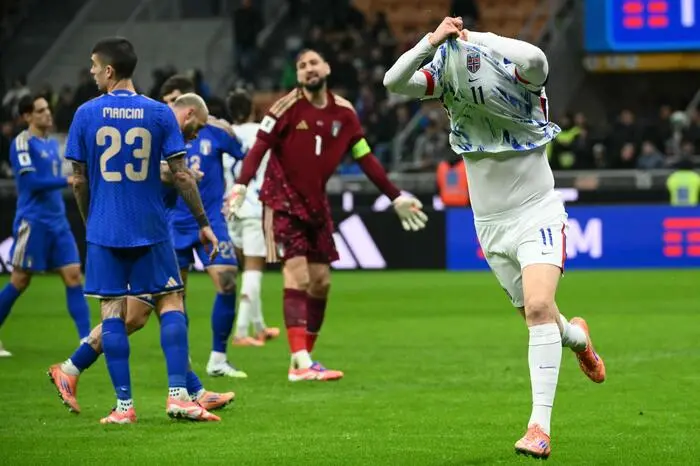
Four years later, in 2022, it seemed impossible to repeat. Italy had just won the European Championships, beating England in the final at Wembley on penalties, with Donnarumma in superhuman form. The strongest team on the continent was back, or so we wanted to believe. Instead it ended up even worse.
Switzerland finished first in the group, and Jorginho, that elegant midfielder with refined feet, who had been decisive at the European Championships, missed two penalties against the Swiss. Two. The second shot at 1-1 a few minutes from the end could have changed everything. Instead the ball went where it wasn’t supposed to go.
In the play-offs Italy met North Macedonia, in Palermo. Dry match, a goal in injury time, scored by a player no one knew. 32 Italian shots, just one Macedonian goal. Italy still followed the 2022 World Cup in Qatar on television. Two consecutive World Cups missed. Something that had never happened in the history of the Azzurri.
And on the last day of that qualifying group, Italy had drawn 0-0 in Belfast against Northern Ireland. The circle was closing, even if no one could see it yet.
In Bergamo: inside or outside
Here we are. They again. Us again. Again all in ninety minutes, or one hundred and twenty, or until penalties, because this is a straight match and you don’t mess around.
Northern Ireland arrives in Bergamo with a history that deserves respect: look for it first World Cup qualification since 1986forty years of waiting. Michael O’Neill, their coach, has built a compact, organised, dangerous team on dead balls. They don’t have the absolute star, Conor Bradley, the Liverpool winger, is out due to injurybut they are a real collective, hardened by the Nations League won in their group.
On the other side there is an Italy that seems different. Gattuso, someone who has never been afraid of anything in his life, worked for months to build a group, to create belonging. “I worked to create the group,” he said. «We haven’t participated in two World Cups. Now we have to unburden the boys. This group deserves joy.”

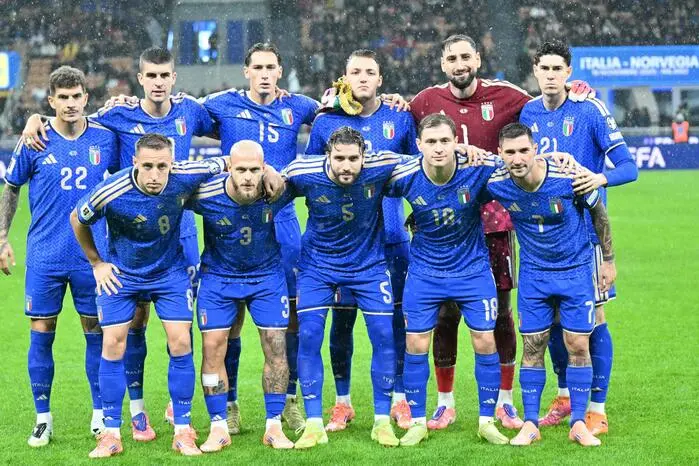
A joy. Simple word, full of history. Because the Italian national team hasn’t brought true joy for years. Victories yes, some flashes, but that feeling of fullness, of being there, in the middle of the world, fighting for something big, has been missing since 2006.
The Bergamo pitch did well: 5-0 to Estonia under Gattuso, a large victory that had raised hopes. The stadium will be full, the wind is cold but the sky promises to be clear. No fog like in Belfast in 1958. At least that’s good news.
Technical guide to the match
WHERE AND WHEN
New Balance Arena (former Azzurri d’Italia), Bergamo. Thursday 26 March 2026, 8.45pm. Single match: in the event of a draw, the match goes to extra time, then possibly to penalties.
WHERE TO FOLLOW HER
Free to air on Rai 1. Free streaming on RaiPlay.
WHAT HAPPENS IF ITALY WINS
They enter the playoff final, scheduled for March 31, against the winner of Wales-Bosnia and Herzegovina. The final will be played away (in Cardiff or Sarajevo). Whoever wins goes to the 2026 World Cup in the USA, Canada and Mexico.
WHAT HAPPENS IF ITALY LOSES
Permanent elimination. Third consecutive failure to qualify. The national team would play a friendly match on March 31st against the other eliminated team. An unprecedented sporting disaster.
PROBABLE FORMATIONS
ITALY (3-5-2): Donnarumma; Mancini, Bastoni*, Calafiori; Politano**, Barella, Locatelli, Tonali, Dimarco; Kean, Retegui. Coach: Gennaro Gattuso.
* Sticks in doubt, possible alternative Good morning. ** Politano recovered, Gym on the bench. Out Scamacca, Chiesa and Cambiaso.
NORTHERN IRELAND (3-5-2): Hazard; McNair, Brown, McConnell; Hume, Galbraith, Lyons, McDonnell, Lewis; Donley, Price. Coach: Michael O’Neill.
* Conor Bradley out (injury), Liverpool’s absolute star.