


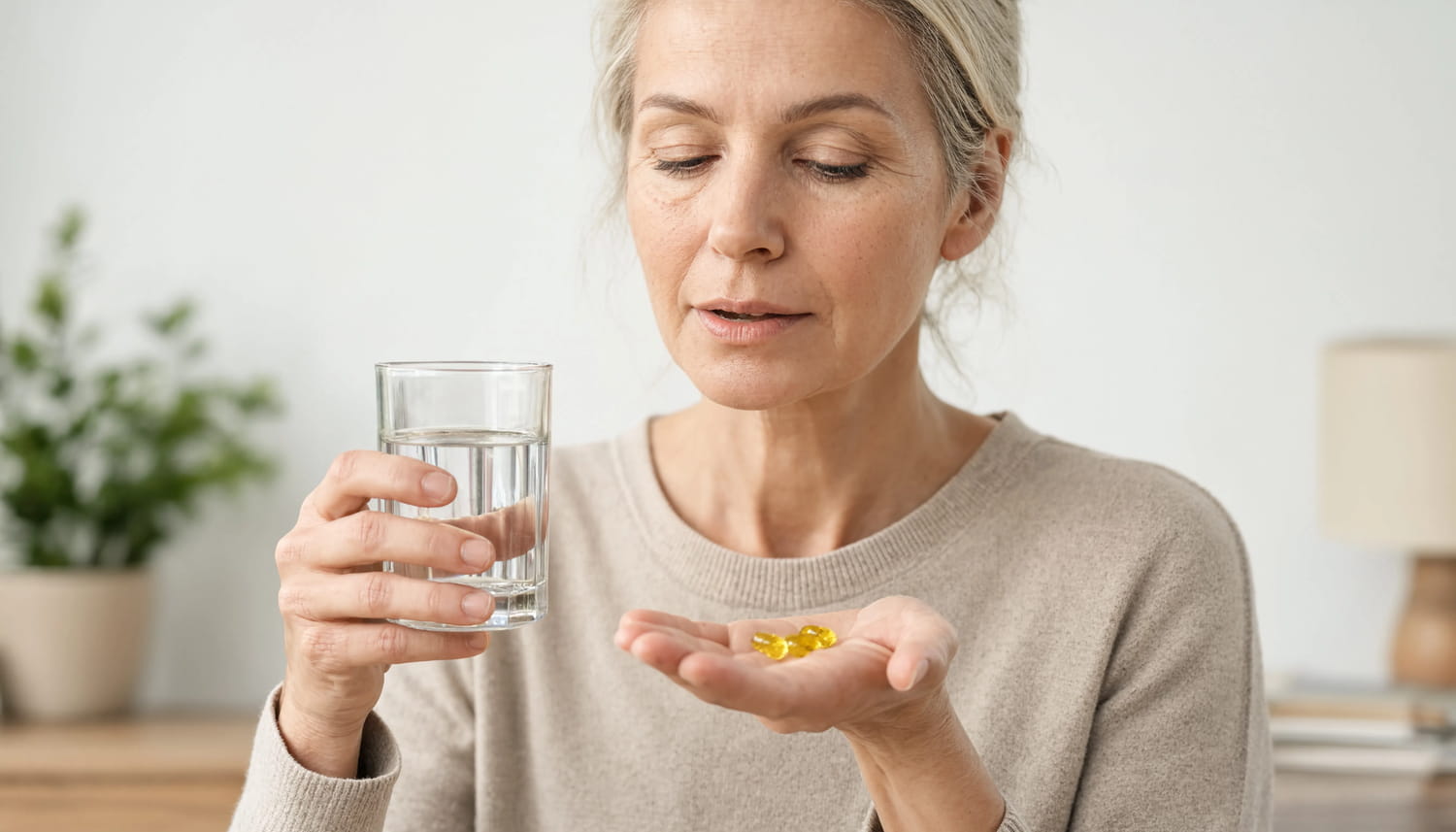
This anti-aging product is a real success with consumers. But is it really effective? Dermatologists respond.
It is one of the most popular anti-aging products of the moment. And for good reason: on paper, it ticks all the boxes. It promises to smooth fine lines and wrinkles, give the skin a plump appearance, more firmness and elasticity, while hydrating it. In addition, it integrates simply and non-invasively into the daily routine, particularly appealing to consumers looking for accessible well-being solutions. In addition to its benefits for the skin, this supplement is attributed with many other benefits: hair and nail growth, support for muscles and joints… But as with everything, when the promise seems too good to be true, there is often a hiccup. And this product, although adored by the general public, is no exception.
In the morning, the action seems rather simple: pour a few grams of this powdered food supplement into your coffee or tea. The goal? Stimulate collagen production in order to limit the effects of progressive age-related decline. However, the scientific evidence remains insufficient to achieve consensus among dermatologists. The reason is biological: collagen is a large protein. When ingested, the digestive system breaks it down into simple amino acids. So there is no guarantee that the body uses these nutrients specifically to rebuild collagen in the skin rather than other tissues like muscle or bone. Subsequently, brands turned to collagen peptides: the protein is broken down to make very small chains which pass the intestinal barrier better and are then found in the blood. The theory is that the presence of these peptides in the blood sends a signal to the body to stimulate its own cells to produce collagen.
But again, with this more advanced technology, dermatologists are not convinced. “Your body doesn’t know that when you consume collagen orally, you want it to go specifically to the skin“, explains Dr Blair Murphy-Rose, dermatologist, to the American media Vogue. “While these amino acids are part of the building blocks needed for collagen production, they are also used throughout the body for countless other essential functions. You can’t assume that eating collagen will directly result in new collagen forming in the skin.“To simplify, it is impossible to force this food supplement to target the face. When ingested, part of it is broken down and the other part is redistributed where the body needs it most.
So, it’s important to view this powder as an anti-aging aid, not a magic bullet. “People who take it know that collagen is a supplement that supports their current routine, but does not replace it“, Dr. Murphy-Rose continues. “They have realistic expectations.“To date, the best anti-aging remains daily sun protection and, why not, a retinol cream.