






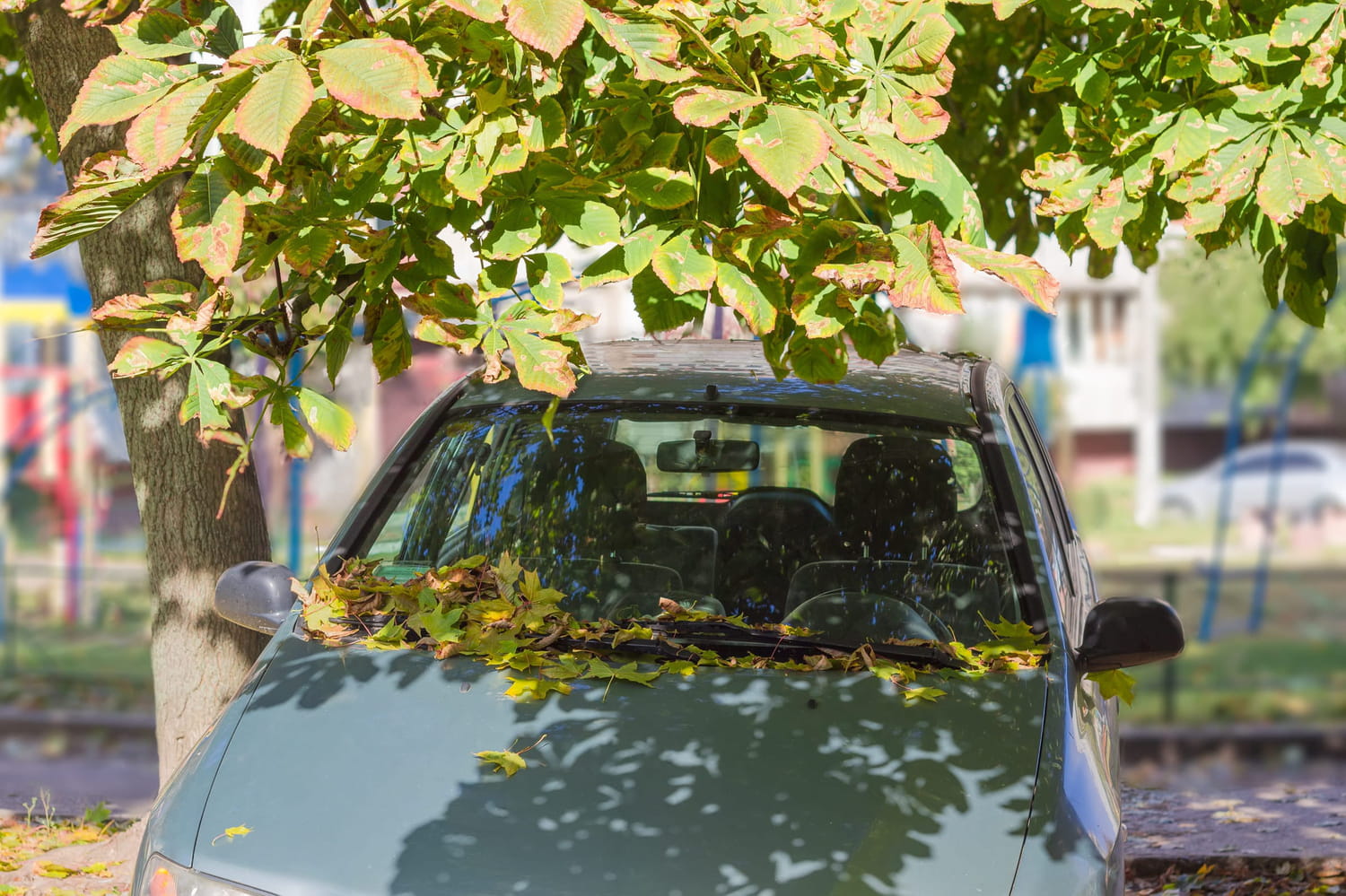
In summer, looking for a parking space in the shade of a tree is a reflex for drivers, even if it means having to go to the car wash afterwards. But one tree in particular, very present in France, can permanently alter automobile paint and varnish.
With the return of the intense summer heat, finding a parking space in the shade becomes the top priority for all motorists. We seek at all costs to protect the passenger compartment from the heatwave, and to avoid transforming the steering wheel, the seats or even the gear lever into hotplates. However, this reflex which seems full of common sense can turn into a real nightmare for the maintenance of your car and the longevity of its bodywork. Because among all the trees that line our roads and our parking lots, and which therefore offer us this so welcome shade, a very specific variety represents a real danger for our vehicles.
If you make the mistake of parking your car under its branches, it will not only be soiled by pollen residue or pigeon droppings: the bodywork may be permanently damaged. You risk finding the hood and roof covered with a sticky and particularly aggressive substance, which chemically attacks the protective varnish of your car. Under the effect of the sun and heat, the residues become deeply embedded and constitute the ideal environment for the proliferation of fungi, which are destructive to the paint.
The culprit, the number one enemy of our cars in summer, is the lime tree. And the risk is everywhere in parking areas, since it is one of the most planted trees in France: a huge part of shaded parking lots is located precisely under its branches. This sticky material (called honeydew) which is deposited on the hood and roof of the vehicle is not immediately corrosive. However, after prolonged contact under high heat, it cooks on the bodywork and becomes the playground for sooty mold. This microscopic fungus eats away at the original clear coat and creates acid attacks that leave stains on automobile paint, often requiring renovation by professional polishing or buffing.
If the damage has already been done, know that a simple car wash can be enough, provided you hurry: aphid honeydew can dissolve in water, but it is better not to wait until it has had time to dry and nibble on the paint. The best solution? Always keep a bottle of water and a cloth in your car, to wipe off most of the residue as soon as you get back to your car, then quickly go to the car wash to clean more thoroughly.
The advantage is that you can identify a lime tree very easily… and therefore avoid it as much as possible! It can be recognized by its heart-shaped leaves, and its small yellowish flowers gathered in a cluster, around a small, paler leaf which resembles a miniature helicopter wing. Its smell is also very characteristic: in summer, it gives off a very intense sweet scent. If a parking space smells like honey herbal tea, beware! And if necessary, there are also mobile applications to distinguish the trees and plants around you.
The problem is that the lime tree is far from being an isolated case: whether it is oak and its acid tannins, pine and its hardening resin, or maple and its honeydew similar to lime, these trees threaten the majority of our parking spaces in France. Suffice to say that it is almost impossible to escape this trap for your bodywork, whether during your daily commute or on the road to vacation. To prevent these plant attacks, apply a hard wax which will act as a protective film on the paintwork before your summer outings.