



Kennedy Center Faces Two-Year Closure After Trump Move, Leaving Performers in Limbo
Washington’s most prominent performing arts venue is heading toward a two-year shutdown just as cancellations mount and legal questions remain unresolved.
President Donald Trump said Sunday that the John F. Kennedy Memorial Center for the Performing Arts will close for renovations beginning in July, a move that would halt performances at the national cultural institution through at least mid-2028. The announcement came amid growing backlash from artists, companies, and trustees following changes to the center’s leadership and governance.
The closure is not yet final. Trump said the plan is subject to approval by the Kennedy Center’s board, which he now chairs and which includes a slate of trustees appointed since his return to the White House. Until a formal vote takes place, the center remains operational — but the uncertainty is already reshaping decisions by performers and staff.
Trump framed the shutdown as a necessary step to address what he described as long-standing structural and financial deterioration. In a social media post, he said the venue was “tired, broken, and dilapidated,” arguing that a full closure would allow renovations to be completed faster and more comprehensively.
Neither the White House nor Kennedy Center leadership has released documentation detailing the condition of the building or explaining why a two-year closure is required. As recently as last year, Trump had said renovations could be carried out while the center remained open.
The timing has intensified scrutiny. The announcement followed a wave of high-profile cancellations by performers who cited concerns about the direction and values of the institution since its leadership overhaul. Several companies had already withdrawn from upcoming seasons before the closure plan was revealed.
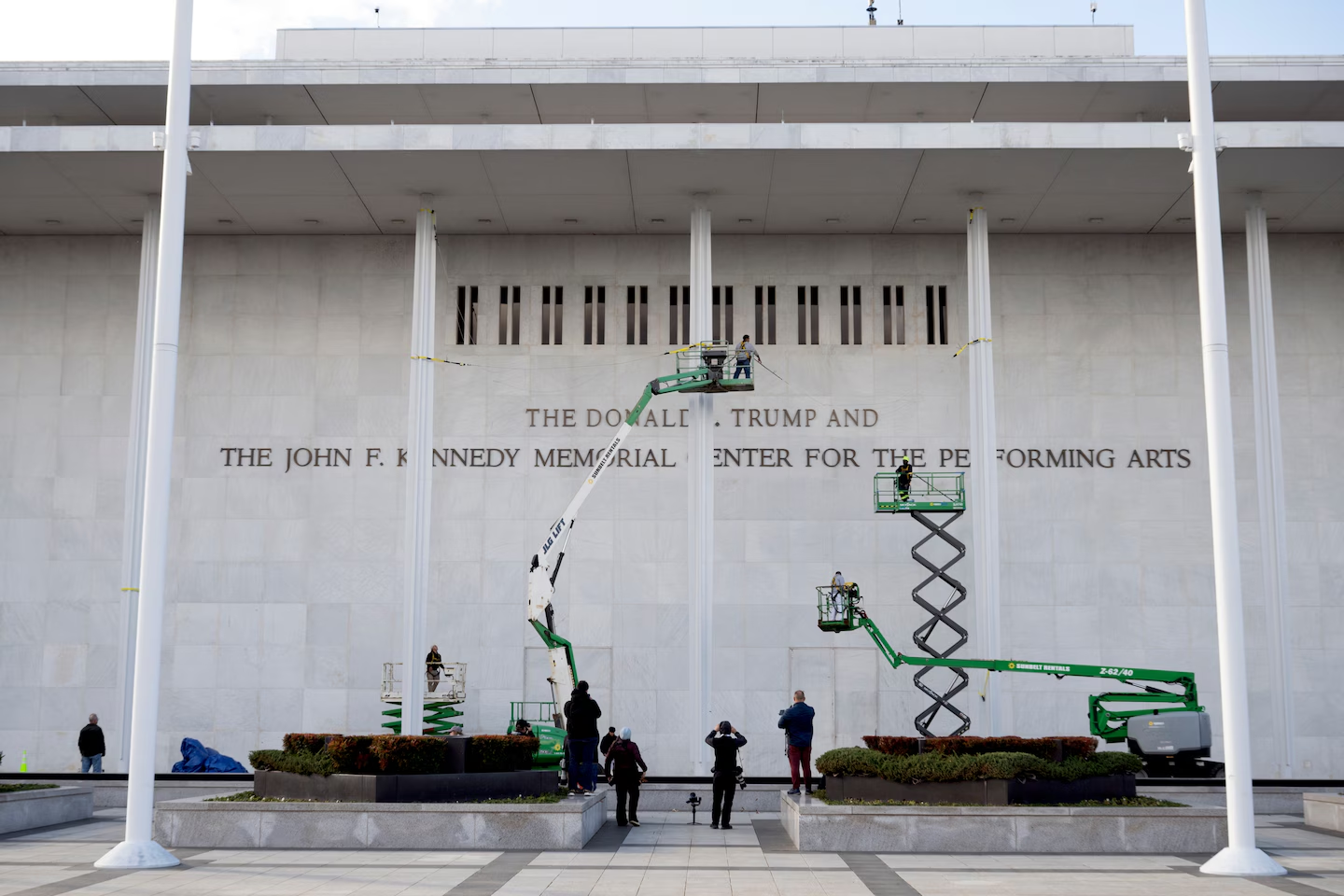
The John F. Kennedy Center for the Performing Arts in Washington, DC, as the venue faces uncertainty over a proposed two-year closure for renovations.
The Kennedy Center was established by Congress as a living memorial to President John F. Kennedy and has operated continuously since opening in 1971.
It houses the National Symphony Orchestra and serves as a year-round venue for music, theater, dance, and public programming. A prolonged shutdown would disrupt scheduled performances, touring plans, education programs, and employment for hundreds of artists and workers.
Ric Grenell, the center’s president and a longtime Trump ally, defended the proposal, calling the closure temporary and necessary. In a statement, he said federal funds approved by Congress would support repairs and that closing the building would allow resources to be used more efficiently. He did not specify the scope of the renovations or provide a timeline beyond the two-year estimate.
The sudden shift has raised questions about governance and authority. While the Kennedy Center receives federal funding, Congress has historically played a role in its oversight. One member of the board, Rep. Joyce Beatty of Ohio, sued in December, arguing that only Congress has the authority to rename or fundamentally alter the memorial. Beatty said Sunday that the closure announcement showed “disregard for Congress” and left open questions about what would happen to the institution’s mission during the shutdown.
Other critics have focused on the sequence of events rather than the renovations themselves. The closure was announced just days after a documentary about First Lady Melania Trump premiered at the center. It also followed public disputes over signage and the addition of Trump’s name to the building, a move that drew objections from lawmakers and members of the Kennedy family.
Several relatives of President Kennedy have spoken out previously, calling the changes inappropriate for a national memorial. One family member said last year that adding Trump’s name alongside Kennedy’s changed the meaning of the institution. New comments posted Sunday suggested the closure was being used to manage the fallout from artist withdrawals rather than building conditions.
The practical consequences are already unfolding. Performing arts organizations typically plan seasons years in advance, and uncertainty over access to the venue has forced groups to reconsider schedules, relocate productions, or cancel altogether. The Washington National Opera announced last month that it would move performances away from the Kennedy Center, citing instability following the leadership changes.
Staffing disruptions have also emerged. The head of artistic programming left the center abruptly last week, less than two weeks after assuming the role. No replacement has been announced.
The center’s board has not yet publicly indicated when it will vote on the closure proposal or whether revisions are being considered. Without that decision, performers, donors, and audiences are left navigating a narrowing window of clarity as July approaches.
At stake is not only access to performances, but the role of the Kennedy Center as a neutral national space for the arts. Since its founding, the venue has positioned itself as politically independent, hosting artists across genres and viewpoints. Whether that identity can be preserved through a prolonged shutdown and reconstruction remains unresolved.
For now, the building remains open, performances are still scheduled, and contracts are still in place. But each passing week without a formal decision increases the likelihood that more artists will walk away, more programs will be suspended, and more of the center’s future will be decided by default rather than vote.
Nothing has been concluded. The renovations have not begun. The board has not ruled. Yet the pressure has already shifted — from a question of repairs to a test of control over one of the country’s most visible cultural institutions.
People Also Ask
Why is the Kennedy Center planning a two-year closure?
The proposed closure is tied to a large renovation plan that would require the venue to shut down for construction, according to statements from President Donald Trump and Kennedy Center leadership.
Who decides whether the Kennedy Center will shut down?
Any closure would require approval from the Kennedy Center’s board of trustees, which oversees operations and major decisions for the federally funded venue.
Why are performers canceling appearances at the Kennedy Center?
Several artists and groups have withdrawn in response to recent leadership changes and broader uncertainty surrounding the direction of the institution.
Does Congress have authority over the Kennedy Center?
Congress provides funding for the Kennedy Center and established it as a national memorial, although day-to-day governance is handled by the board.
When could the Kennedy Center reopen if the closure is approved?
If the plan moves forward as outlined, the center would close in mid-2026 and is expected to reopen approximately two years later, following construction