


What is truth? A question that spans centuries from Pilate to social media disinformationphilosophies, religions, courts and media and which it addresses Grace by Paolo Sorrentino, opening of the latest Venice Film Festival (Coppa Volpi to Toni Servillo, best actor), in theaters from 15 January.
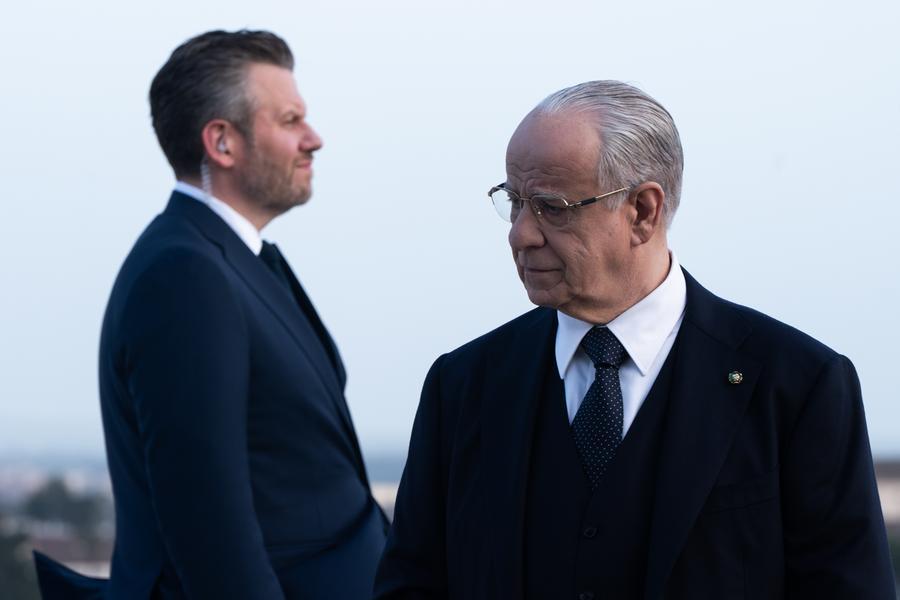
The President of the Republic Mariano De Santis (played by Servillo), a widower, Catholic, with a daughter who is a counselor and caretaker (Anna Ferzetti, in her best acting performance) is about to finish his seven-year term. Among the latest issues to be addressed are two requests for mercy (a husband who killed his terminal wife, a wife who killed her torturer husband). And the euthanasia law to be signed. Austere jurist, author of a monumental manual of criminal law, seeks the truth in codes, in procedures, with times for reflection. No one believes he will address the open questions: they brand his style as an escape from decisions. But it won’t be like that.

A sober, elegant President, because form is substance: a “memory” for our political class. A story between public and private: the past that imprisons, the love for his wife whose disappearance he cannot resign himself to, the suspicion of a betrayal he has suffered, the interrupted dialogue with God (“when I pray I fall asleep”), questions that torment him: “whose time is it?”, where is the truth?
The answers are not in the manual: to find the truth requires the exercise of doubt and the encounter with others.
Here is the heart of Sorrentino’s work, with the many meanings of the title, including evangelical ones. Divine Grace, in fact, reaches the man who seeks the truth and gives himself in the encounter with Christ, not in a religious theory. Knowing the truth makes you free, says Jesus, obeying it makes the steps easier, as happens to the President who floats in space in the film.
The director abandons the empty aesthetic of Parthenope to ask real questions. There is no shortage of “Sorrento” people, (the rapper Guè Pequeno who stares into the room questioning us, a black pope with dreadlocks on a scooter, the irreverent friend who visits the tenant of the Quirinale for “dinner options”) but without betraying his style he gives us a restrained direction, with inventions that resolve the film. Like two surreal dialogues from the President: we hear but do not see an existential confession made in a telephone interview with the director of a fashion magazine, and a missed connection with an astronaut orbiting in space that we see but do not hear.

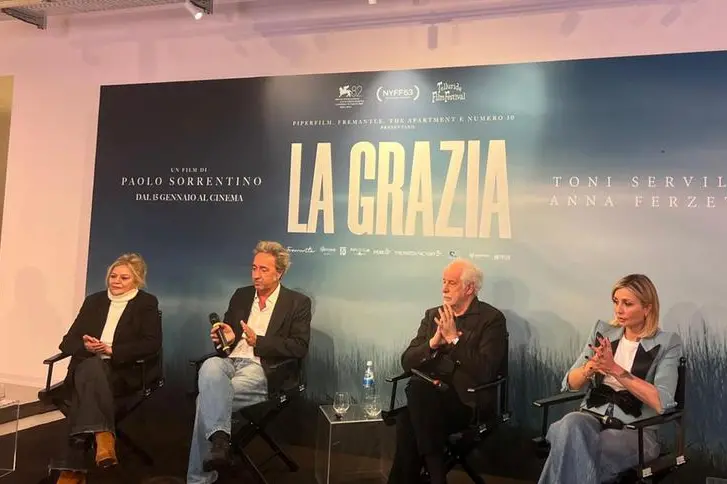
From left: Milvia Marigliano, Paolo Sorrentino, Toni Servillo and Anna Ferzetti during the presentation of the film in Rome on January 9th
(HANDLE)
A film of his maturity, which cites his filmography, almost a fulfillment of those works in which he remained more on the surface (Youth, Them). It would be a shame to chain the judgment to the (serious) issue of euthanasia: this is not the theme of the film. Grace it moves us away from false and granite certainties (“Reinforced concrete” is, not surprisingly, the presidential nickname) and forces us to search for the truth within relationships characterized by many forms of love (conjugal, friendly, paternal, work relationships).
We don’t expect instructions or answers from a film, but the right questions to ignite the desire for research. Christians know (always?) “what the truth is”, it is Christ: however, they often lack the drive and heart to seek Him who comes to meet us through Grace.