




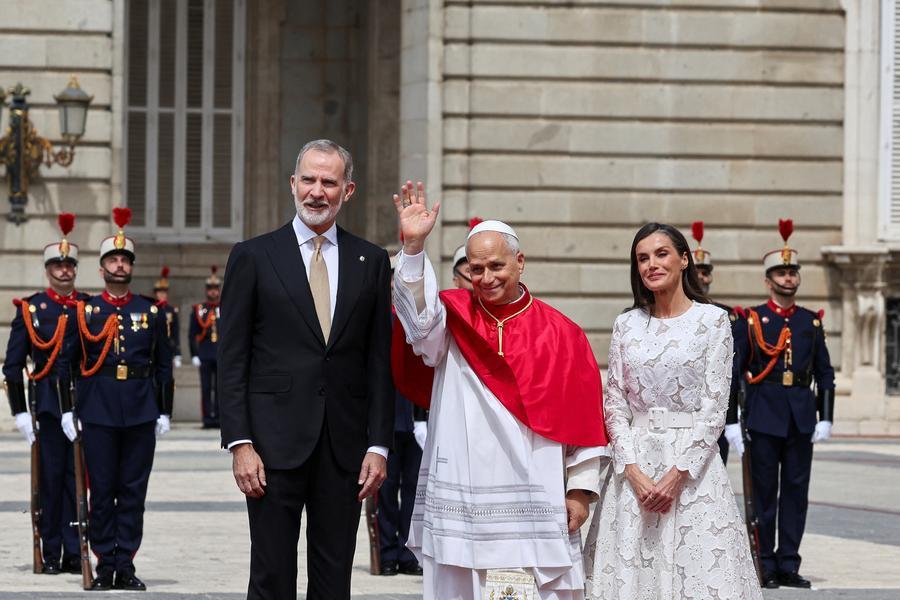
Grateful for the Pope’s visit, also on behalf of all those who speak Spanish. A privilege to be able to hear the Pope in a language that millions of people around the world understand. The King of Spain, Felipe however, it is not missing, together withpraise for all the work that the Catholic Church does, especially in the social field, «the fruit of the commitment of men and women religious, priests, deacons, young people involved in parish life, volunteers who provide their service in shelters, migrant centers, canteens, assistance”, to highlight the fight for the “pain caused by cases of abuse”.

On the plane, greeting the journalists accompanying him on his fourth apostolic journey, Leo had defined them “a wound still open” reiterating how he has always tried to listen to the victims and stop the plague. And if the king recognizes that they are not representative of “the vast ecclesial community”, the Pope reiterates that we must act with clarity and firmness. Even if it is not “possible to listen to all those who ask”, the Pontiff will receive a group of victims on this trip to continue trying to heal the damage inflicted on individuals and on society as a whole.

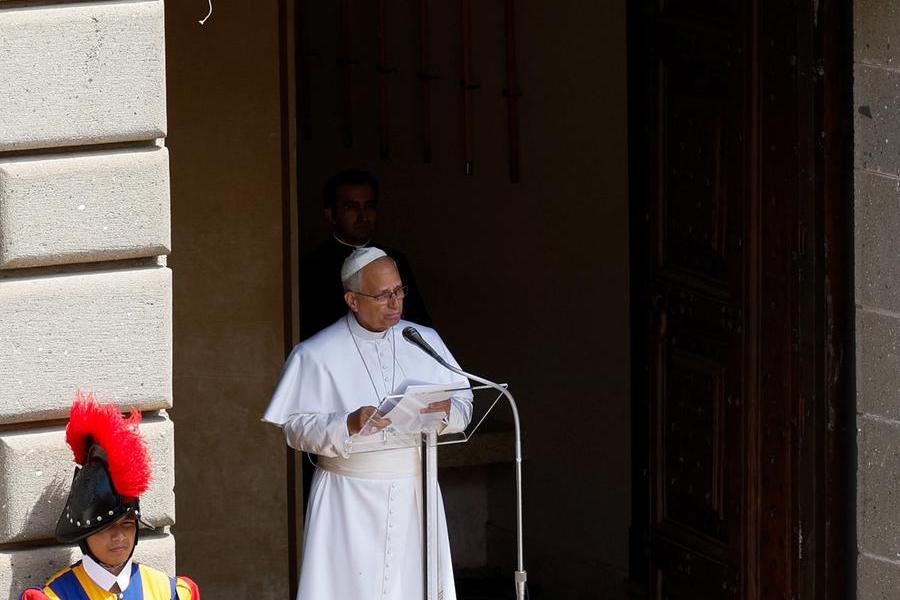
But welcome to the Pontiff, greeted by 22 cannon shots, was above all an underlining of the importance of human dignity, universal rights, the values of democracy and international law.
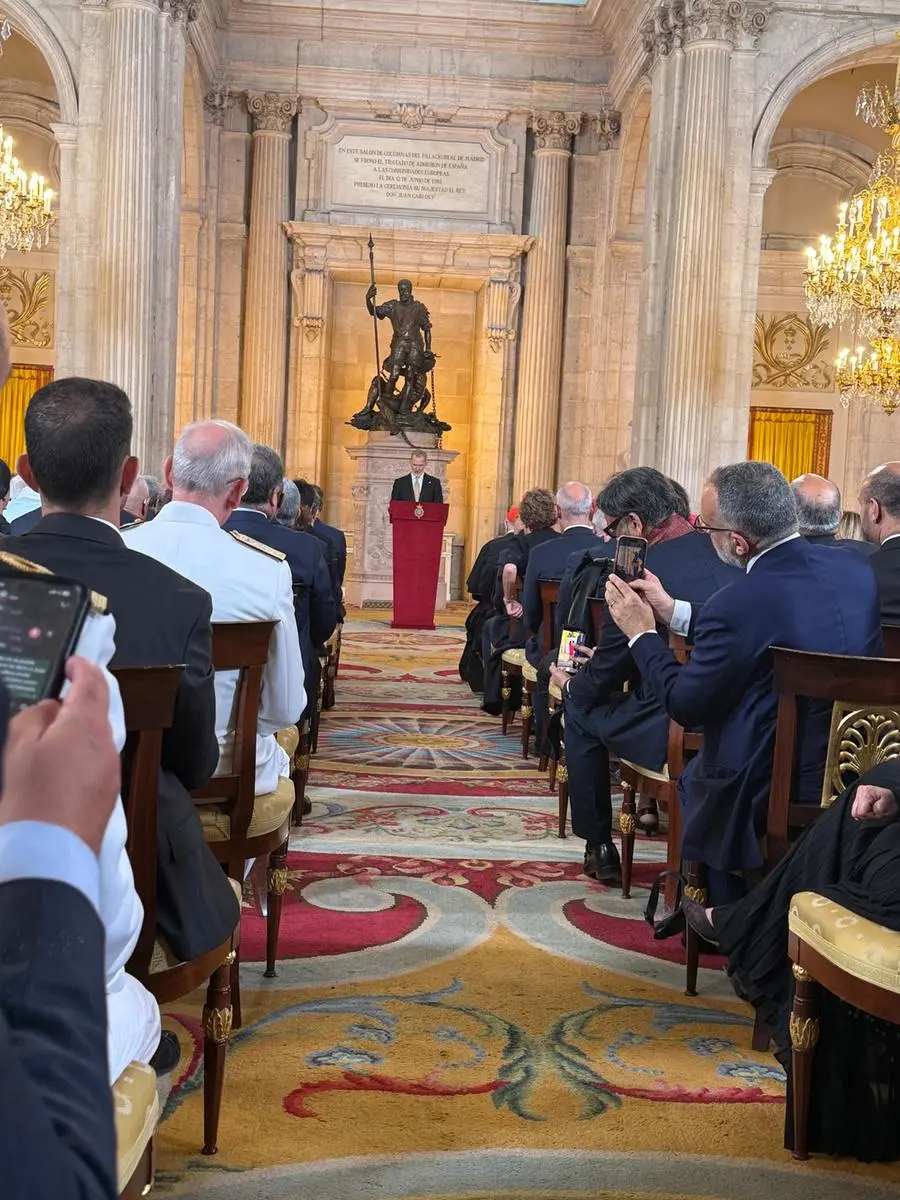
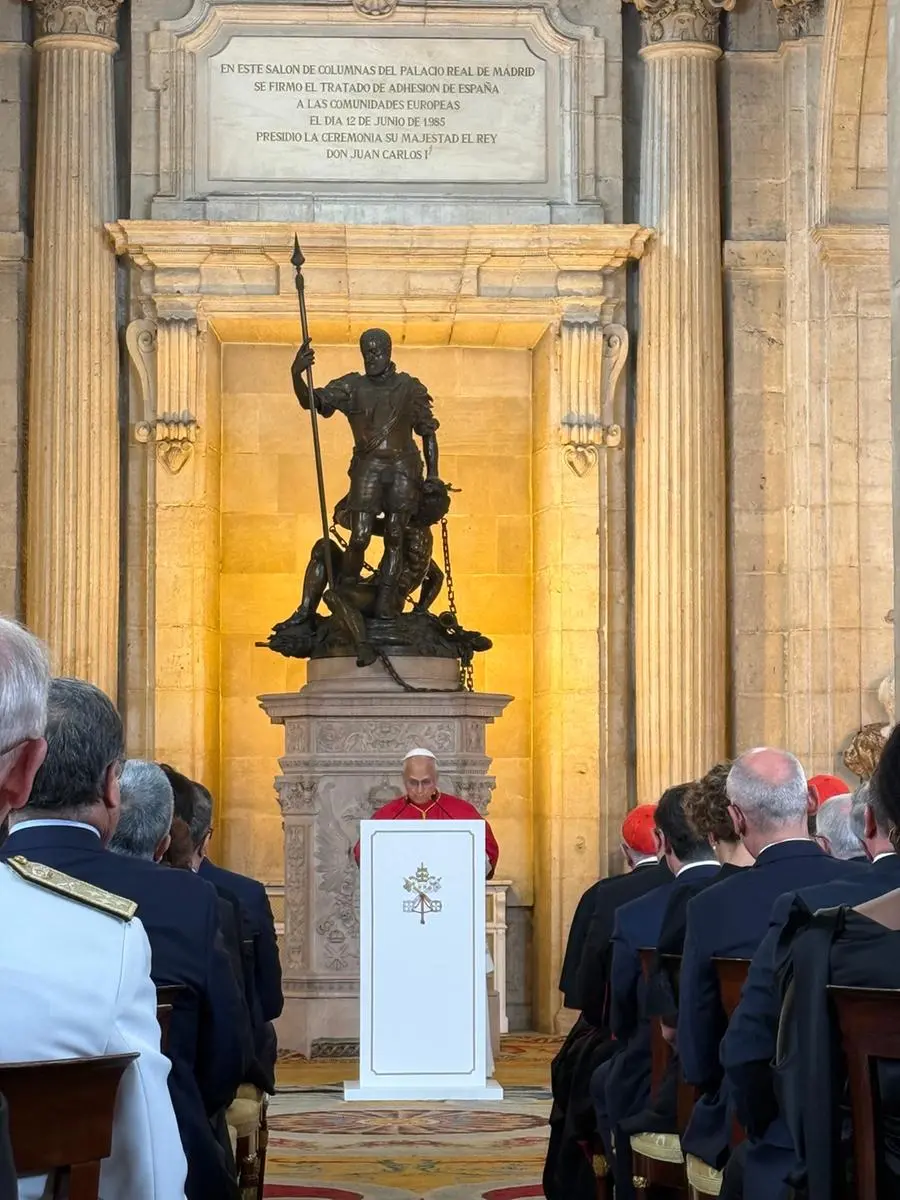
Leone immediately expresses “appreciation” for the Spain’s “loyalty” to international law and multilateralism, which translates into an active commitment to peace and solidarity between peoples”. In the hall of the Royal Palace where, on 12 June 1985, the treaty of accession of Spain to the European community was signed, Leo reminds the authorities of the key principles that must guide action: “dignity of the person, universal destination of goods, option for the poor, care of the common home, peace”.
Principles that must guide discernment and action with “responsible planning, human and social impact assessments, inclusion of the most vulnerable, digital literacy, research and industry oriented towards justice and peace”.
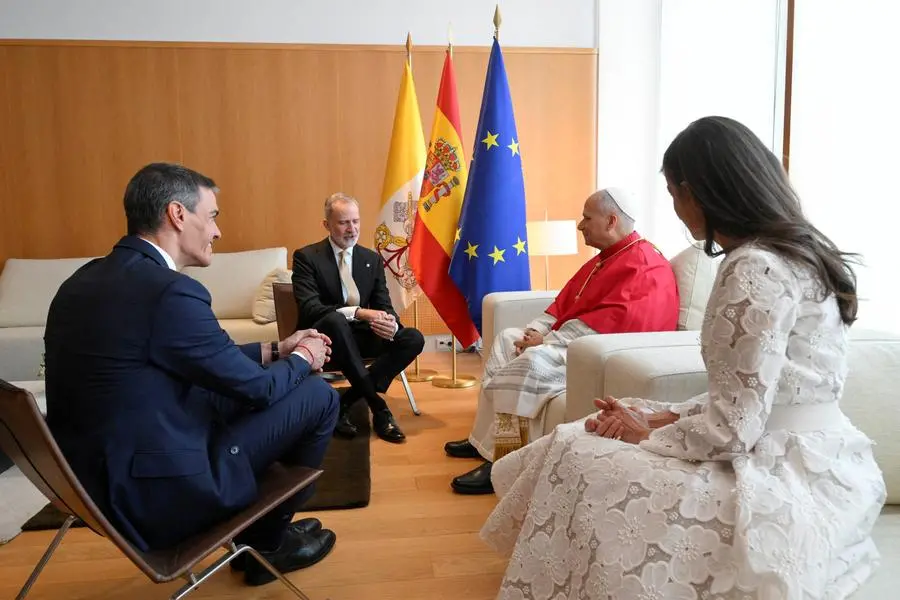
His words are almost an endorsement of the Sanchez government which continues to oppose Trump’s wars and seek peace. Leone, however, also asks to cultivate dialogue and the search for “social friendship” within the country by mending divisions and tensions. And to take into account, in political action, “the point of view of the poor and young people in imagining the future, to bring the demands for autonomy and those of unity into positive harmony, to favor the process of European union, not in opposition to other powers, but as a gift for the entire human family”.
A carefully prepared journey, the fourth of the Pontificate, which will also cross the region of Catalonia and the Canary archipelago. Three “different” and equal Spains, united by the search for peace and by a very deep and ancient bond with the Christian faith.
And it is precisely the bond with the Christian faith that, in the wake of the preaching of the apostle James who arrived in the Iberian peninsula two millennia ago, pushes us to commit ourselves to the common good.
In this context the Pope underlines that his trip to Spain is for «confirm, encourage, inspire a renewed fidelity of believers to the Gospel and a deeper reconciliation and cooperation between the different souls of this Nation». The history of the country «suggests that not the culture of confrontation, but that of encounter, generates stability and prosperity. Upon closer inspection, the message of peacewhich in these times, unfortunately, sounds naive to some, provocative to others, finds acceptance in those who do not close themselves in pre-packaged ideologies but open themselves to the truth”. He takes up the words of Pope Francis to say that there must be a constant dialogue between idea and reality and that we must avoid «the idea ending up separating itself from reality. It is dangerous to live in the realm of words alone, of images, of sophistry.” The truth, Leone continues, “is always bigger than us and for this reason it amazes us and attracts us on paths of purification and reconciliation, in which dialogue with others – and with the Other with a capital letter – becomes fundamental”.
The Pontiff recalls two essential figures of the country: Saint John of the Cross and Saint Teresa of Avila «who became friends in the passion for the divine Mystery». Theirs, explains Leone, «is a mysticism with open eyes, that is to say not extraneous to history, but, on the contrary, which leads to the root of the questions, to the heart of reality». Their testimony helps us see the light in the darkness that seems to envelop us. The unknown scares us, we live in a time of “darkness of reason” and violence. “The feeling of no longer having maps, disorientation” prevails. Precisely for this reason we need witnesses and teachers, we need “men and women who perceive the light in the darkness, in the end a possible beginning, almost the eruption of a truth like a light that still blinds, but which – if we trust and find peace – will delicately lead us towards itself”. Saint John of the Cross said it: «Night you guided me! O night more lovely than the first dawns! O night that hast joined the Beloved with the beloved, the beloved in the Beloved transformed!». And today “our time, which on the surface is shocked by terrible imbalances and conflicts, more profoundly calls for peace, for a new knowledge of the human person and his inviolable dignity, for the civilization of love”, recalls Leone quoting his encyclical Magnifica humanitas.
Saint Teresa also describes an itinerary that leads to deep questioning. The image is that of the interior castle. «Advancing from room to room towards the most internal place – that is, each towards his own heart, sanctuary of truth -, space expands, the mind opens, contradictions are resolved, tensions dissolve, others find a place, the universe becomes home. Not an intimate escape, but a radical opening to the totus Alius et semper Novus, is realized when we return to ourselves. This dimension of the human being is the reason why religious freedom and conscience must be protected.”
Leone denounces the «the temptation to gain popularity by fanning the flames of polarization seems to be growing rather than decreasing; human dignity continues to be violated. Then we need culture, interiority, free and quality education, transcendence. Yet, from these dark nights, men and women faithful to the truth have been pushed forward from room to room to the point where, in conscience, justice and peace embrace each other. It is from their freedom that we learn to be free.”
The Catholic Church, supported by its martyrs and its saints, “is ready today to put itself at the service of the future of a people seeking reconciliation and peace”. Hence the invitation «for the love of truth, to abandon the divisive and polarizing narratives of your social reality and its historyto move from sterile simplifications to a fruitful appreciation of complexity. I see here a specific vocation of Europe, of which Spain is the original and fundamental protagonist. AND the gift that the Old Continent can give to the world if it wants to remain young, just as young are those who feel they have a future and a mission that still appeal to them. Appreciating complexity and studying it, learning not to deny it and to inhabit it as a blessing, shunning those identity approaches that seem to make everything clear, but populate the world with ghosts and enemies: this is the task of those who have a great history behind them. New technologies have become an artificial environment in which our fundamental options are put to the test: within it, prejudices become exasperated, critical thinking weakens, overbearing interests sow death drives. On the other hand, good can resist and communicate itself.”
We need, «on the part of those with economic, political and institutional responsibilities, a leap in quality, a reversal of direction in investments in schools, universities and research, in local communities and in civil society as a hotbed of participation and cultural mediation. Security, which we too often delude ourselves into coming from weapons and walls, instead matures in learning to make our way with othersto grow together, side by side. Your own history bears witness to this. The presence of Islam in the Iberian Peninsula, for example, constituted a long-lasting political, cultural and religious reality. During that period there was not only confrontation, there was an attempt to create a space for contact, conversation and dialogue on the meaning of truth between Christians, Muslims and Jews.”
He underlines how, «in the school of translators of Alfonso In particular, cities such as Cordoba and Toledo became places of mediation between languages, religions and knowledge. But this is the truth that European cities tell, their historical stratification, the fabric of solidarity that over the centuries has composed their differences, transforming inevitable conflicts into starting points.”
Finally, a thought Ignatius of Loyola who taught how «in trials and failures it is possible to rethink everything». Ignatius «had this audacity, giving credit to the sadness and consolations of his heart, in an exercise of discernment and imagination whereby he preferred peace to weapons, and saints to the powerful. He understood that good was not a utopia by which he felt attracted and then his crisis was transformed into grace.” The same can happen today for the Rerum novarum, the new things, which “disturb us and on which our sensitivities are currently divided”. Without fueling sterile fears or naive enthusiasms and avoiding “words that humiliate or oppose”, we must open new paths. Spain can do this by also promoting “the process of European union, not in opposition to other powers, but as a gift for the entire human family”.