
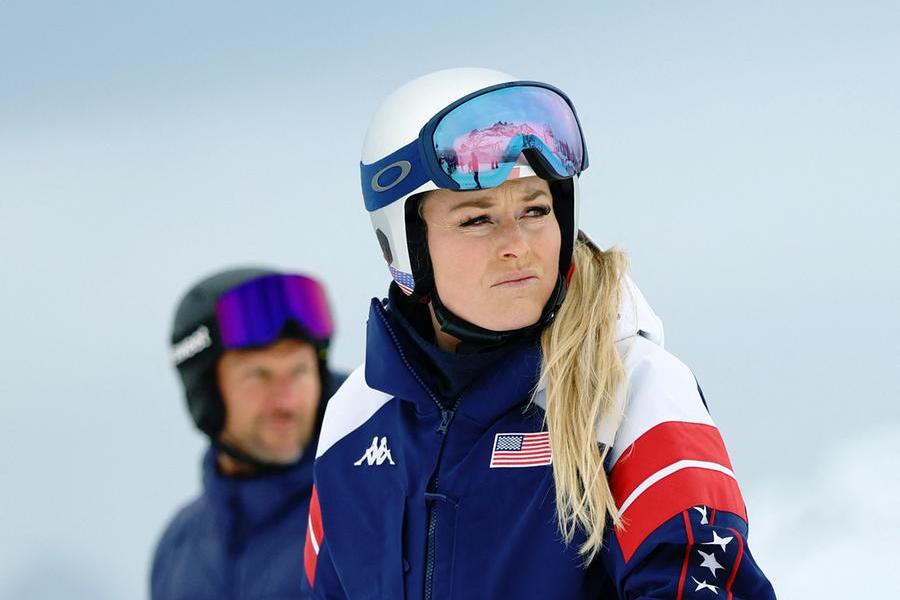




It takes courage (even physical courage, it’s about touching 150 per hour in certain sections) to get back into the game at the speed of alpine skiing, at over forty years old, betting on a comeback that no one believes possible. And succeed. It perhaps takes even more to take a step back, to the edge of the dream, if the body puts a stop in your way.
It is on the thin border between these two forms of (extreme) courage that the drama of Lindsay Vonn, who lost control on the Olympic downhill skiing ending with a heartbreaking scream and a fracture (but it could have been even worse), finds its raison d’être. She had injured her knee when she fell into the nets on the last descent before the Games in Crans-Montana, a race held in difficult conditions.


There had been talk of a cruciate rupture, so much so that some had doubted the severity of the injury when they saw it at the start of the Olympic downhill.
Seeking the limit is in the DNA of champions, in alpine skiing where a fall is lurking, and more: but there is a moment in which even a great champion, especially if like Lindsay he has already won a lot and already sacrificed a lot of body on the altar of the Olympians, must know how to measure his own limit and respect it. Sand the gods of Olympus don’t take it well: could it be a coincidence that Icarus, Prometheus, the Pillars of Hercules belong to the anthropological imagination of the Greek world?
If the crash at Cortina had occurred without the accident at Crans-Montana, it would have only been an accident, Vonn would have had nothing to complain about other than bad luck, but Crans-Montana changed the cards (And there it can and perhaps should be said that that descent in the Swiss Alps, a week before the Games, had to be stopped by the organizers before leaving due to adverse conditions, not interrupted after the massacre began).
But, then, it’s one thing to come to terms with those in charge in heaven to try to stop time passing one last time, it’s another thing to challenge him knowing that you already have impaired physical integrity. We armchair sportsmen cannot know what is at work in these cases, whether it is just the instinct of challenging the gods which has always been present in champions and explorers, and which goes beyond the instinct of self-preservation of us nobodies, or whether external pressures, contracts, duties, personal sponsors or even just the overused rhetoric of the superhero in sports stories have also been at work.


Be that as it may, it was an almost physical pain to see an extraordinary athlete fall like that, hurt like that, betrayed by the waxen wings of human fragility that is in every champion, be it in the material limits of the body or in the yearnings of the heart that forget to listen to them.
Having said that, those who now rage on social media reveal nothing other than their own mediocrity. Also because, if, after thousands of years, we still remember and read those myths, it is because Icarus, Ulysses, Prometheus, tell us about us common mortals, as we are or as we would like to be.