


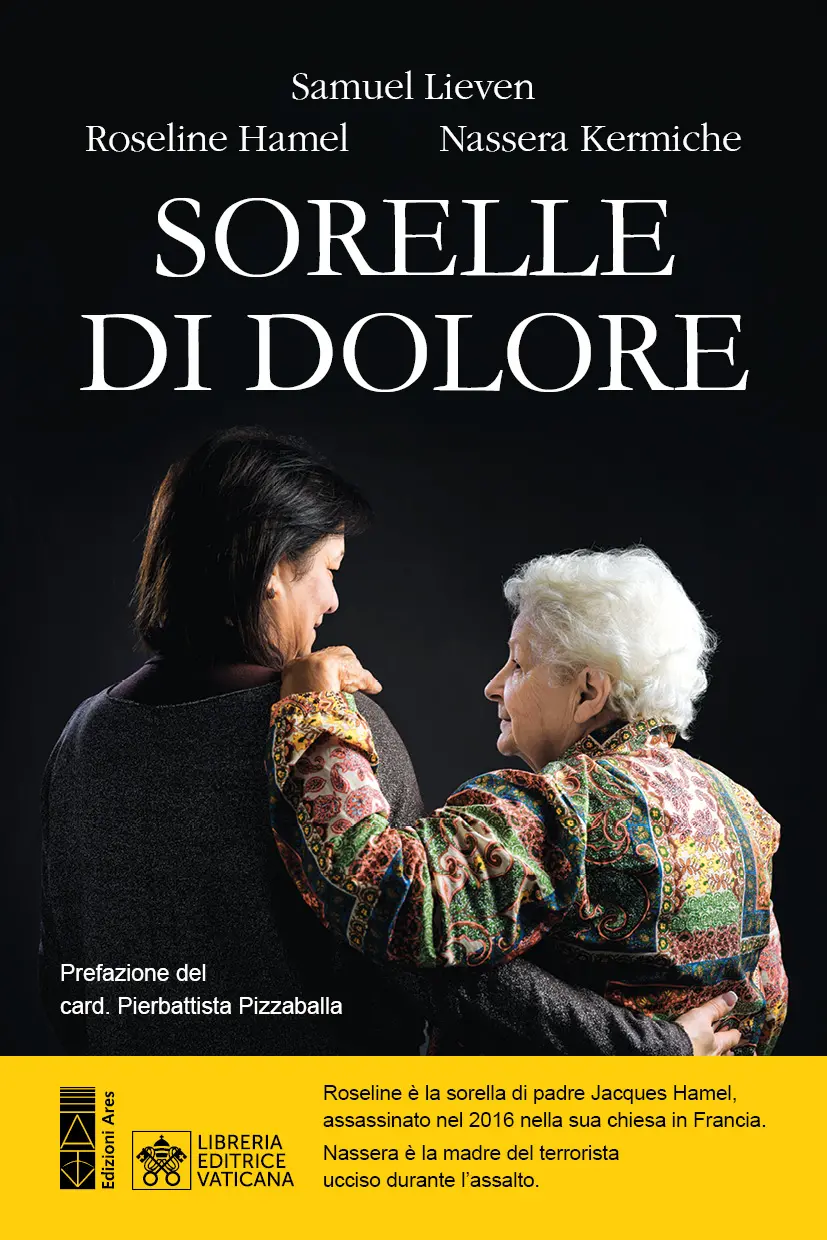
Jesus told us with clear words, which continue to illuminate our gaze and, reading this book, they illuminated for me with new substance and renewed value: «I praise you, Father, Lord of heaven and earth, because you have hidden these things from the wise and learned and have revealed them to the little ones. Yes, Father, for this is what you have decided in your kindness” (Matthew 11, 25-26). Roseline and Nassera, in their simplicity, gave a strong and necessary testimony in our time: that love does not give up in the face of death.
And they testify to this in these pages, in which all their suffering for the loss of their family members, Jacques and Abel, still emerges. But they are the ones who tell us that “these things”, that is, what Jesus said, are the heritage of simple and humble people.

All these truths, and the greatest truth – that it is love that wins, not death! –, they arrive in history through the most normal people, the least visible, those who do not like the spotlight or the notoriety of the media.
Without bothering about experiences that have also become famous through books and novels, even in the Holy Land this happens in our daily lives: in our hospitals, for example, it is normal for doctors and nurses of different faiths to work side by side treating and caring for Jewish, Christian and Muslim patients. Overcoming, in the ordinariness of everyday life, reluctance and suspicions, feelings of revenge and attitudes of revenge. It also happens in our schools, in clinics, in Caritas, in shelters: religious identity is not asked, “customs” are not placed on the good, the other is not excluded because “other”. I believe that it is precisely these fragments of humanity that still keep the world standing, precisely in a time in which the great men of the planet move their armies like pawns on a chessboard. Without thinking that a bomb exterminates a family, without taking into account that a missile can put an end to the existence of dozens of young people, completely cutting off lives that have just blossomed.
This story questions the reader. He asks if it is possible to still believe in the power of good when everything seems to deny it. He asks whether peace can really be, as Pope Leo reminds us, “disarmed and disarming”. It doesn’t offer recipes, but it delivers a responsibility: that of not giving in to the logic of hatred, of continuing to believe that friendship, even in the most unlikely forms, can open a passage in the night.
Finally, there is another question that this book lets emerge, almost in watermark, and which concerns each of us: what do we do with pain when we cannot avoid it? Do we transform it into a wall, into armor, into a definitive condemnation of the other? Or do we accept that it becomes a place of passage, a threshold to cross without fully knowing where it leads?

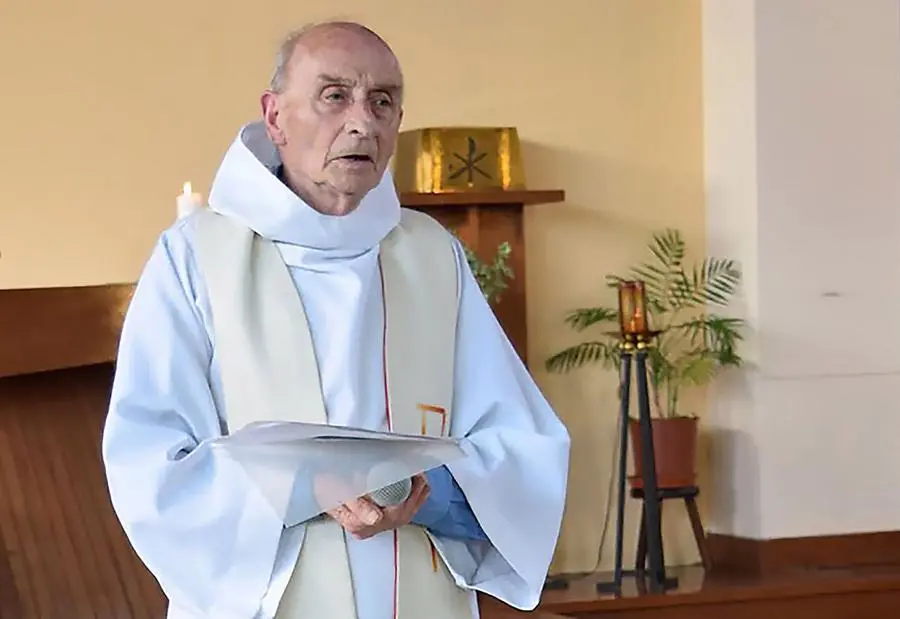
Roseline and Nassera did not choose the pain that hit them. No one chooses such a test. But they chose how to live in it. They have rejected the shortcut of hatred, which promises immediate relief and instead leaves even deeper wounds. They have chosen a more demanding, slower, more fragile path, which exposes them to the risk of misunderstanding and judgement. A path that is not imposed, but is offered as testimony.
In a time marked by increasingly radical polarizations, by narratives that divide the world into opposing blocs, this story reminds us that evil thrives where identities become walls and suffering is used as weapons. On the contrary, good – the authentic, unproclaimed one – grows in invisible places, in guarded relationships, in gestures that do not make the news. It is a discrete good, often silent, which does not eliminate conflict, but prevents it from becoming absolutized.
This is why Sisters of Sorrow is not just a book to read, but an experience to go through. It does not ask for ideological adhesions or emotional consensus, but asks for listening. It asks us to pause before a possibility: that pain, while remaining pain, is not the last word on our humanity. May reconciliation not be a naive utopia, but a possible, albeit fragile, choice, supported by concrete gestures and a trust that goes beyond what is immediately visible.
Those who enter these pages do not come away with simple answers. But, if he lets himself be touched, perhaps he comes out with a slightly freer gaze, a slightly less armed heart, and the awareness that even in the darkest night a path can open up. Not to erase the pain, but to go through it together.