





John 13.21-33.36-38 – Tuesday of Holy Week
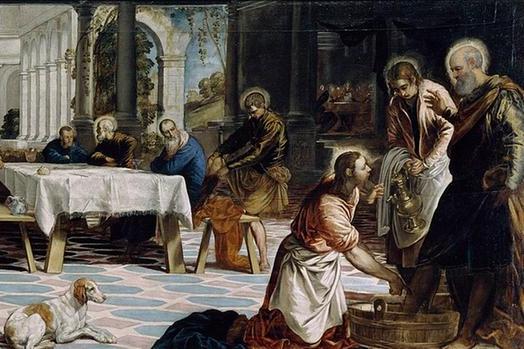
«After saying these things, Jesus was deeply troubled and declared: “Truly, truly, I say to you, one of you will betray me”. Judas’ betrayal is not something painless for Jesus. It is not simply the implementation of an already written script. The Gospel clearly says that Jesus is troubled, deeply shaken. Because Judas is not a stranger: he is one of the Twelve, one chosen, one loved like all the others. He too was called after a night of prayer. He too shared his daily life with Jesus.
Yet, inside him, something resists this love. Perhaps a disappointment, perhaps a different idea of the Messiah: stronger, more decisive, more compliant with human expectations. And instead he finds himself in front of a man who speaks of gift, of service, of the cross. The most surprising point, however, is another: Jesus knows about the betrayal and does not prevent it. It does not replace Judah’s freedom. Continue to love him, until the end, but don’t force his choice. This is one of the most radical aspects of love: respecting the freedom of the other, even when this freedom takes the wrong direction. God loves our freedom up to this point: to the point of letting himself be betrayed. He does not withdraw his love when it is not reciprocated, but neither does he impose it.
He offers it, exposes it, delivers it. This Gospel, on the threshold of the Passion, asks us a very serious question: what are we doing with our freedom? Freedom is not simply the ability to choose, but the responsibility for what we choose. Judas reminds us that we can stay close to Jesus and, at the same time, not really let ourselves be involved in his love. And so the real question is not whether we are close to Him, but if we are using our freedom to welcome or reject what is given to us. The passion of Christ is not just an event to be contemplated, but a relationship to be decided. For us too.
Tuesday 31 March 2026 – (Tuesday of Holy Week)