
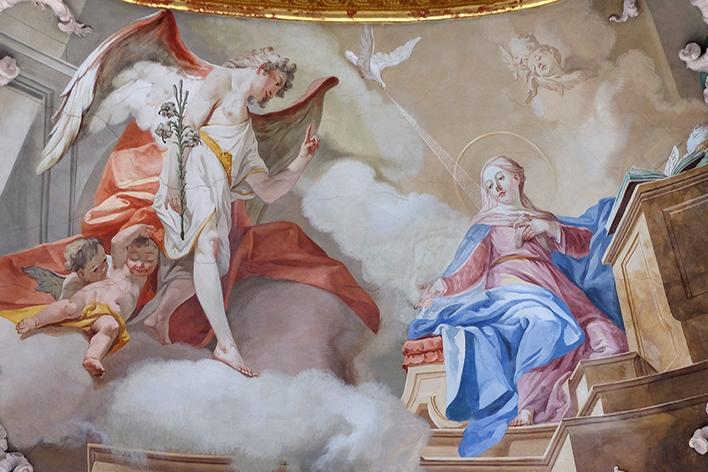




Luke 1,26-38 – Annunciation of the Lord – Solemnity
A Marian stop, on the feast of the Annunciation, takes place a few days before Holy Week. The mystery of the Word who became flesh in Mary’s womb is in continuity with the Paschal mystery of that Son who, having become man, will die on the cross and will be resurrected on the third day. Nativity and Easter, after all, are already united with each other. Simeon had prophesied it: “And a sword will pierce your soul too.”
From the beginning, the light of the Incarnation also carries within it the shadow of the cross but also the flashes of Easter. But today’s liturgy it doesn’t stop at the pain: it puts Mary’s “yes” back before our eyeshis “here I am”, pronounced before God’s proposal. It is a decisive moment. God wants to enter history, but he does not do so without the consent of human freedom. He chooses to go through listening, welcoming and availability of this woman. None of what happens will be imposed.
Love, to be true, always needs freedom. Mary teaches us precisely this: the freedom that knows how to say “yes”. Not a superficial or naive yes, but a conscious yes, which trusts even without understanding everything. A yes that accepts the risk, that welcomes a promise greater than one’s abilities. In the history of salvation no one is forced. God does not save by force, he saves out of love. And precisely because he saves out of love, awaits man’s freedom, his consenthis “here I am”.
Maria becomes like this the model of every believer: a freedom that opens itself to God, even when things are difficult, even when not everything is clear, even when what is asked seems disproportionate. His “here I am” does not immediately resolve all the questions, but it opens a path. And it is precisely from that availability that salvation is born.