
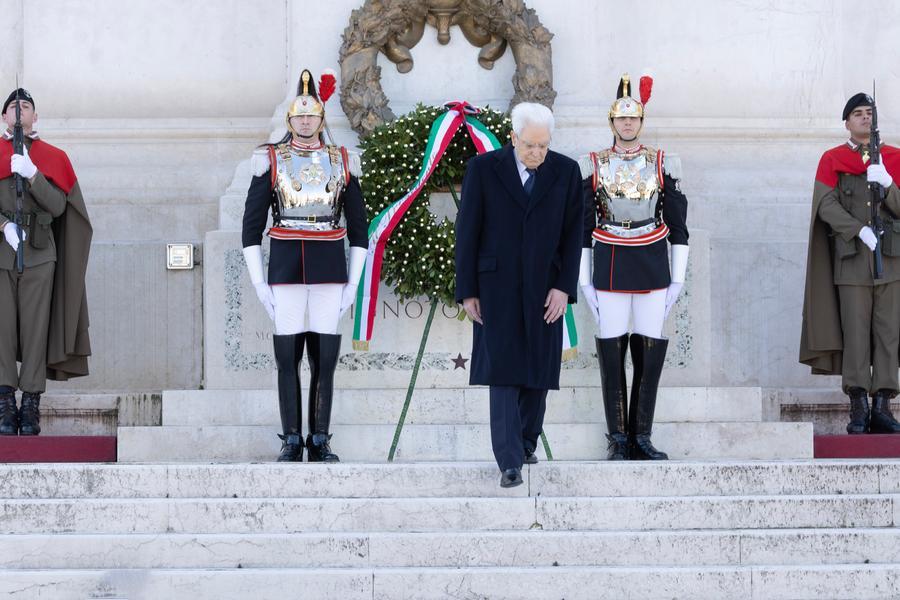


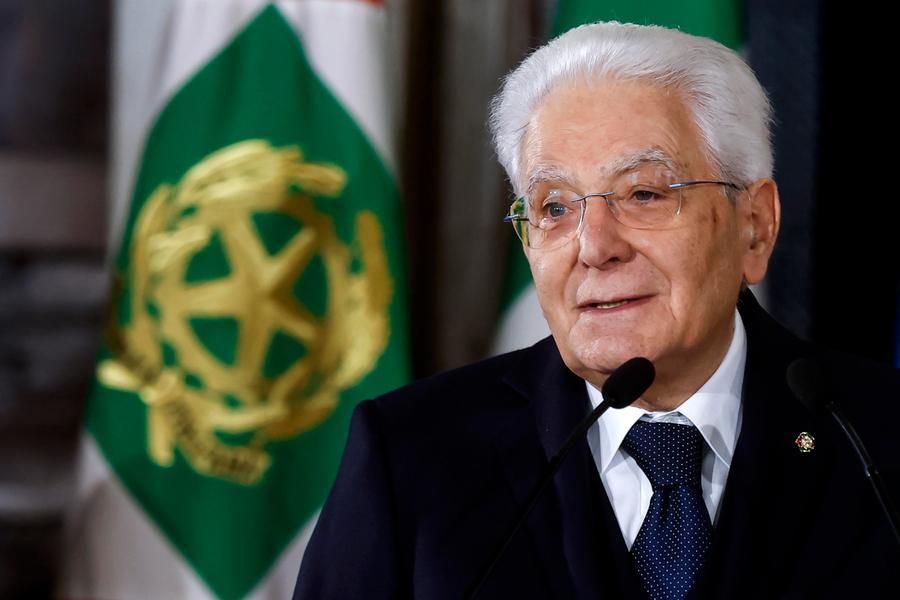
For Christmas, the president of the republic Mattarella has “pardoned” five convicts. What does grace mean, after justice has condemned them “with due process” to various penalties, part of which have already been expiated, but with the remainder abated? What justice is it that makes punishment cease, when instead the popular mood is incited by the media to close the cells and throw away the key, so that “the certainty of punishment” triumphs?
And instead grace is something that the Fathers put in the Constitution itself (art. 87). This suggests something that must be great, important, essential, to be part of our supreme law. Giving grace is a prerogative granted only to the highest authority, within the human village of which it also represents the unity, our unity. It is an individual act of clemency, which comes about a specific story, a specific life. It does not erase the past, but discerns the future. A pardon is a remedy for the concrete rigidities of a punitive system not immune from the risks of fallibility, disproportion, incomprehension, brute resemblance to a clockwork orange.
Grace is a valve of humanity. It is done not to deny guilt, not to humiliate the victim, not to annihilate judgement, not out of arbitrariness, but for something that is still related to justice, with the need for its “human face”.

It’s a very delicate topic, of course. Asking for grace and receiving it is already a rare event in the news; we face a severe and serious path, articulated by law 241 of 2000. Mattarella is a president who thinks and acts with rigorous conscience. In his second mandate he accepted 27 requests for mercy out of approximately 1,500 requests. The five events of grace of this last Christmas offer us horizons of life and pain that curb our desire to judge others, others who others have also said are guilty. Stories that awaken in us a pity that asks Christmas to be a sprout of hope on the old evil root of a withered world.
At one time, from the unification of Italy until 1999, the relevant ministry was called “of grace and justice”. Then we just called it “of justice”. But what justice program would remain if we lost the sense that doing justice exactly means “fixing” rather than leveling rubble? And to think of these rare graces of ours in earthly things, in the time that Christmas brings to the world in the spirit an infinite wave of hope to heal the infinite miseries that afflict us, what do these rare graces of ours invite us to choose, if not between a heart of stone or a heart of flesh?