






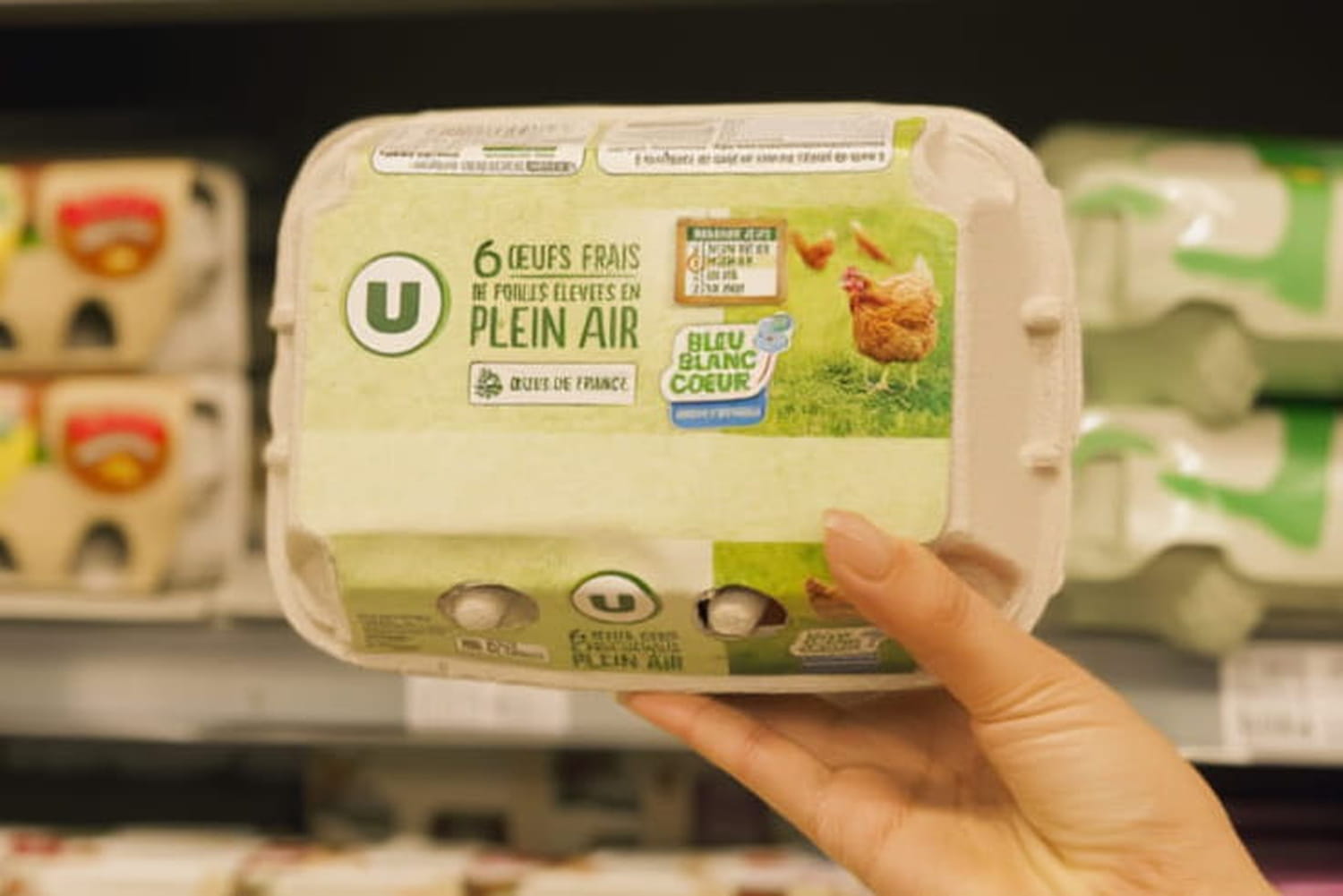
You may have come across the Bleu-Blanc-Cœur logo on your yogurts, your milk cartons or your boxes of eggs in the supermarket without really knowing what it guarantees. Is it a “health” label, a French origin or a promise of taste?
You may have come across the Bleu-Blanc-Cœur logo on yogurts or eggs in your supermarket, without knowing what it really means. What exactly is it?
What is Bleu-Blanc-Cœur?
This is a sustainable agricultural and food approach born in 2000. It is not a simple “gastronomic” quality label, but a nutritional and environmental sector. The principle is based on a simple observation: for humans to be in good health, animals and the earth must also be healthy (“One Health” concept). The Bleu-Blanc-Cœur association is committed to improving the diet of farm animals by replacing sources of saturated fats (such as imported soya or excess corn) with plants naturally rich in Omega-3 such as flax, alfalfa, grass or fava beans.
What is the logo placed on the products?
It is a stylized flax flower (flax being the emblematic plant of the approach for its richness in Omega-3) which has blue petals and green leaves, symbolizing nature and agriculture. This logo is generally placed in a clearly visible manner, often on the front of the product (near the Nutri-Score, for example) to guarantee that the animal has been fed according to the association’s specifications.
What types of products?
The Bleu-Blanc-Cœur logo can be found on a very wide range of everyday products, from French agriculture. These are mainly raw or minimally processed products:
- The creamery: Milk, butter, yogurt, cheese (from the feed of cows, goats and sheep).
- Butchery and delicatessen: Pork, beef, poultry, rabbit, as well as ham.
- Eggs: These are one of the label’s flagship products (chickens eat flax seeds).
- Groceries: Flours, breads, pastas, as well as certain oils and prepared meals using certified ingredients.
What is the benefit for health? Is it particularly good for the heart?
The label bears this name because it has a direct impact on general health and cardiovascular health. “By feeding animals better, we modify the nutritional composition of the food they produce. Bleu-Blanc-Cœur products naturally contain more Omega-3 and less saturated fatty acids“, tells us Nathalie Kerhoas, president of the label. Omega-3s are essential “good fats” which help to regulate cholesterol, reduce inflammation and protect the cardiovascular system. It is also the only approach of nutritional interest scientifically recognized by the Ministries of Health and Agriculture. Clinical studies on humans have demonstrated that the consumption of these products improves the lipid profile of consumers.
Where can I find Bleu-Blanc-Cœur products?
These products can be found in large retailers (Intermarché, Système U, etc.) and offer products under their own private labels with the logo, or via national partner brands (such as Fleury Michon or Loué). Many local bakers and butchers display the logo in their windows. Many on-farm producers sell their labeled eggs, meat or dairy products directly. Please note that in collective catering, many school canteens and company restaurants favor these sectors.