


In recent days, the government has presented a new bill on immigration, marking yet another crackdown on the matter. Unlike a decree, the rules will first have to be examined by Parliament, even if the executive announces its intention to request the quickest possible process. The text, more severe than expected, introduces a “border defense strategy”, tightens the requirements for granting complementary protection and for family reunification, and provides a broad delegation to the government for the implementation of recent European measures. Among the measures cited in the Palazzo Chigi press release, the concept of “naval blockade”.
To understand the implications of this new regulation and its impact on migrant people, we interviewed Monsignor Gian Carlo Perego, archbishop of Ferrara-Comacchio and President of the Cemi (Episcopal Commission for Migration) and of the Migrantes Foundation.
Your Excellency, the new bill on immigration introduces more stringent rules. Does this “hard line” really respond to a security need or does it risk fueling irregularities?
«The government’s new provision continues the prejudicial line of reading migration as a phenomenon of social insecurity, rather than as an instrument of social and cultural regeneration. The reality is different from what we want to believe. The reality of immigrants in Italy corresponds to a population of workers (2 and a half million), increasingly in demand and increasingly less paid; of entrepreneurs (600,000), the only businesses that are growing are those of immigrants; of families (2 million four hundred thousand), with an increasing number of births out of the overall number (20%); of pupils in schools (900 thousand), with 65% of pupils being children of immigrants born in Italy”.
There isn’t an alarm, anyway?
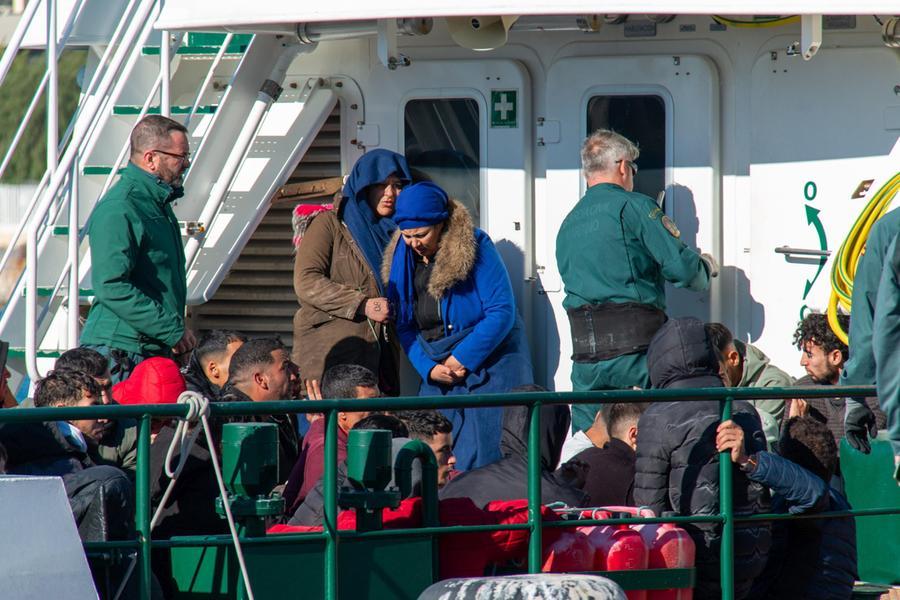
“No. To this reality, made up of only 450,000 asylum seekers and refugees, we respond by invoking security, when perhaps we should invoke welcome, protection, promotion and integration, to use the words of Pope Francis, reiterated by Pope Leo in the exhortation Dilexit nos. And the security measures envisaged are to reiterate the defense of the borders before the protection of people fleeing wars, environmental disasters and violence, also invoking a ‘naval blockade’ in the event of mass migrations that are not well quantified, turning the Mediterranean into a wall rather than a road, stopping people fleeing and sending them to a presumed “safe country” (Albania today, but others could be added), accelerating an interpretation of the European Plan on migrants and refugees, guarding the land borders, from which to remove potential asylum seekers in an abbreviated procedure, making family reunification more difficult, reducing the inclusion paths for unaccompanied minors (lowering the paths from 21 to 19 years and accelerating multidimensional checks and not activating family reunifications), limiting the freedom of communication in the CPRs both by telephone and with religious people or volunteers, effectively denying the possibility of civil society, through NGOs, to save people at sea. It is a new bill that adds to the other six, including decrees and safety laws, which in addition to indicating a false danger, risks making our country lose attraction which, in this way, while already losing young people who emigrate en masse – never like today – also young immigrants. A country that renounces the resources of people who also generate a cash surplus with their taxes and expenses of 1 billion and 200 million euros (data from the Moressa Foundation) risks generating growing irregularities, without foreseeing its emergence (as Spain did), at a critical moment for the country’s economy at the end of the PNNR, with an agriculture and a world of services that lacks personnel, is a country that is not only less safe, but one that is heading towards death”.

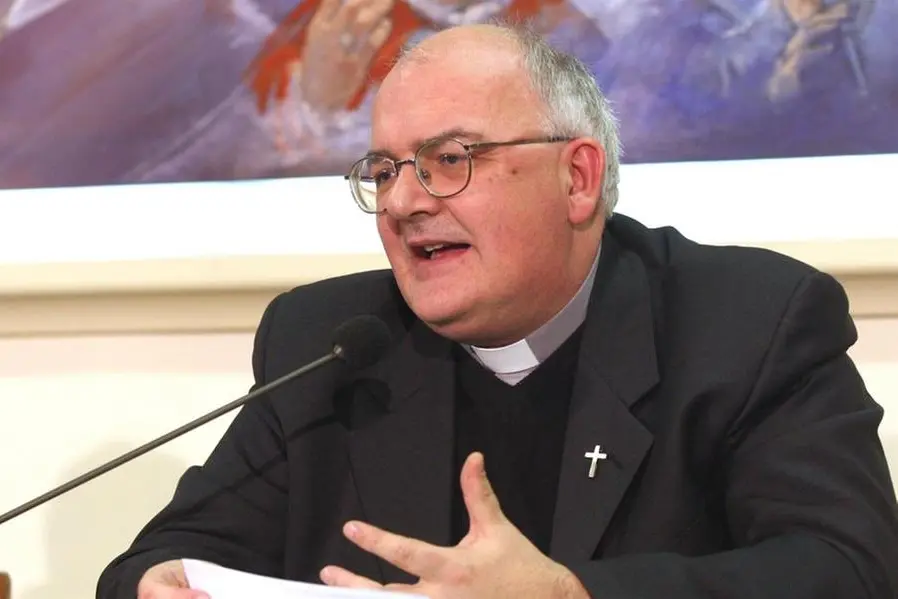
The bishop of Ferrara and president of the CEI Migrantes Foundation Monsignor Gian Carlo Perego
We talk a lot about flow management, but less about integration. Why does the transition from the widespread reception model (SAI) towards large detention centers seem to be a step backwards for the cohesion of the territory?
«The flow decrees of the previous three-year period and of this second three-year period that has begun saw the Government accept the request of the economic world for the possibility of entry into our country of approximately one million people. In reality, in the previous three years, apart from the bureaucracy, the costs for businesses, the long times for permits, with false papers and trials, it saw the entry of just under 25% of the workers requested. The same thing last year, the first of the new three-year period. Furthermore, the flows decree was not accompanied by a housing plan, generating precariousness for workers, scholastic accompaniment, health protection, the possibility of family reunification: all this has generated insecurity for migrants, insecurity in the territory. With regard to asylum seekers and refugees, a single reception plan spread across the territory would generate greater welcome, different accompaniment, greater protection, especially if there is an initial examination of the profiles of asylum seekers to direct them to the national territory also according to their skills. Asylum seekers – today around 90,000 – live in CAS without anyone asking them for a CV. They can work, but if they reach a salary of 6,000 euros they are left on the street, without a support plan. The quotas reserved for asylum seekers and refugees by the flow decrees in a year are only 380: when these are resources already present in the territory, for which there is also an important resource earmarked. Once again, social insecurity is generated, rather than governing a phenomenon.”
The new rules provide for accelerated procedures and more invasive age assessments for unaccompanied foreign minors. What are the concrete risks for the protection of the little ones and for their actual educational path in Italy?
«The Security and Immigration Bill further weakens the Zampa law, considered in Europe to be the best law for the protection of unaccompanied minors, with accelerated multidisciplinary procedures to identify unclear minors, reducing the time required for cessation of accompaniment and protection from 21 years to 19, not providing new resources for communities for unaccompanied minors – today more than half are found in CAS even for adults only –, not strengthening family reunification, not further encouraging forms of foster care and family reception projects, not helping the spread of guardians for minors, the request for which often ends up in the juvenile courts. In this way, there is the risk that other agencies, certainly not educational ones, will lead minors into criminal gangs, low-cost labor or even sexual exploitation. A country that does not invest in minors is an inhumane country, but also one that wastes an important human resource for the future. Great resources are spent in the Mattei Plan wanted by Meloni for professional training, for example, for 35 Egyptian children, 20 of whom are to be sent to Italy and we forget the 8,000 unaccompanied Egyptian minors who have landed in recent years. There is a squint that does not help to read and valorise a migratory reality.”
The management model of asylum procedures outside national borders, as in the case of the Italy – Albania agreement, is becoming a European reference. Is this a pragmatic solution or a dangerous delegation of moral and legal responsibility?
«The Italy – Albania agreement was a shameful, immoral and unconstitutional operation, which the judiciary rightly tried to stem in its harmful aspects of the rights of asylum seekers. It is not a triumph that Europe has hypothesized a “safe” third country in which to manage asylum applications. We will see which countries will follow Italy’s expensive model: one billion euros so far to welcome people who in fact could have been welcomed in existing structures and in existing CPRs. It is certainly not an intelligent, pragmatic and coherent model to stop people in the Mediterranean and take them to Albania for an accelerated procedure for examining applications – today almost no longer even providing for special protection – to bring back to Italy those who have the right to an asylum application, effectively preventing or seriously limiting even the appeal: Article 10 of our Constitution is in fact seriously limited, just as the possibility of caring for people who, as we know, have often suffered violence and trauma is limited. Inhumane and irrational.”
If you had the opportunity to rewrite the pillars of an ideal law on immigration, what would be the three essential points to reconcile respect for legality with the centrality of people?
«A law must start from the reality to be governed. The Bossi-Fini Law started with 1 and a half million people who have now become 5 and a half million, with another 1 and a half million who have also become Italian citizens. Italy is founded on work, states the first article of the Constitution. First of all, we need to protect work and immigrant workers, encouraging the meeting between supply and demand for work (the sponsor), literacy (the famous 150 hours for our workers) and professional training, recognition of qualifications, fair pay (today the average pay of an immigrant worker is 7,000 euros compared to 12,000 euros for Italians)”.

And the other points?
«A second pillar is the house. A new housing plan, like that of Minister Fanfani (300 thousand homes) or La Pira in Florence after the war to favor workers from North to South and agricultural workers would be a necessity, also to promote security and social cohesion, and family reunions. Only the Emilia-Romagna region has intelligently launched a housing plan in Italy. For our emigrants after the war we waged a social battle to encourage family reunification, against countries that only wanted gastarbeiter (workers), like Switzerland and Germany, and today in Italy we risk doing the same thing with immigrant workers. A third commitment concerns school and the protection of minors. An intercultural school today is on paper and not in reality, while the reality is increasingly intercultural. It is necessary to create the sixth class for schoolchildren who arrive in Italy from other countries for intensive literacy that allows immediate scholastic recovery and inclusion in the class corresponding to the age, with the help of teachers/mediators, and at the end of the compulsory schooling to provide citizenship. They are three concrete proposals that reflect reality and promote social justice, cohesion and security.”