

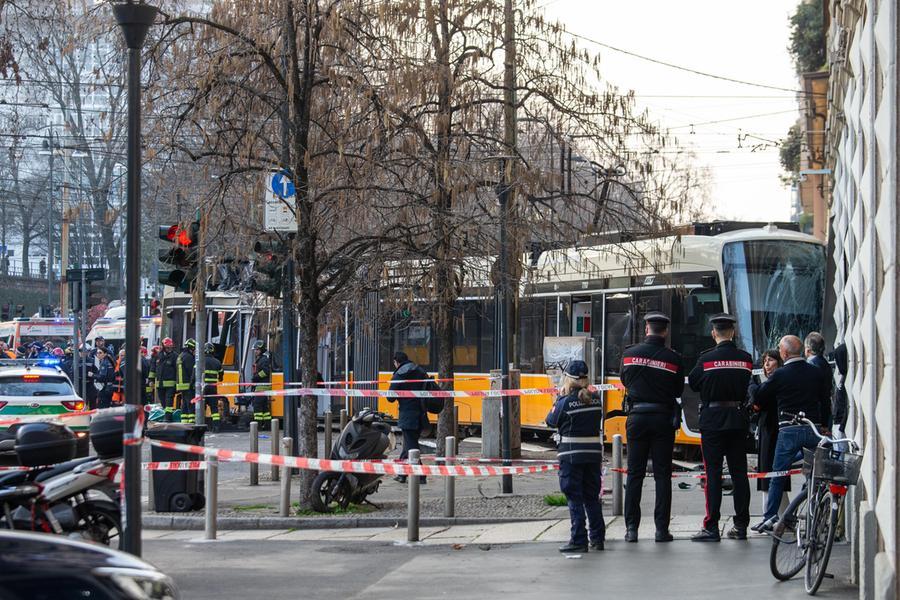


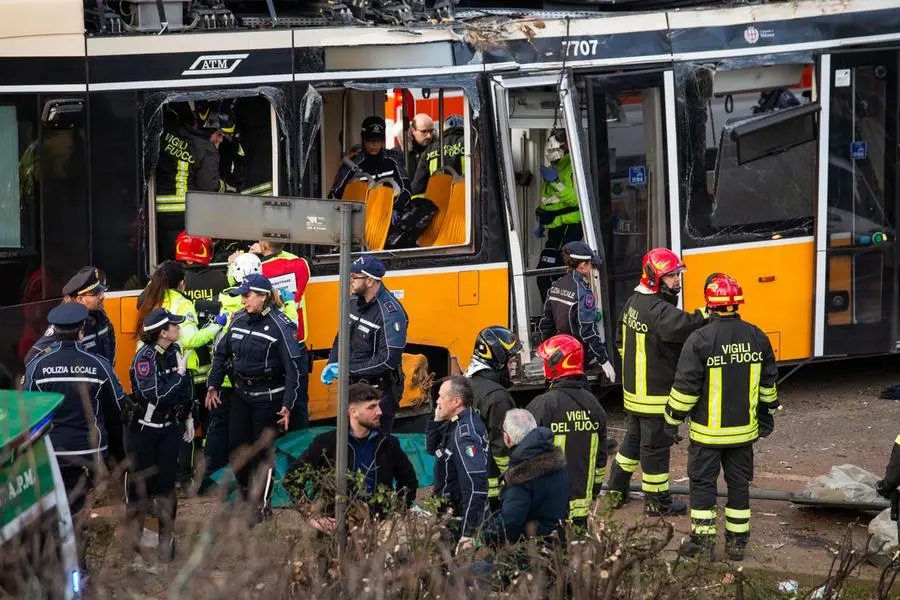
Friday 27 February, Milan. It was a few minutes after 4pm when a taxi’s dashcam captured the tragedy on the corner live viale Vittorio Veneto and via Lazzaretto. In a usually lively area like Porta Venezia, the usual rattle of trams is suddenly replaced by a devastating roar. A few seconds of film capture a crazy race, culminating in the derailment and crash of a line 9 convoy. The outcome is dramatic: two dead and numerous injured.
The Milan Prosecutor’s Office then corrected a serious initial oversight: there was a mix-up in the identification of the victims. The second to lose her life in the accident is Johnson Okon Luky, a man of African origins whose family members are still being traced. Contrary to what was previously communicated, the fifty-six-year-old Senegalese Karim Touré is alive, although hospitalized under code red. The first confirmed victim remains fifty-nine year old Ferdinando Favia.
According to an initial reconstruction, the vehicle – instead of proceeding straight – entered an interchange at high speed, well beyond the limits set for that stretch of line. Off the rails, the tram invaded the opposite lane, ending its run against the window of a building in viale Vittorio Veneto. The impact threw some passengers out: help was immediate, but unfortunately useless for the two victims.

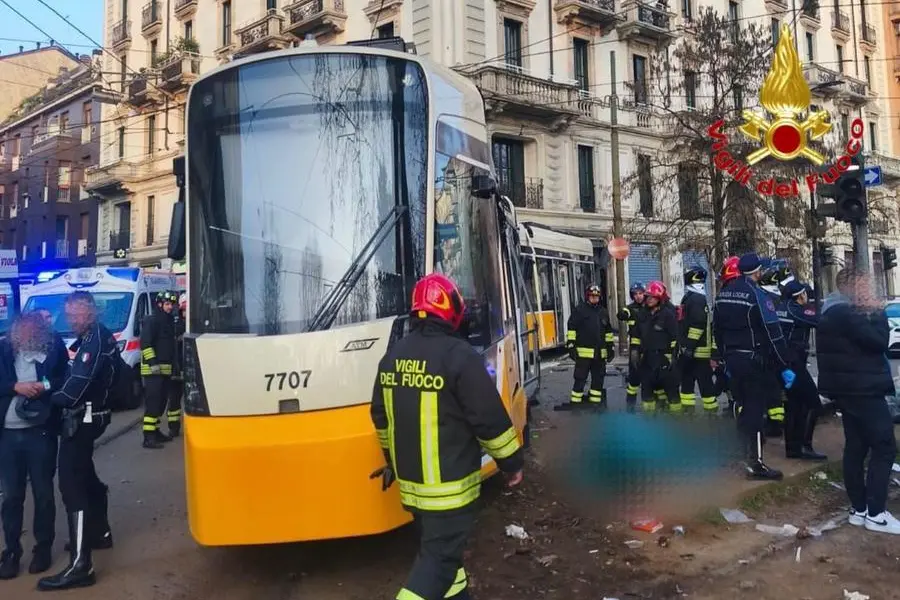
The driver of the vehicle is now the center of attention, a 60-year-old man, an ATM employee for almost thirty-five. In shock at what happened, he attributed the accident to a sudden illness he felt while he was driving. According to his statements, he felt a strong pain in his leg and, immediately afterwards, he “saw everything black”, losing control of the vehicle.
This loss of consciousness would explain why the tram missed the last stop before the intersection and did not slow down near the interchange. The initial findings of the Local Police have, in fact, ruled out faults on the tracks: the interchange was “closed” (i.e. prepared for the turn towards Via Lazzaretto) due to the passage of a previous vehicle. Under normal conditions, the driver would have had to activate a control in the cabin to “open” it and continue straight, a maneuver that never happened.
Transported to Niguarda hospital, the man was discharged with a prognosis of 10 days; toxicology tests for alcohol and drugs were negative.
The vehicle involved is a latest generation Tramlinka jewel of technology equipped with anti-collision sensors and intelligent braking systems. Yet, nothing prevented the impact. Investigators are now wondering about the failure of the main protection systems to intervene.
The first is the so-called “dead man” system: a technology that requires constant interaction (every 2.5 seconds) from the driver via a button: in the absence of response, the system activates an audible alarm and, after another 2.5 seconds, automatic emergency braking.

The second device under the lens is the gear switch, a control stick that requires constant pressure to maintain traction. If released, the tram should stop within thirty seconds.
The hypothesis being examined is that the illness may have occurred in a sort of temporal “blind spot”: if the blackout hit the driver a few meters from the interchange, the technical reaction times of the systems (although very rapid) may not have been sufficient to overcome the inertia of the vehicle.
The tram driver’s version is now being examined by investigators. The Milan Prosecutor’s Office, led by the chief prosecutor Marcello Viola and the prosecutor Elisa Calanducciopened a case for murder and negligent injury and registered the man in the register of suspects also for dnegligent railway disaster. In the morning, local police officers carried out a search of the ATM headquarters in via Monte Rosa, seizing the necessary documentation and data from the tram’s “black box”.
In the next few hours, the engineering expert (the same one who followed the Pioltello disaster) will be appointed for the definitive kinematic reconstruction.