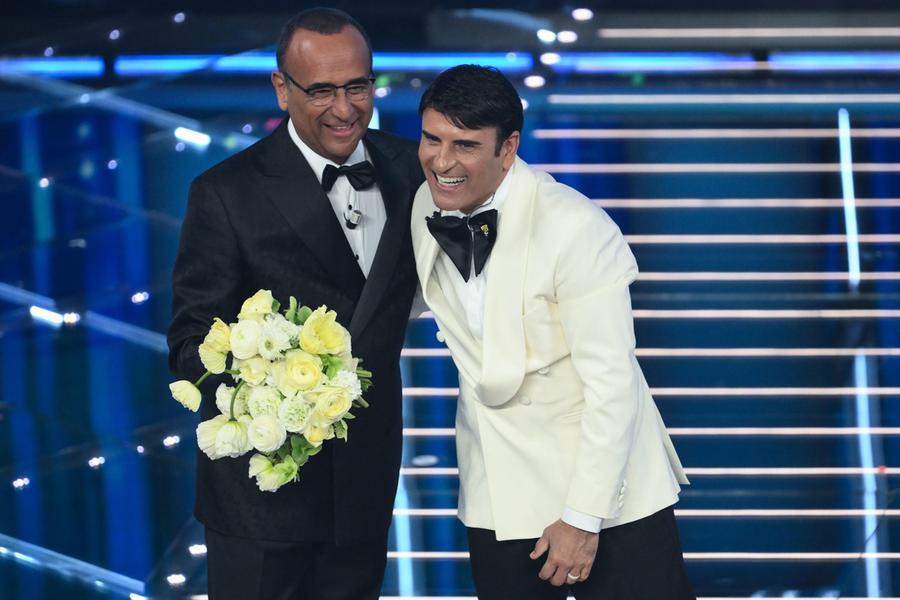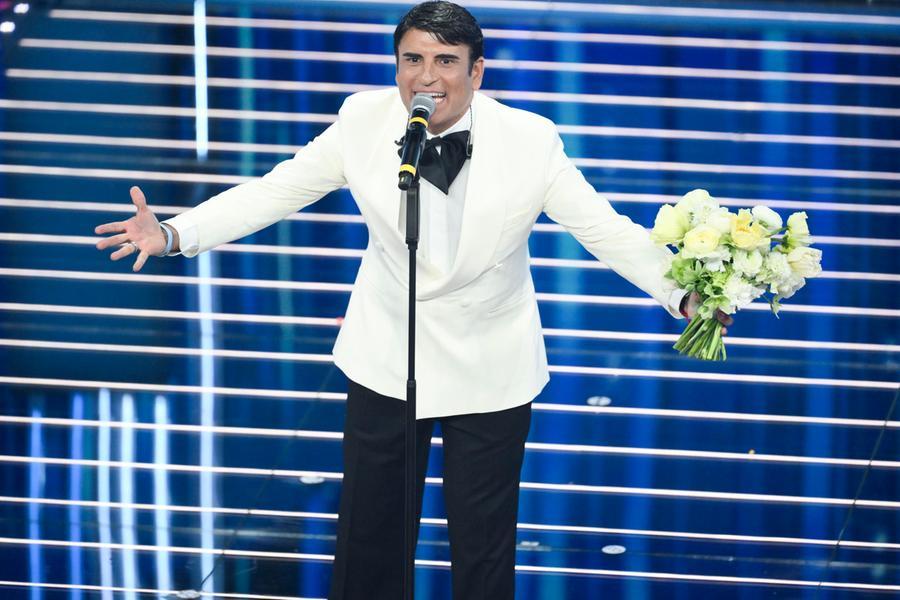





If there is one thing that emerges strongly from Sanremo 2026, it is the cultural signal that comes from the podium. Sal Da Vinci wins with Forever yesand it’s not just any victory. It is the revenge of a love that is not afraid to pronounce the word “eternal” in an era that would like everything to be temporary, light, with low emotional intensity. In a society where bonds are consumed like consumer goods, a song that sings the marriage promise as a conscious and joyful choice becomes a counter-current act of extraordinary power.
I read with equal interest what the ranking “could” have been and wasn’t. Arisa, fourth with Magical fairy talewould have deserved a very different place: perhaps second place, perhaps a tie with Da Vinci himself. Because his is not a simple love song, but the discovery that love lives within oneself like a rainbow, like peace after the flood. “There is no longer black or white, but the biggest rainbow there is, there is the rainbow here inside me”: it is the passage from eros as lack to agape as fullness, from dependence on the other to the discovery that the source of love is also internal. The rainbow is the sign of the alliance, of peace after the flood. The progression of his song is revealing: from compliments (“at thirty everyone told me how beautiful your voice was”) to the need for peace (“at forty I just want to find a little peace”), up to the desire to return “to my mother’s arms”. The little girl who becomes innocent again is the fruit of reconciliation with her own history.
And Raf, he could then have placed third with “Now and Forever”a song written with his son Samuele and dedicated to his wife Gabriella after thirty years of marriage. “And you are always the most beautiful, time looks wonderful on you”: lines that overturn the current narrative, according to which time is the enemy of love and marriage is its tomb. Here time does not destroy, it sculpts. It makes the loved one even more beautiful, because it adds the beauty of the shared story.
An ideal podium – Da Vinci, Arisa, Raf – which tells three variations of the same message: the love that becomes a promise, the love that is discovered within oneself, the love that resists time. Three voices that design a cultural paradigm shift that we felt was urgently needed.
From liquid love to love that remains. For decades – especially in past years – Sanremo has praised liquid, precarious love, which cannot last because duration itself would be the enemy of freedom. Songs that described falling in love as a will-o’-the-wisp, relationships as a temporary experiment, fidelity as overcoming naivety.
Yet, signs of a trend reversal were already in the air. In 2018, Giovanni Caccamo brought “Eterno” to the Festival, a hymn to the stability of feelings that spoke of the beauty of investing in a relationship that lasts over time, contrasting the precariousness of modern bonds. It was a prophetic song, going against the grain of the spirit of the time. And it is no coincidence that Caccamo himself returned to Sanremo 2026 as the author of “Opera” for Patty Pravo: “On earth we are alone, solitary in company“. It is not good for man to be alone, and solitude in company – that of social media, of connected but separated crowds – cannot be enough. We must convert to the universal love that fills joy with life.
I read this victory very positively because it fits into a un broader cultural movement that found expression in the recent document of the Dicastery for the Doctrine of the Faith “A dear one. In praise of monogamy”. Published in November 2025, the document is not an abstract treatise, but a praise of the beauty of love that gives itself fully to another person. Because there can only be two of those who give themselves in an all-encompassing way, otherwise it would be a partial gift that does not respect the dignity of the partner.
“Forever yes” sings precisely this: “I know well that the future is a great unknown. Because a love is not love for life. If it has not faced the steepest climb”. The “forever” is not a chronological measure, but a quality of love that arises from the promise made “before God”. In an age of liquid relationships, singing about marriage and fidelity becomes an act of prophetic rebellion.
And there is a passage of the document that seems written to comment on “Magical fairy tale”: “True love is not possession of the other, but the discovery that the other lives in us as a gift”. When Arisa sings “the rainbow here inside me”, she describes this internalization of love, this ability to carry the good relationship within herself. Raf, for his part, embodies the praise of duration: time does not consume love, it matures it, deepens it. From this perspective, we then understand the paradox: fragility becomes a slit of light. It is not a flaw to hide, but the place where the most authentic strength can be born, the one that is not power but resilience, the ability to find meaning in suffering. The “cracks of the soul” are not taboos, but doors to a more mature understanding of ourselves.
The love that remains: promise, loss, transcendence and happiness. Alongside fragility, the dominant theme is tenacious love, which defies time and death. Sal Da Vinci sings the promise with disarming honesty: true love does not ignore difficulties, it faces them. He knows there will be steep climbs, yet he still chooses to put in the effort. Raf adds that time does not destroy, but makes the beloved even more beautiful, because it adds the beauty of the shared history. The fruit of this commitment is happiness. And if “we are made to love” (Nek said some time ago) then the happiness fruit of love is a right, it is not a peak to be reached, but an intrinsic right to our flesh (Maria Antonietta & Colombre in Happiness and That’s It). In a society that always wants us to be dissatisfied, happiness becomes an act of rebellion. Because being happy means escaping the logic of consumption, affirming that what we are is already precious. There is a paradox: happiness does not want pain, yet it is committed to loving even at the cost of its own pain, in order to drag others into its joy.
In the end, Sanremo 2026 leaves us a clear message: love wins. Not romantic and possessive love, but love that becomes universal cosmic energy. It is love in all its forms – solidarity, friendship, caring relationships – the only force capable of overcoming every fragility and opening up the hope of change. Sanremo 2026 did not close its eyes to the pain of the world. Ermal Meta in Stella Stellina rereads a nursery rhyme to tell the story of a Palestinian girl: “I also thought about escaping from a land that doesn’t want us. But I don’t know where to go”. A lullaby broken by war. The phrase “A prayer is not enough to stop thinking about it” is not a devaluation of prayer, but a provocation not to reduce it to a gesture to feel a clear conscience.
Dargen D’Amico in AI AI plays between irony and anxiety: in a world where artificial intelligence can clone faces and voices, “skin gives an exceptional effect”: the human resists, love wins, hope remains.
Sayf in Tu mi piaci tanto chooses a different path: behind the naive title there is a song of hope for Italy, with that “I made a song, it’s a flower on a truck” which is a synthesis of redemption and gentle utopia. “I like you a lot, we are all the same, we just want to love.”

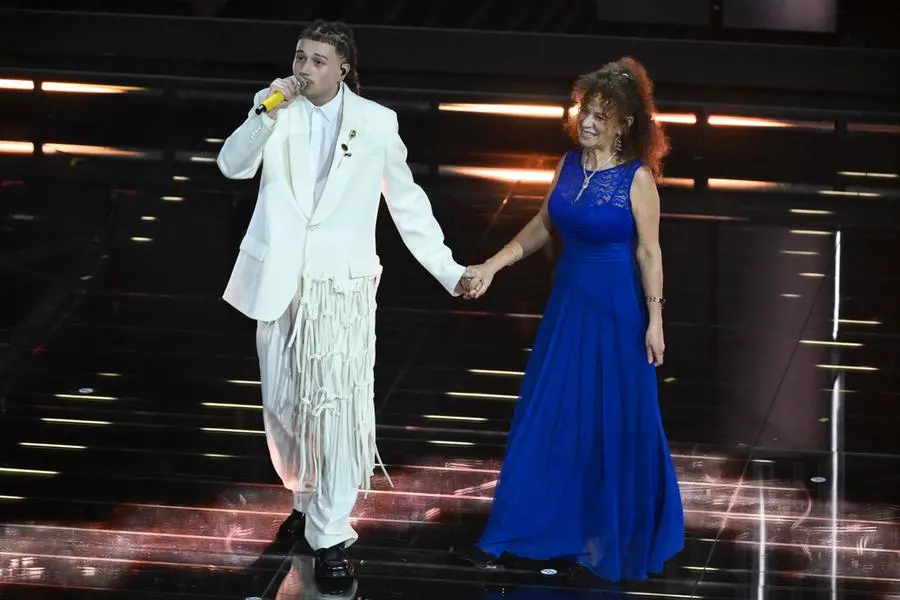
Sayf with his mother Samia on the Ariston stage at the Sanremo Festival
(HANDLE)
This is why it is important that songs such as “Per semper Sì”, “Magica favola”, “Ora e per semper” are sung in Sanremo. Because they form the desire of the new generations for a true, deep, lasting love. Because they show that loyalty is not boredom, but adventure; that the promise is not prison, but freedom; that time does not consume love, it matures it.
Because, as these days of music have taught us, even when the sky weighs more than the floor, there can be a light brewing in the shadows. And those who have the courage to look up – romantics, but also believers – can perhaps glimpse it. Not to escape the earth, but to find the strength to inhabit it with hope.
Sanremo 2026 leaves us this hope as a legacy. That love wins. That fragility is a place of light. That the promise is possible. That happiness is a right. And that music, when it is true, when it comes from the heart and speaks to the heart, can be a vehicle of grace, an anticipation of that full joy that we all seek and that only God can give.