



While the Milano Ice Park facility in Rho is hosting the Olympic speed skating competitions and some matches of the ice hockey tournament, an exhibition is underway that helps to understand why the Dutch are so strong in ice racing.
“History and Glory of Speed Skating – Dutch ice culture in Rho” is the title of the exhibition which can be visited until 22 February in the historic Villa Burba in Rho, a 17th century noble residence a short distance from the Olympic venue.
“With this unique exhibition in Rho, the Italian and international public will have the opportunity to learn about the rich skating culture deeply rooted especially in the Netherlands, but increasingly significant also in Italy. The exhibition makes it clear that skating is much more than an elite sport: it is a story of tradition, innovation and international connections. These stories enrich Olympic current affairs and offer a context to the top-level sport that we will see during the Milano Cortina 2026 Games”, he says Michael Stibbe, Ambassador of the Kingdom of the Netherlands to Italy from September 2025.
The exhibition tells the story of a sport which in the Netherlands is an essential part of the national winter identity and which is becoming increasingly popular in Italy too, above all thanks to the Olympic successes in short track and ice skating.
speed. Athletes like Enrico Fabris, Olympic champion and symbolic figure of Italian skating, have contributed to making this discipline known to the general public. And today all of Rho is celebrating Riccardo Lorello23 years old, bronze medal in the 5,000 meter speed skating race.
The Dutch are the great dominators of the specialty. In the Winter Olympics, up to the Beijing 2022 edition, the Netherlands has won 133 medals in speed skating (48 gold, 44 silver, 41 bronze) and 9 medals in short track (3 gold, 3 silver and 3 bronze).
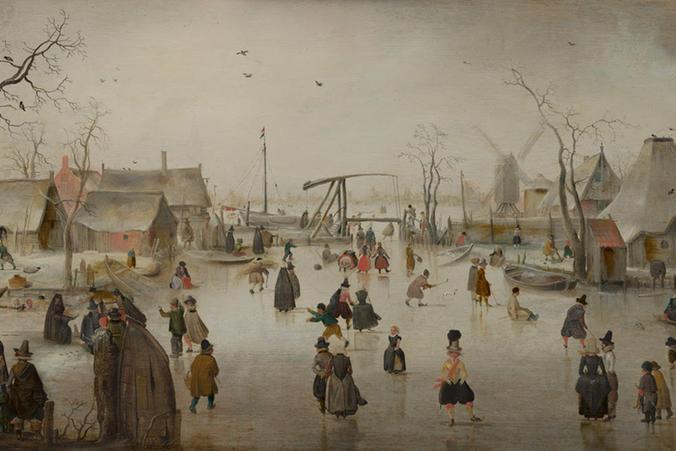
The exhibition presents skating as a social and cultural phenomenon, not just an elite sport. On the other hand, just think of the numerous Renaissance paintings that show daily life in winter in Dutch territory, in which dozens of people can be seen skating on the canals, both for pleasure and for the need to travel. On the ice in the Netherlands, social differences were blurred and men and women participated as equals; already in the 19th century women’s competitions attracted tens of thousands of spectators.
The exhibition also draws on the collection of the Frisian Skating Museum (Eerste Friese Schaatsmuseum) in Hindeloopen, which houses the largest collection of skates in the world.
A section is dedicated to the legendary Elfstedentochtthe 199 kilometer skating marathon along eleven cities in Friesland (a northern province of the Netherlands), which can only take place in case of intense frost and which has only been held twelve times
over the last hundred years. Photographs, historical films and original objects give life to the myth of this unique undertaking whose last edition took place in 1997.
With the disappearance of natural ice due to milder winters, skating has moved towards artificial rinks and indoor covers, giving rise to a new wave of innovations: indoor arenas, “clap” skates, aerodynamic suits and increasingly modern and sustainable rinks. A development that continues today, with an eye towards the future.
The exhibition is created thanks to the collaboration between the Municipality of Rho, the Municipality of Heerenveen, the Province of Friesland, the Thialf ice stadium, the Heerenveen ‘n Gouden Plak Region (regional promotion organisation) and NOC*NSF (Committee
Dutch Olympic).
The exhibition is curated by Marco Lubbers of Catch Your Moment.
The initiative takes place under the aegis of the Embassy and Consulate General of the Kingdom of the Netherlands in Italy.
The photo shows a painting from 1605 by Hendrick Avercamp (museum image ©Mauritshuis)