





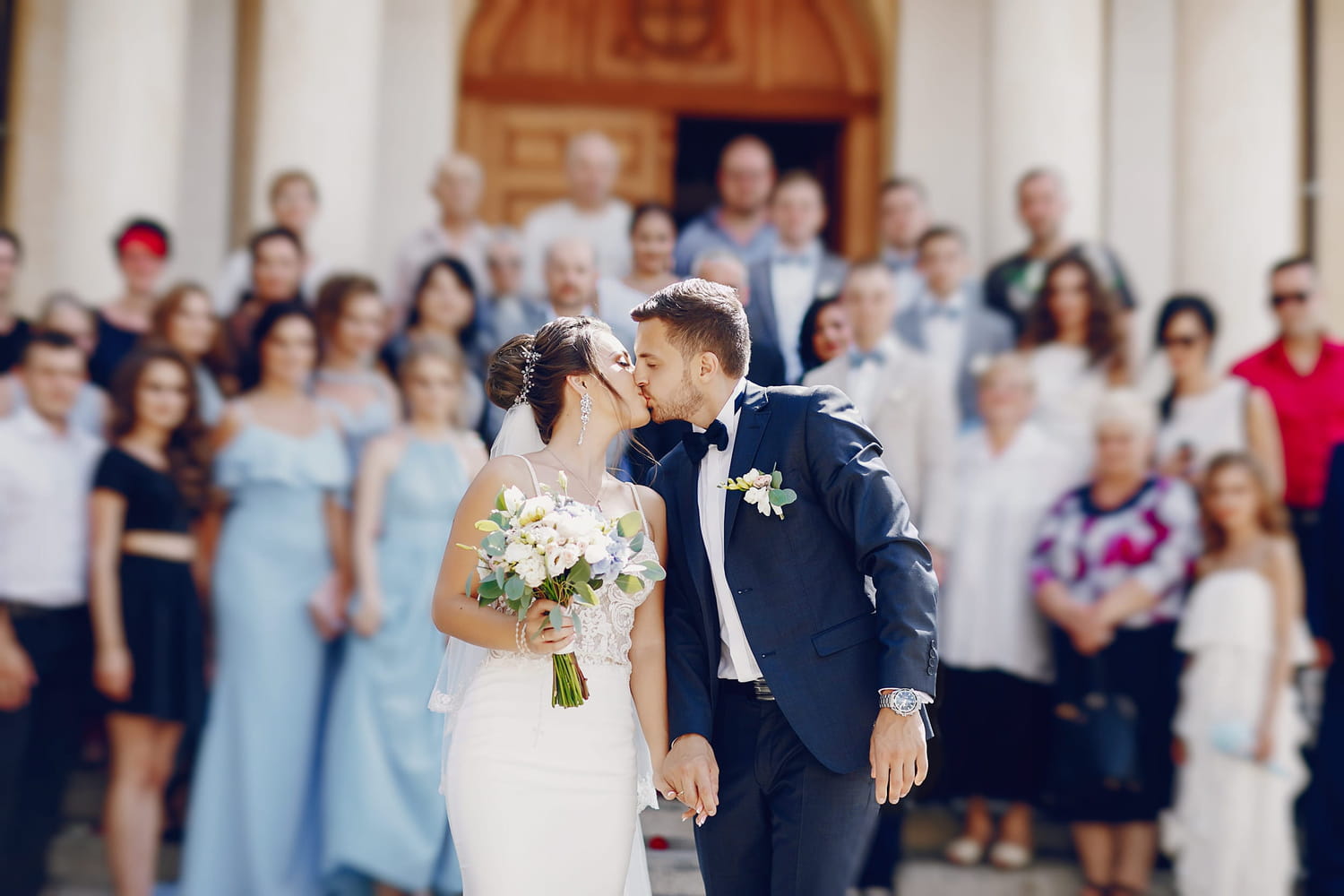
Romantic for some, totally old-fashioned for others… Certain wedding customs no longer find favor in the eyes of the future bride and groom, nor their guests.
Weddings evolve over the generations, creating new faces for the most beautiful day of a life. While certain rituals stand the test of time without aging, others are profoundly renewed to meet the aspirations of our time. Conversely, several well-established traditions now seem doomed to completely disappear, swept away by the arrival of new practices that are much more personal and expressive. According to the “Vows & Venues” study conducted by Hyatt in 2026, rituals long considered essential are definitely losing their splendor in the eyes of the bride and groom and their guests.
Today, couples are completely reinventing the organization of their weddings by breaking traditional codes. Among the new desires that are emerging, “brunch the next day” is unanimous and now appeals to 56% of French people, impatient to extend the festivities over several days. Other trends are emerging but remain even more marginal, such as the presence of a pet during the ceremony (28%) or the appearance of content creators on social networks to support the photographer (35%). On the other hand, if there is one subject on which the French overwhelmingly agree, it is on the list of old customs that they wish to wipe off the map.
It is the famous guard of honour, formerly an obligatory passage at the end of the ceremony, which is now at the top of the outdated traditions: more than half (52%) of French people want to eliminate it. But that’s not all. Most of us also seem tired of long imposed speeches: 51% would happily do without the father of the bride’s speech, and 50% would also skip that of the witnesses. A sign that morals are evolving towards more modernity and equality, 44% would much prefer to hear a speech given by the bride herself, marking a real turning point in this historically masculine tradition.
Gone also for the famous bridal veil, which 47% of respondents no longer imagine at their “ideal wedding”. A figure which testifies to the desire to move away from historical, and very often religious, rites, which have largely lost their original meaning over the centuries. Finally, another strict rule is breaking down: that of not seeing each other before the ceremony. Nearly half of French people (48%) now favor a more intimate “first look” moment, where the bride and groom choose to uncover themselves before the start of the festivities, far from the superstition that has surrounded this moment until now.
But in the midst of this great sorting of traditions, certain fundamental values nevertheless remain untouchable. This is the case with the set table. While the trend seemed to be towards casual buffets or less formal food trucks in recent years, the French are loudly reaffirming their attachment to gastronomy: seated meals remain popular with 8 out of 10 people. Ultimately, marriage is no longer a matter of rigid conventions, but the authentic and tailor-made expression of each couple. If our attachment to gastronomy retains a central place in the hearts of the French, future brides and grooms no longer hesitate to sweep away the rituals of another time to treat themselves to a celebration that truly suits them. A nice way to prove that if commitment remains eternal, the way to celebrate it knows how to live with the times!