



“For everything there is its time, its time for every matter under heaven.” Recite theEcclesiastes. There is, he says, “A time to tear and a time to sew, a time to be silent and a time to speak.”
Even if Nicola Pietrangeli had been playing the role of “rosicone” in the last years of his life with those who asked him for a comment on Sinner, to stir up a controversy on social media; even if he had suffered a little from the passing of time and his lost youth, now that Nicola Pietrangeli is no longer among us, the time has come to drop this game that is not always pleasant either towards the old champion or towards the young man who found himself playing the game of history with him and who otherwise never gave a chance.
Among other things, we must not forget that the game with history in sport is an idle game like the impossible interview: partly because comparisons cannot really be made, except at the short distance of time that allows equal terms, and partly because we know that the game with history is always generational: everyone lets the heroes of their own time win it, those they have seen play.
Sinner didn’t post condolences on social media? Did Sinner send them privately? Sinner didn’t send them at all? Does it really matter right now?
It just seems like a way to continue dragging both of them into a rivalry that feels very forced from the outside, just because controversy for controversy’s sake is raging online.
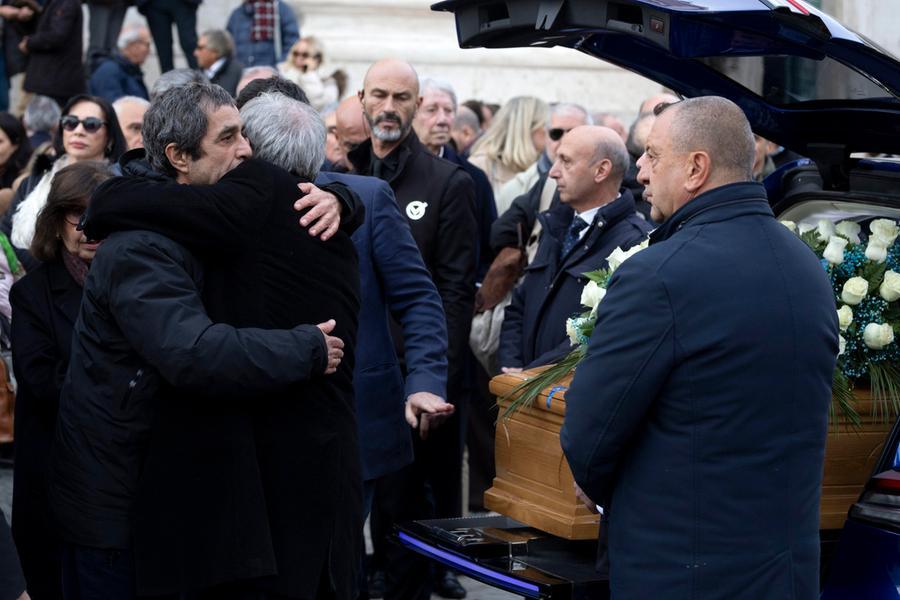
More than the message received or not received, the indelicacy of the out-of-place and out-of-time question of those who asked Pietrangeli’s children about Sinner on the day of their father’s funeral speaks volumes: it seems the yardstick of a disproportionate society that has made Instagram the measure of all things.
It’s okay to start controversy, or even whip it up, when it comes to frivolity. But as Guareschi had the old teacher Cristina from Don Camillo and Peppone’s town say: “Death is a serious thing.”