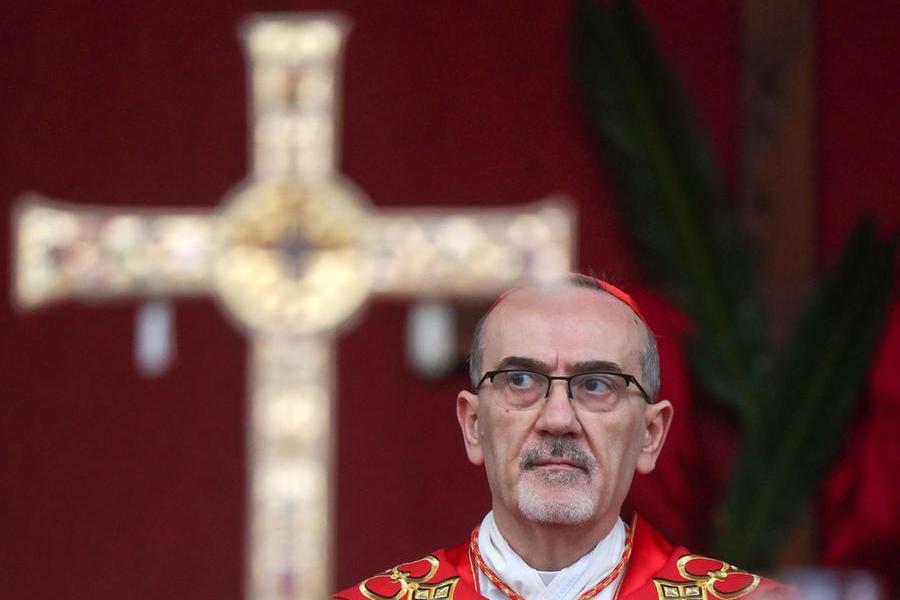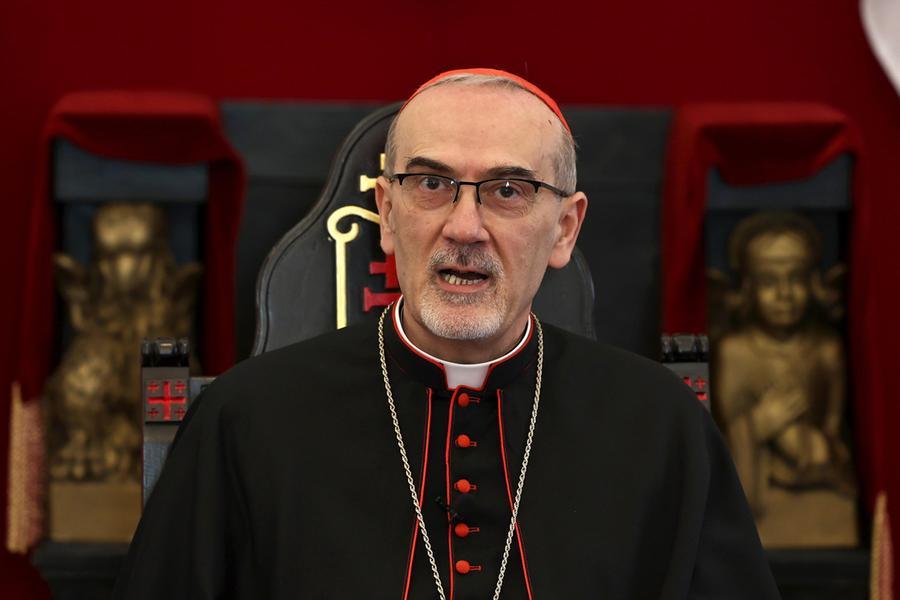

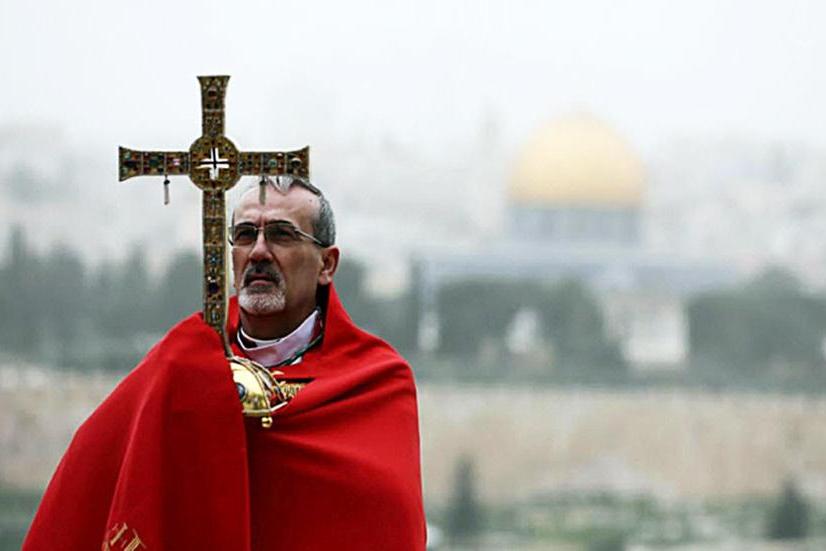




“You will not be forgotten.” It’s a simple sentence, but said under the bombs it becomes a promise that weighs like an oath. When last July 20th Pierbattista Pizzaballa he celebrated Mass in the Church of the Holy Family in Gaza, the only Catholic parish in the Strip, hit a few days earlier by an Israeli raid, his voice was covered by the explosions. He didn’t stop, he didn’t raise his tone, he didn’t seek shelter. It remained there.
It is perhaps this image – more than many analyzes – that tells us who the Latin Patriarch of Jerusalem is today: a man of austere faith, Franciscan, but also one of the most exposed and listened to figures in the contemporary Middle East torn apart by wars and ancient hatreds.
Born in the province of Bergamo, born in 1965, he retains the apparently shy character of his origins. He moved to Jerusalem in October 1990 and in 1999 he entered service in the Custody of the Holy Land holding various positions. A fine biblical scholar, he studied the Hebrew language to work in the Holy Land also in contact with the Christian faithful of that language.
After twelve years, from 2004 to 2016, as Custodian of the Holy Land, in 2020 Pope Francis appointed him Patriarch of Jerusalem and three years later created him cardinal. Pizzaballa has built a rare profile over the years: that of a credible mediator in a context where credibility is a very rare commodity. He has lived in the Holy Land for decades, knows the languages (he speaks modern Hebrew and English), the wounds and fears of both sides. He talks to Israelis and Palestinians, never ceasing to remember that, first of all, there are people under the bombs.
After 7 October 2023 – the watershed that with the Hamas attack reignited the Israeli-Palestinian conflict with unprecedented violence – the cardinal spoke openly of a “divided heart”. On the one hand the condemnation of the Hamas attacks, on the other the denunciation of the “disproportion” of the Israeli response. A position that cost him criticism from all fronts, but which strengthened his moral stature.
As the British newspaper noted The GuardianPizzaballa «represents one of the few voices capable of maintaining a balance between empathy and denunciation in an increasingly polarized conflict».

The choice of presence
Unlike other leaders, Pizzaballa does not limit himself to declarations. Enter Gaza. Bring help. He exposes himself. Several times he personally led humanitarian convoys to the Strip, becoming the guarantor of their distribution, when Israel directly and indirectly hindered the work of humanitarian organizations present in the Strip. According to the international media, this direct presence on the field has made him a point of reference not only for local Christians, but also for humanitarian and diplomatic workers. A risky choice, but consistent with his style: stay close to the least, without delegating.
In a territory where the Christian community is increasingly fragile and reduced to a trickle – hit by war, the economic crisis and the collapse of pilgrimages – the Patriarch has become a point of spiritual and concrete resistance.
An increasingly clear voice
In recent months his language has become even more explicit. He denounced settler violence in the West Bank and criticized Israeli political choices. But above all he was struck by the radical nature of some statements on the relationship between faith and war: «The manipulation of the name of God to justify this or any other war is the most serious sin we can commit in this time. God is among those who are dying, who are ill, who suffer”, he said on March 18th in a video link with the Oasis Foundation. Words which, as underlined by the Arab broadcaster Al Jazeera“they break the religious rhetoric used by both sides and bring the discussion back to human terrain.” Even on the current situation in Gaza his opinion is uncompromising: “80 percent is in rubble and no reconstruction has begun, people live in sewers, in tents.” A crude description, far from media simplifications and Trump’s bombastic declarations on the start of reconstruction.

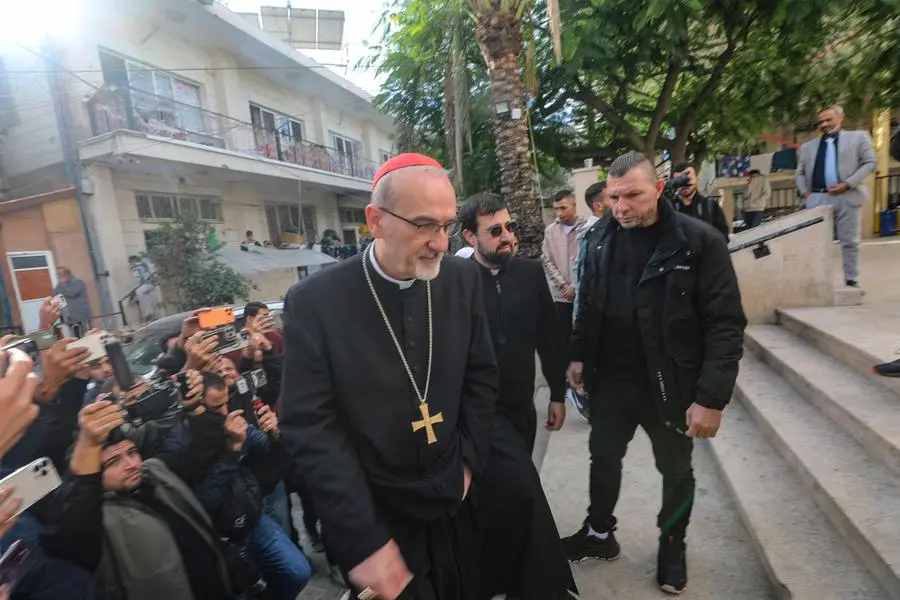
Cardinal Pizzaballa in Gaza last Christmas
(EPA)
The symbolic weight
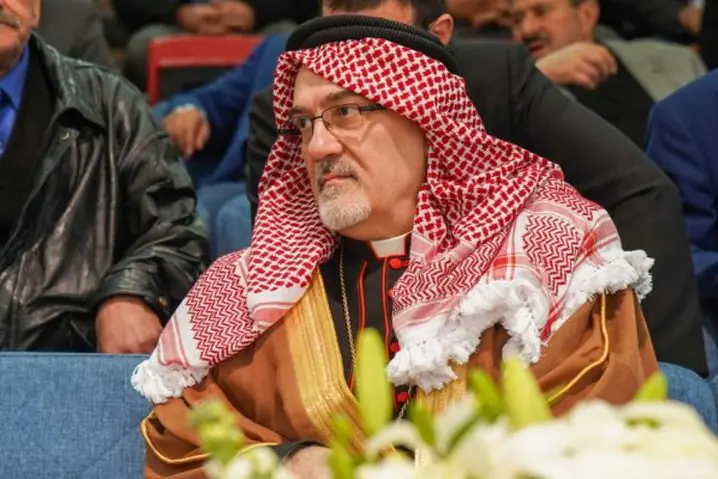
The gesture of wearing the Palestinian keffiyeh, on several occasions such as on Christmas Eve 2023 and in March 2024 during a pastoral visit to the city of Fuheis, Jordan, has caused discussion. For some a political sign, for others a gesture of closeness. In fact, in its style, it seems rather like a symbolic language: to be a neighbor, to take upon oneself the pain of a people without ceasing to speak to the other. It is no coincidence that, during the conclave of May 2025, his name circulated among the possible candidates for the papacy, before the election of Pope Leo XIV. A sign of the international consideration gained over the years. A few days ago, announcing the cancellation of the Palm Sunday procession, he uttered words that summarize the present time: «The harshness of this time of war today takes on the additional weight of not being able to celebrate Easter together and with dignity. This is a wound that adds to the many inflicted by the conflict.”
It is not just a liturgical question. It is the sign of a wounded Holy Land, where even the most ancient gestures of faith become impossible such as, for example, the carrying out of the Via Crucis in the Old City. Until what happened last Sunday when the Israeli authorities prevented him and the Land Custodian, Fra Francesco Ielpo, to enter the Basilica of the Holy Sepulcher for the celebration of Palm Sunday which opens the rites of Holy Week. The news quickly went around the world and became an international case but Pizzaballa, faithful to his role as conciliator and diplomat, avoided adding fuel to the fire: «There were some misunderstandings, we didn’t understand each other. There were no clashes, I don’t want to force my hand”, he said, adding however that “respect for the right to prayer” is needed. Israeli Prime Minister Netanyahu then announced that he had instructed the authorities that Pizzaballa be granted immediate and complete access to the area.
A pastor under pressure
Pizzaballa walks on a narrow ridge. He is criticized by Israelis when he denounces military operations. He is criticized by Palestinians when he condemns Hamas. It is observed by international diplomacy. Yet he continues to speak, to expose himself, to be there. Perhaps this is precisely his figure: do not look for a comfortable position, but remain within the complexity. With a simple and radical conviction, which returns in that phrase pronounced under the bombs: “You will not be forgotten”.