



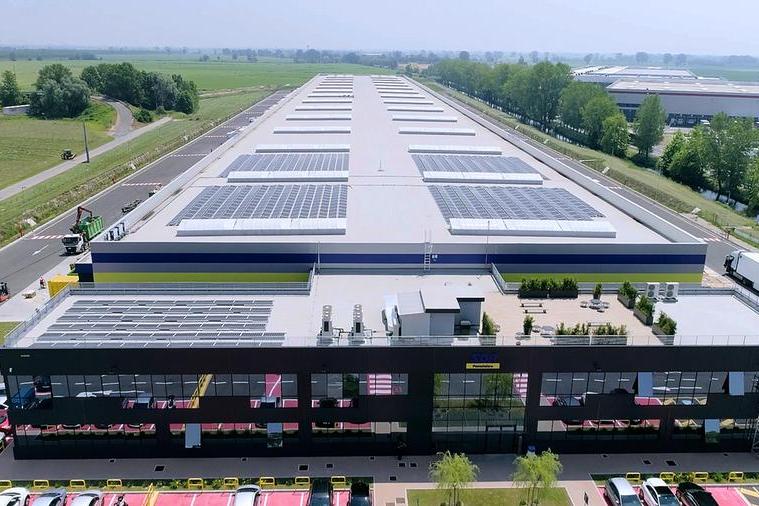
Energy efficiency, emissions reduction and technological innovation. Poste Italiane strengthens its commitment to sustainability with the “Smart Building” project, a program launched a few years ago which aims to make the Group’s buildings greener and more intelligentamong the largest real estate assets in the country with almost 15 thousand offices.
The heart of the project is the widespread introduction of advanced technologies: sensors, digital platforms and integrated energy management systems allow consumption and environmental conditions to be monitored in real time. In this way, lighting, heating and air conditioning are automatically adjusted based on the actual use of the spaces, reducing waste and optimizing performance.
Alongside the technological component, the plan also includes structural interventions on the properties: from the replacement of obsolete systems to the energy requalification of buildings, up to the progressive elimination of the most polluting systems. In particular, we are proceeding with the decommissioning of diesel systems and their replacement with more efficient solutions, such as electric heat pumps, compatible with the integration of renewable energy.
The results are already significant. As of December 31, 2025, there are over 4,300 sites involved in the projectwith the aim of exceeding 7,000 by 2026, also thanks to the integration with the Polis project. All these buildings are progressively equipped with centralized energy management systems, which allow for more efficient control and optimized maintenance.
An important chapter also concerns lighting: since 2017, hundreds of thousands of traditional lighting fixtures have been replaced with LED technology. At the end of 2025 there will be approximately 470,000 light points installed, with a reduction in energy consumption of up to 50% and a longer lifespan. The most recent solutions also allow the light intensity to be modulated based on natural light, further improving efficiency.
On the decarbonisation front, Poste Italiane has already replaced around 250 traditional boilers with heat pumps, avoiding the emission of around 9,700 tonnes of CO₂. Two significant interventions are underway at the Como and Mestre sites and will be completed in 2026contributing to an estimated further saving of over 1,000 tonnes of CO₂.
A path that looks to the future and is part of the broader European commitment towards the energy transition: fewer emissions, lower consumption and increasingly intelligent buildings.