


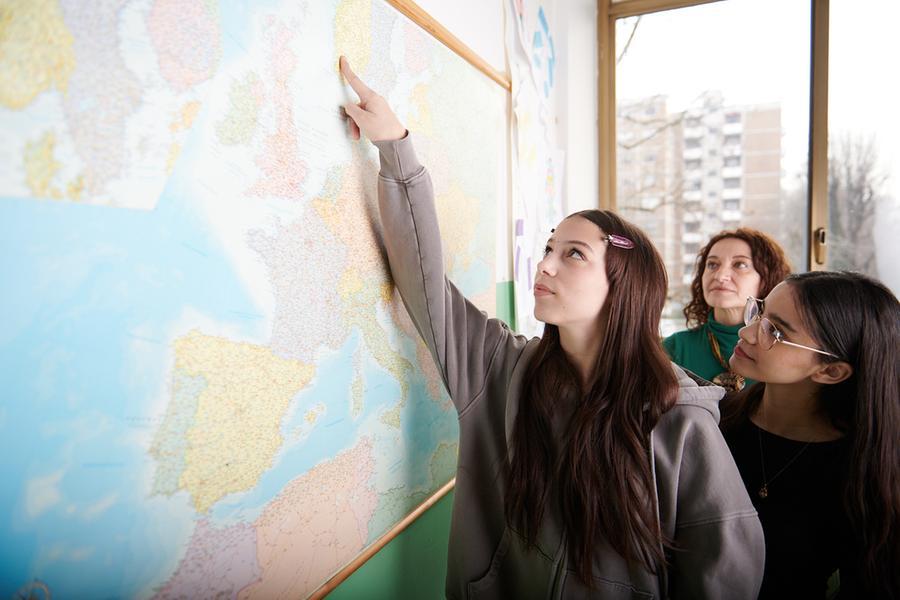
For over twenty years the Sycamore Foundation fights to help children affected by the phenomenon of implicit school dropout, a problem that affects girls and boys in middle school. A concrete phenomenon, which affects 12.3% of students in the last year of lower secondary school. Children whose scholastic gaps increase day by day, very often leading to failure.
To meet these very young students, the Foundation created the Popular School and Second Chance which, thanks to the collaboration of Municipality of Milan and the Territorial School Officeaccompanies pupils aged between 13 and 16 to obtain their lower secondary diploma. But the results of the work carried out on and with these children in difficulty are not only seen on the scholastic side. Many of those who have passed through the Second Chance School over the years had not only lost the desire to study; they no longer believed in themselves and thought they were not capable of achieving satisfactory academic results.
The proposed school model is inspired by Don Lorenzo Milani’s Barbiana School: classes with a small number of students and the constant presence of educators to support the teachers during the days. In this approach, teaching arises from the constant dialogue between teachers and educators, who intertwine the different subjects starting from shared key concepts. Much space is given to activities outside the classroom, considered a real training ground for learning to be together and face daily challenges, with particular attention to the path that awaits children after school.

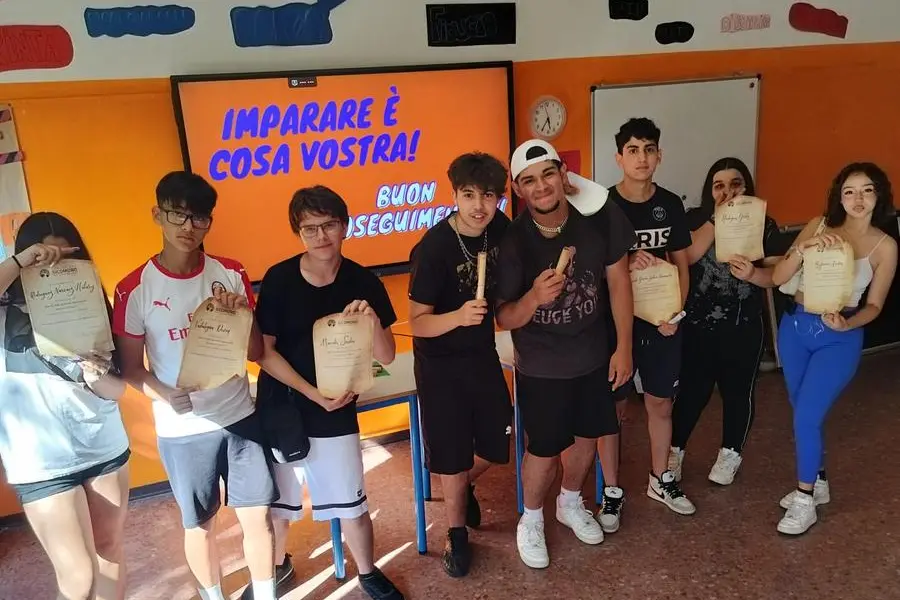
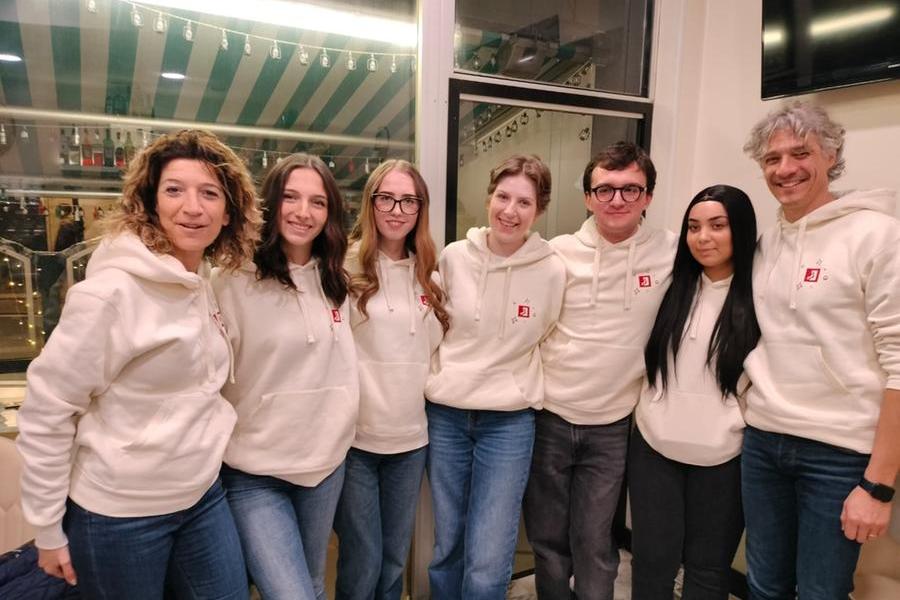
With the collaboration of the Social Inclusion Lab – DONDENA Center of Bocconi University a report was created that could help summarize the work carried out in recent years, thanks to the collaboration of the School’s former students.
A significant fact that emerged from the study is linked to the change in students’ perception towards studying and their future opportunities. If indeed 86% of those interviewed stated that they did not appreciate studying at all before the experience, the percentage drops significantly (to 47%) during the course in the School of Second Chances. At the same time, children begin to appreciate studying again and their confidence in the future increases (going from 29% to 79%), also with regard to obtaining a high school diploma.
«The report gives us a precious snapshot of the perception that our students have of the Second Chance School, even years after participation – comments the General Secretary of the Sicomoro Foundation, Simona D’Alò –. The reduction of grade repetitions, the continuation of studies, the strengthening of trust and the building of solid educational relationships represent concrete signs of success, which validate the proposed school and educational model”.
The study shows how children who pass through the school achieve positive academic outcomes after the course. 81% did not fail during their school career, 16% had to repeat a year, 3% more than one.
The heart of the success of this model, however, lies not only in statistics, but in the ability to transform the school environment into a space of welcome and not of exclusion. As underlined by researchers from Bocconi’s Social Inclusion Lab, the challenge against educational inequalities remains a priority for the Milan area, but the results obtained so far outline a clear path.
The transition from “I don’t like studying” to “I want to graduate” is not only an academic success, but a social victory: it demonstrates that, if supported by constant guidance and teaching methods close to reality, even children considered “difficult” can take back the reins of their own tomorrow. The Second Chance School thus confirms itself not only as a defense against abandonment, but a true citizenship laboratory where, quoting Don Milani, “learning is my thing”.