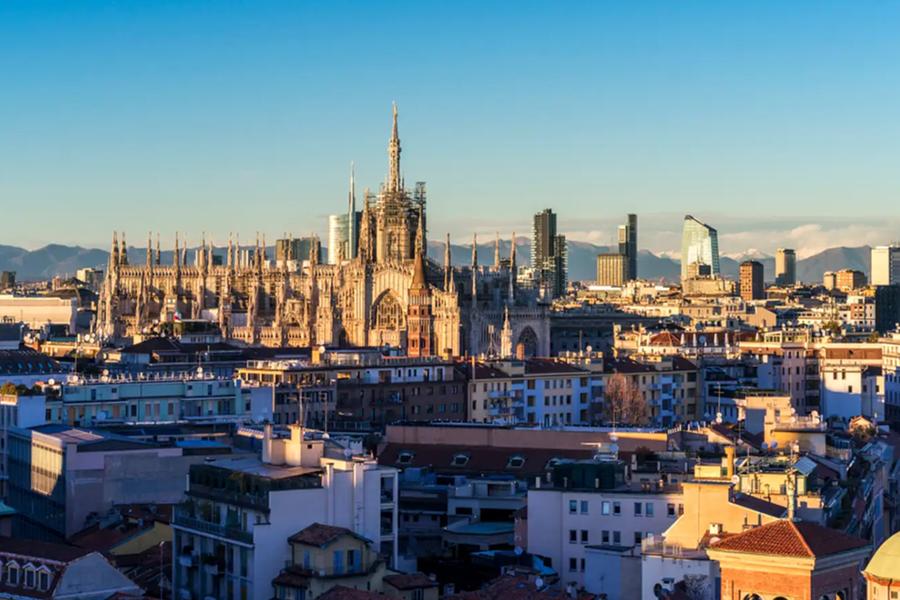




Milan returns to question the profound meaning of human experience. From today to March 22, the city hosts the Soul Festival of Spirituality, promoted by the Catholic University of the Sacred Heart and the Archdiocese of Milan, with the patronage of the Municipality and the collaboration of the CFMT (Tertiary Manager Training Centre). An event that, beyond the formulas, tries to put an ancient and often removed word back at the center: mystery.
Five days, seventy appointments, around one hundred protagonists including intellectuals, artists and scholars. The chosen theme – “Mystery, the song of the world” – is not a slogan, but a provocation. In an era that claims to explain everything, the festival invites us to pause before what escapes us, which cannot be reduced to an algorithm. Literature, science, psychoanalysis, philosophy, theology and the arts dialogue in a widespread program made up of lectures, readings, shows and workshops.
It is not an academic exercise. Or at least not only. There is a concrete question that runs through the entire program: what place does the interior dimension have today, even within work and organizations?
The contribution of the CFMT fits into this terrain, renewing its partnership with the festival by proposing a clear approach: spirituality and production are not separate worlds. On the contrary, it is precisely in their intertwining that the quality of work, relationships and leadership is played out. A thesis that goes against the grain in times when everything seems to be measured in performance and immediate results.
There are two meetings in particular promoted by the Centre.
The first, today at 6pm at the Castello Sforzesco (Sala Weil Weiss), has a title that is already a program: “Unveiling the mystery of experience”. Leading the reflection is Paolo Jedlowski, one of the most authoritative Italian sociologists, a scholar of social memory. The starting point is simple and, at the same time, radical: telling oneself is not a habit, but an instrument of knowledge. For those who lead people, it also becomes a leadership lever. There is no direction without awareness. The meeting is accompanied by a visit to the exhibition Open book n. ORa journey through the history of books that becomes an opportunity to return to the original gesture of reading and thinking.
The second appointment is Friday 20 March at 6pm at the Diocesan Museum. “In silence: listening to oneself and daily relationships” features Pablo d’Ors, a Spanish priest and writer, one of the clearest voices of contemporary spirituality. The theme is silence, an almost unpronounceable word in a world saturated with noise. Not as an escape, but as a practice. Not as isolation, but as a condition for truer relationships, even at work. Before the meeting, an exclusive visit to the exhibition dedicated to the Crucifixion by Hans Memling, a masterpiece of the Flemish fifteenth century, put into dialogue with contemporary artists. A comparison between eras that says, without proclamations, how much the mystery continues to question every generation.
The overall meaning of the festival lies here: not to offer prefabricated answers, but to reopen questions. In a time that changes quickly, perhaps too quickly, the ability to live with uncertainty becomes a decisive skill. Even for those who work, direct and decide.
The Soul Festival tries to say it clearly: without human depth there is no innovation that matters. And the mystery, far from being a residue of the past, can become a key to understanding the present and orienting the future.
The complete program is available on the official website of the festival. All events are free to enter, with online registration.