

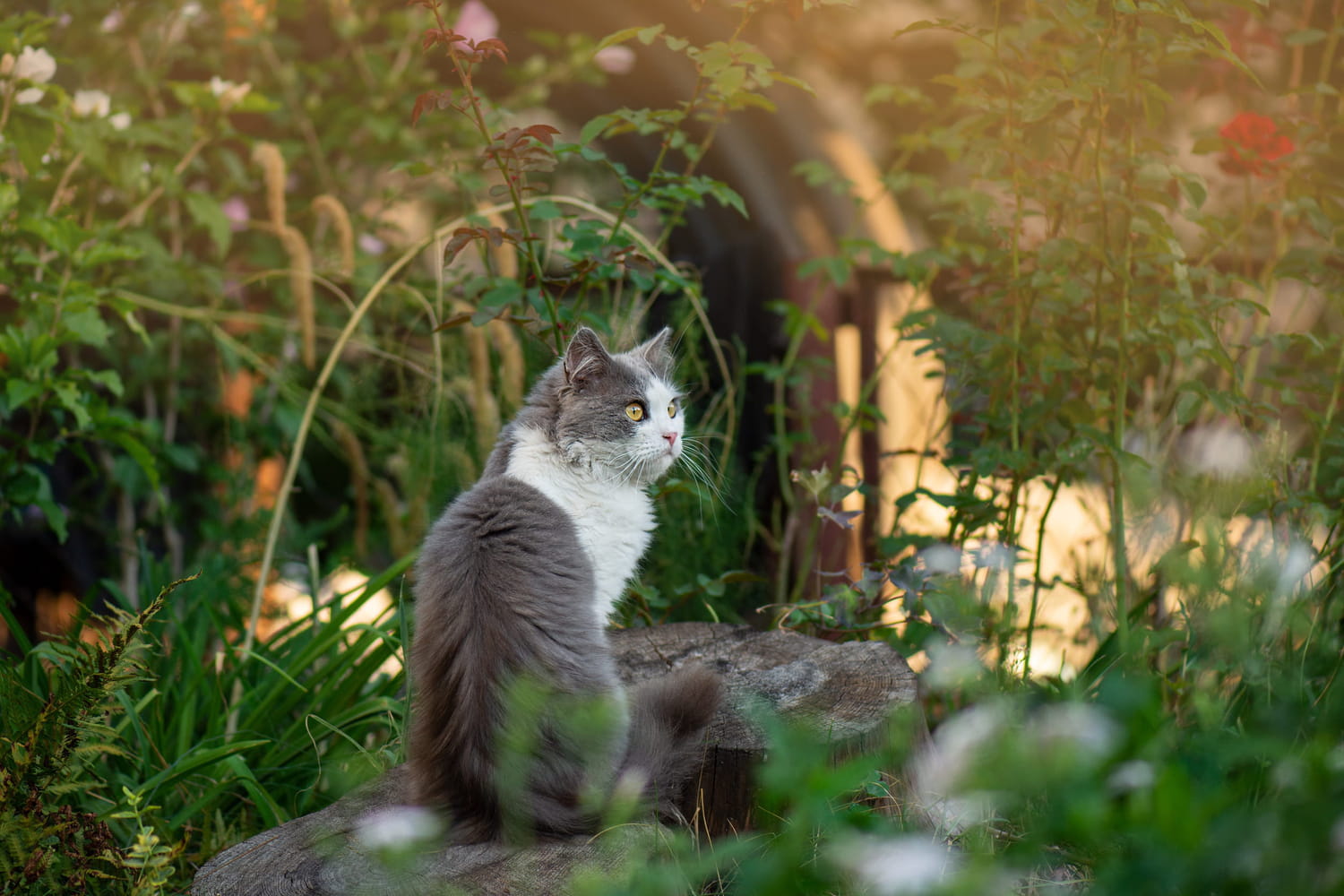




Letting your cat go outside is not without risk, for him or for others. But especially during the few spring months, it is better to keep it indoors.
Contrary to what one might think, cats are not home animals. We often imagine that they are more suited to apartment life and sofa evenings than their dog friends, yet they are just as attracted to the outdoors. Felines also want to go out, let off steam, explore or wander around their territory, whether it’s a simple garden or an entire neighborhood. With the return of the sun, it is very tempting to leave doors and windows wide open to offer them that long-awaited breath of fresh air after the long winter months. But if you are used to letting your cat enjoy its independence to go out as it pleases, you should know that spring is much less conducive to these excursions than other times of the year. And nothing to do with risky temperatures, as can be the case in winter or summer.
Between April and July, it is recommended to keep your cat indoors as much as possible. First, for your own safety, because sunny days are often accompanied by an increased risk of accidents, the roads being busier than during the winter period. The lengthening days also encourage our companions to extend their exploration perimeter, which exposes them more to territorial conflicts with other animals in the neighborhood or to certain diseases. But another reason, much more unknown, is also put forward by associations: although domesticated for thousands of years, the cat remains above all a predator. Even when he is well fed, his hunting instinct pushes him to attack small wild animals found in every garden.
The Bird Protection League (LPO) affirms that the domestic cat “is one of the leading causes of mortality for small wildlife”and that it kills around 324 million prey each year in France. In spring, the risk is even greater for nesting birds, whose breeding and nesting period generally extends from the beginning of April to the beginning of July. Experts therefore recommend limiting cat escapades as much as possible during this period, particularly at night when they are most active. in order to save chicks freshly out of the egg and therefore preserve biodiversity threatened. However, the LPO provides some advice for “reduce your cat’s impact on wildlife”without sequestering it 24 hours a day.
First, it’s about playing with him before letting him go outside: by stimulating his hunting instinct with toys, he will be less energetic and will have less desire to attack real prey. Then, diet still plays an important role. Although this will never completely extinguish his predatory side, “a food rich in animal protein limits the need for your cat to compensate by hunting”especially if it is self-service and you can therefore access it whenever you want. Finally, there are also accessories that can alert animals to its presence, both visually and audibly, such as colored collars or bell collars. “The combined application of these methods can reduce cat predation on small wildlife by up to 40%.assures the LPO on its website.