


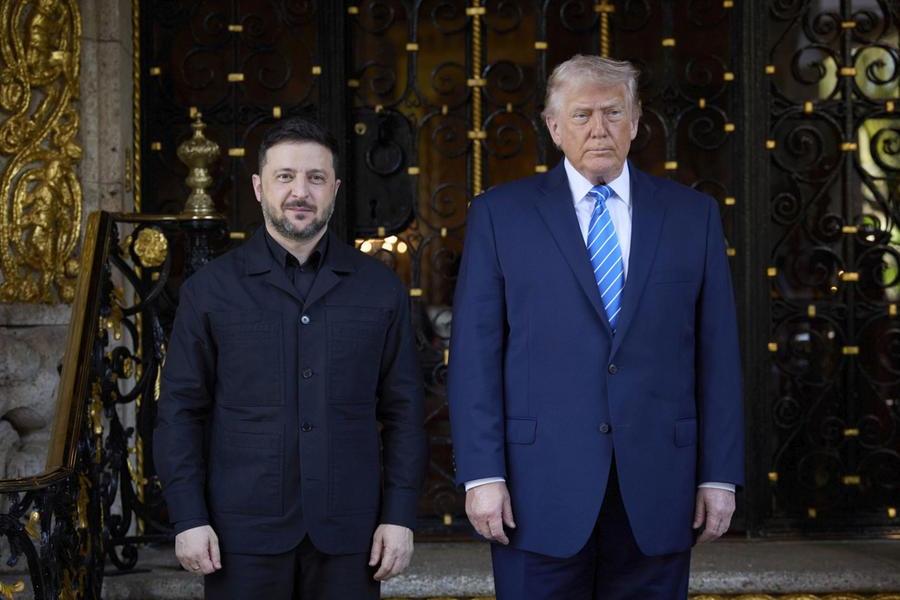


Smiles, expressions of satisfaction, optimistic proclamations and thanks to all the diplomatic representatives who worked on the negotiations. The meeting in Mar-a-Lago, Florida, between Donald Trump and Volodymyr Zelensky was presented as extraordinary by the two presidents. «We have made a lot of progress”, declared Trump at the press conference, which demonstrated an unprecedented closeness (at least compared to recent months) towards the Ukrainian head of state. However, on paper, the summit does not mark any concrete progress. The basis of the negotiations remains the 20-point plan formulated by Washington, Kyiv and European countries, presented by Zelensky last December 23, which modified – and reduced – the previous 28-point plan presented by Washington.
But, as the US president admitted, there remain thorny issues to be resolved. 90 percent of the issues at stake have been resolved, the two leaders said. There remains a 10 percent on which we still need to work. A 10 percent which, however, alone represents the largest part of the entire negotiation and the fulcrum of the conflict between Moscow and Kyiv. At issue are the territories occupied by the Russians (and also those not occupied and still under the control of Ukraine): the Donbas, the eastern region that Russia continues to claim as its own and which Kyiv does not want to cede. And then the question of control and management of the Zaporizhzhia nuclear power plant, the largest nuclear power plant in Europe.
The summit focused heavily on the question of security guarantees to be provided to Kyiv: Trump for his part declared that these will be solid, will involve Europe and will last 15 years, even if Zelensky asked for guarantees to be much longer in time, 30, 40 or 50 years.
Regarding the territories, Zelenky reiterated: «It is a difficult issue. We have different positions with Russia. I wouldn’t say there is agreement on this point but we are getting closer.” The Ukrainian president said that martial law would be lifted only when Kyiv received the necessary security guarantees. And he mentioned the possibility that the peace plan would be put to a citizens’ vote in a referendum.
While Zelensky met Trump in Florida, Russia made its voice heard and reaffirmed its military power by massively bombing the capital Kyiv: a million citizens were left in the dark.
Trump said peace is closer. But there is currently still a deep gap between declarations and facts. Diplomatic talks will continue in the coming weeks. Before the meeting with Zelensky, the US president had a long phone call with Putin. The Kremlin leader for his part rejected the request for a truce for Orthodox Christmas, finding in this decision the support of Trump, who considers a temporary ceasefire useless and harmful. Moscow reacted to the Mar-a-Lago summit by reaffirming its request, which remains immovable: Russia wants to take back all of Donbas and is not willing to give in on this point. Through spokesman Peskov, the Kremlin reiterated its request to Kyvi to withdraw all Ukrainian forces from the non-Russian-occupied Donbas. And he declared: «Russia is considering ending the military conflict in the context of achieving its goals».
Certainly, Moscow’s objective is to isolate and put Europe aside – accused by the Kremlin of wanting to scuttle the agreement to end the war -, to move the peace plan once again in favor of Russian demands – as was the original 28-point plan – continuing to exert heavy military pressure on Ukraine and its population.
In short, the path towards the end of the war proceeds in small steps, between glimmers of hope and setbacks, with fatigue and enormous difficulties, open problems and irreconcilable positions between Moscow and Kyiv.