

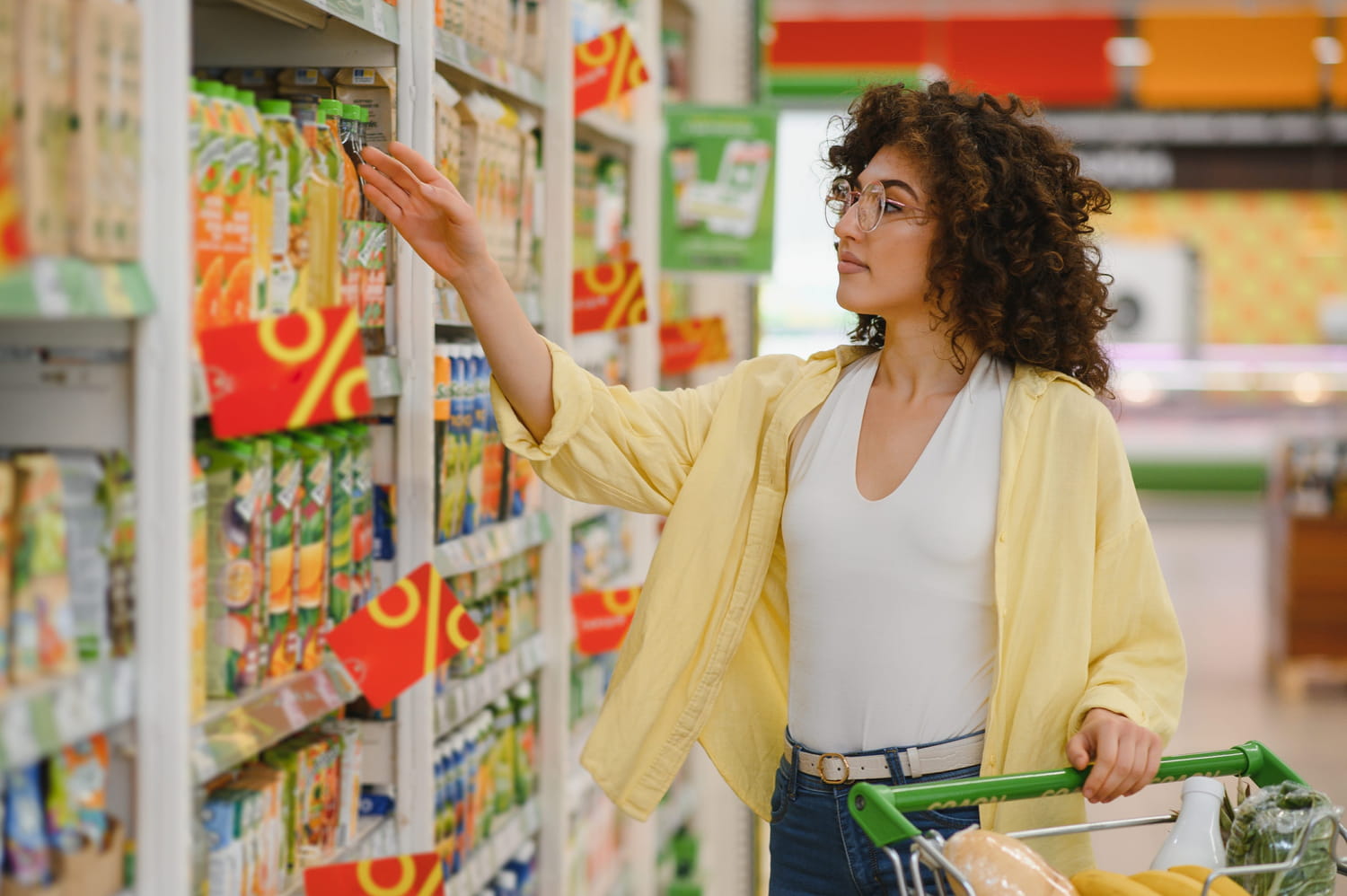
In the supermarket, certain surfaces can concentrate more bacteria than public toilets. This is the case of an item that everyone touches and it is neither the shopping cart nor the loyalty card.
Shopping has become almost mechanical. You grab a cart, browse the shelves, fill your basket, then finish with a few minutes of waiting at the checkout. During this journey, the hands move from one surface to another without us really paying attention. However, several scientific studies show that certain supermarket equipment is among the most contaminated places in everyday life. And contrary to what one might believe, bathrooms are not necessarily the first to be affected. One cashier even says that a particular item deserves more customer attention.
Indeed, researchers have been interested for several years in the circulation of microbes in food stores. An American study published in Food Protection Trends notably revealed the presence of coliform bacteria, some of which are of fecal origin, on 72% of supermarket trolleys analyzed. The rate observed exceeded that noted on several public toilets examined as part of the same work.
Other research carried out in Europe has reached similar findings. Intestinal bacteria have been found on various frequently handled surfaces, including refrigerator handles, baskets and even certain equipment used by customers. A study carried out in several Italian supermarkets also revealed traces of SARS-CoV-2 on certain high-use areas, such as electronic payment keyboards.
But, according to a cashier whose testimony was relayed by several European media, there remains an object that dethrones all others in terms of contamination. A finding that echoes a study relayed by Food Safety News, according to which researchers from the University of Michigan found bacterial contamination on 100% of the checkout mats analyzed. This is the shopping separator placed on the treadmill. This small plastic block that customers use to distinguish their purchases from those of their neighbors is handled hundreds of times a day. It is almost always seized in the same place, remains permanently close to food and generally does not benefit from any systematic disinfection. Unlike toilets or trolleys, whose dirt is regularly mentioned, it often escapes the concerns of customers and stores.
To limit the transfer of microbes, specialists recommend a few simple reflexes: disinfect your hands after shopping, avoid touching your face in the queue and wash fruits and vegetables carefully once you get home. Actions that seem basic, but which remain the most effective in preventing the proliferation of bacteria.