






French researchers have just identified a specific nutrient that improves the action of anti-cancer treatments.
Its reputation as an anti-cancer food is not new but it is, once again, being highlighted. This food is essential for health, and particularly for people with cancer. According to a new French study, it clearly improves the effectiveness of immunotherapy. Unlike chemotherapy which directly targets the tumor, immunotherapy consists of awakening and amplifying the patient’s immune system so that its defenses attack the cancer cells. It is a recent cancer treatment that is increasingly used.
Researchers from Institut Curie and Inserm aimed to understand the impact of specific nutrients on immunosurveillance. “We now know that the response to cancer treatments can be influenced by many environmental factors, such as nutrition”they explain in a press release. The team worked on mice suffering from different cancers (fibrosarcoma, melanoma, breast cancer). They subjected these mice to two distinct diets before administering immunotherapy: one group received a standard diet containing compounds from plants, and the other a diet strictly devoid of a specific molecule, indole-3-carbinol (I3C), but identical in calories and other nutrients.
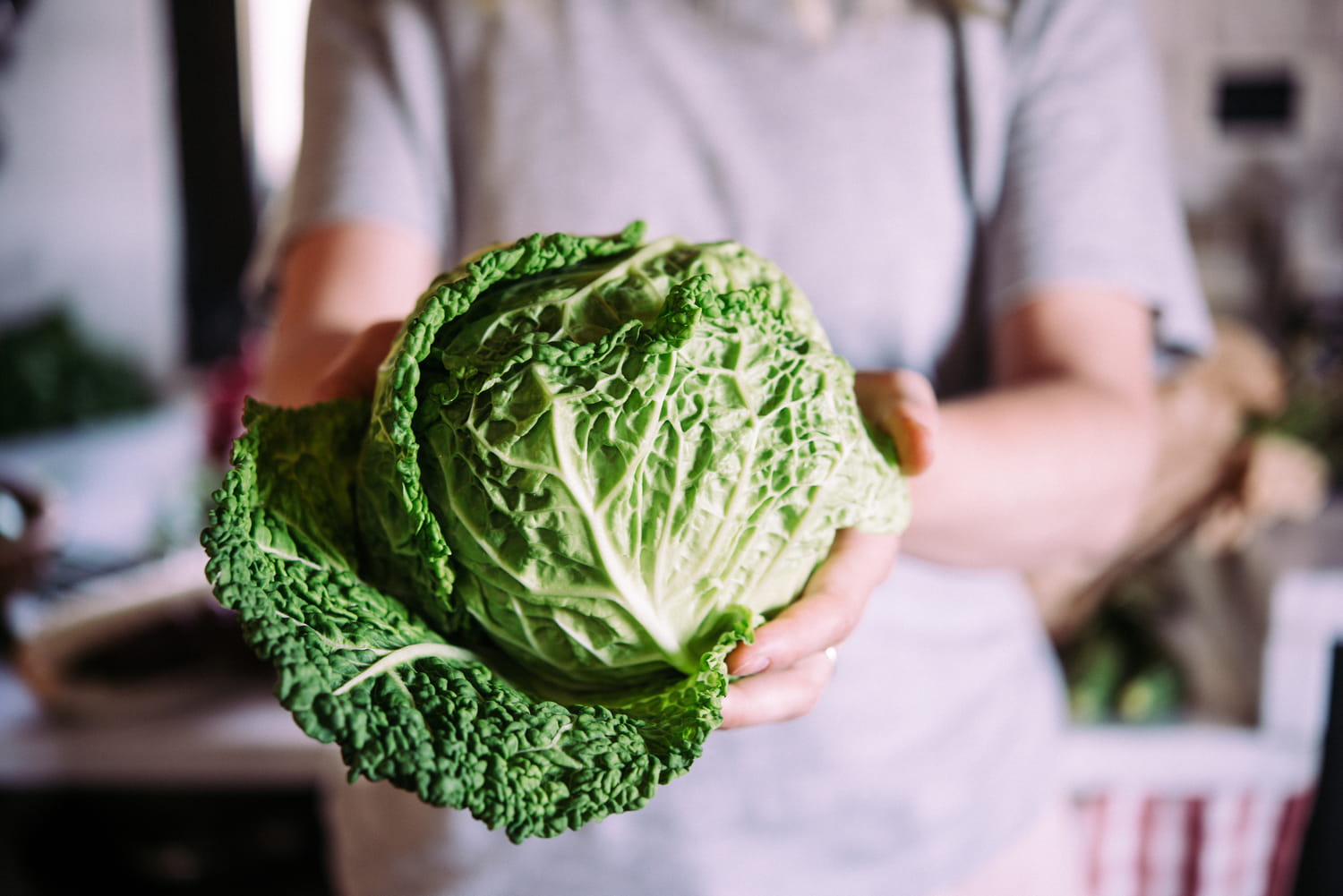
This precious molecule, I3C, is found in abundance in the cruciferous family: cabbage (green, red, curly), broccoli, cauliflower. According to the results, in subjects who consumed indole-3-carbinol, treatment with immunotherapy was effective in 50 to 60% of cases. Conversely, “when we remove this compound present in cabbages, there is a drastic reduction in the effectiveness of anti-PD1 immunotherapy”which drops to just 20%. A major statistical difference which proves the essential role of this nutrient. It is therefore cabbage that would be the food to put on the menu more often when undergoing immunotherapy treatment for cancer.
The mechanism of action was explained by the researchers: during digestion, I3C is transformed and passes into the blood to reach immune cells. It then allows these cells, called cytotoxic T lymphocytes, to better recognize and destroy cancer cells. The idea is therefore to combine the effects of the vegetable with those of the drug. Thus, the immunotherapy drug steps on the accelerator of the immune system, and the vegetable (in this case cabbage) provides the necessary fuel for the engine. Note that I3C is very present in cabbage but also in other vegetables such as watercress, turnip, arugula and radish. Vegetables to put on the menu regularly to maintain a level of physiological activation and support the effectiveness of the treatment.
This very promising discovery made by French scientists must now be tested on humans. No food or nutrient can “cure” cancer or make it disappear. But diet has an important role in helping the body cope better with the disease, limit side effects and maintain its strength. For a cancer patient, the goal is simple: maintain good nutritional status. This requires regular monitoring, sufficient intake (calories + proteins) and a varied diet, giving pride of place to fresh vegetables and fruits every day, oilseeds, etc.