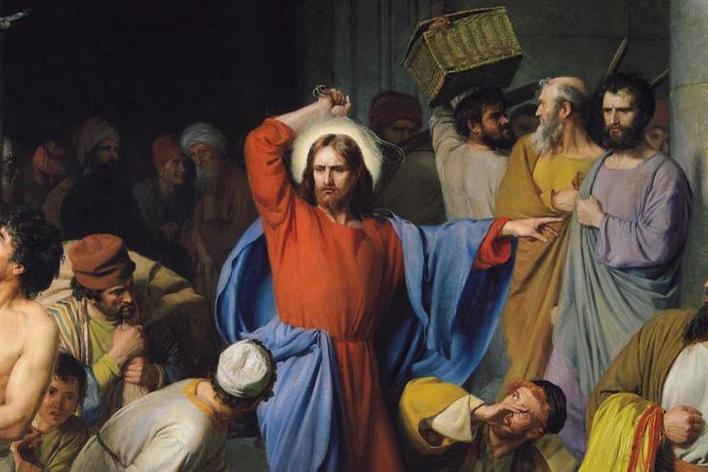


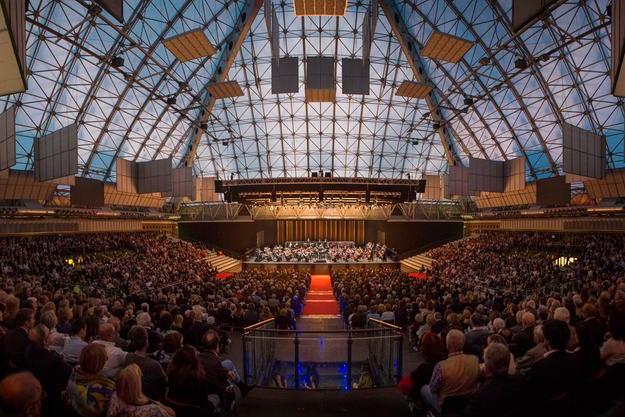



Eight hundred years after his death, Ravenna Festival dedicates the title of the XXXVII edition, scheduled from 21 May to 11 July, to Saint Francis of Assisi, patron saint of Italy. “A sun was born into the world” is verse 50 of Canto These words are the underlying theme of the rich program of the Festival, which will open from Anne-Sophie Mutterluxury soloist in Beethoven’s Violin Concerto with the Royal Philharmonic Orchestra conducted by Vasily Petrenkoengaged in the second part with Mahler’s Fifth Symphony.
Riccardo Mutiat home in Ravenna, will be busy with his Luigi Cherubini Youth Orchestra in two concerts: the one on 7 June dedicated to the Nobilissima Vision orchestra suite by Paul Hindemith, followed by the conversation with Massimo Cacciari entitled “Double portrait: Saint Francis in Dante and Giotto. On 30 June for a program with music by Verdi, De Falla and Ravel (Bolero). All Italian composers (from Monteverdi to Respighi) instead for Muti’s journey with The Philharmonic Brass (members of the Vienna and Berlin Philharmonics, plus friends) on 2 July at Rocca Brancaleone. After the overwhelming success of the first edition held in 2025, Riccardo Muti will re-propose the Cantare amortis est event, the call for choristers of all ages and preparation for two days of lessons and rehearsals, on 1 and 2 June.
Returning to San Francesco, the Micrologus Ensemble offers a musical reconstruction of the Canticle of the Creatures in the Basilica of San Francesco, which also hosts the premiere of Il Santo Folle, commissioned from Guido Barbieri and the composer Marcello Fera on Francis’s meeting with the Sultan, and the conversation with the medievalist historian Franco Cardini accompanied by the laReverdie ensemble. Francesco’s belief that a profession is not only an economic but an internal resource is in tune with OperaPaese per Ravenna by Giorgio Battistelli, a bold musical theater operation that makes local artisans protagonists. Saint Francis is remembered as the creator of the nativity scene in the diptych of events From Greccio to the Neapolitan nativity scene, also in homage to Roberto De Simone (who died in 2025 and was much admired by Muti). Francis’ thoughts are at the center of No sky is without light, an audiovisual performance by Luca Maria Baldini and Salvatore Insana, and of the traditional appointment on the Viae Sancti Romualdi. The famous encounter with the wolf of Gubbio inspires the neighborhood Opera of the La Corelli Orchestra in the neighborhoods of Ravenna and the happy coexistence with creation promoted by the eco-sustainable and widespread festival Romagna in fiore (1-24 May).
There are over one hundred curtain raisers and more than a thousand artists (musicians, actors, dancers) involved in Ravenna Festival 2026. Among them: Kent Nagano, Nicola Piovani and Toni Servillo, the Münchener Kammerorchester with Enrico Onofri, Stefano Bollani, Enrico Rava, Pat Metheny, Jeff Mills, Emma Nolde, Sadeck Berrabah, Yoann Bourgeois.
This year too, the Festival visits the Byzantine basilicas, a UNESCO World Heritage Site. In San Vitale the Estonians Vox Clamantis, Arvo Pärt’s reference ensemble, and the Constantinople ensemble created by the Iranian Kiya Tabassian. In Sant’Apollinare in Classe The Neapolitan Chapel for the first part of the diptych From Greccio to the Neapolitan nativity scene (which is completed at the Alighieri with Cantata dei pastori by and with Peppe Barra), but also Le Poème Harmonique and the Chamber Choir of the Ljubljana Conservatory. The latter, like Vox Clamantis, Vikra Chamber Choir and the Ravenna-based Cappella Musicale di San Francesco, participates in In templo Domini, the traditional series of Sunday liturgies.
The program of the autumn appendix of the Ravenna Festival has also been announced. The Festival returns to the stage from 13 to 17 November with the Autumn Trilogy, entitled Mozart 1791. With the direction of Chiara Muti, Ottavio Dantone leading the Cherubini Orchestra and the Siena Cathedral Choir Guido Chigi Saracini prepared by Lorenzo Donati in the program a new production of La clemenza di Tito, the original creation L’ultimo enchanto (based on The Magic Flute and Mozart’s last compositions) and the Requiem.