




Gourmet and essential on French tables, bread has the disadvantage of being difficult to digest and increasing blood sugar levels after the meal. Unless we eat it like that…
Is a meal without bread impossible for you? This is the case for many people but, for some, this pleasure has a major drawback: being accompanied by bloating a few hours after consumption. Without forgetting that bread raises blood sugar levels and if it rises too much and too quickly, it then promotes fatigue and cravings. There is a trick so that bread does not raise blood sugar. It was revealed in a study showing that by simply changing the storage or preparation of white bread, the post-meal blood sugar response can decrease.
“This is one of my favorite food science tips because it not only improves gut health and blood sugar balance but also saves money.” commented dietitian Abbey Sharp on her networks. In the study conducted at Oxford Brookes University, ten healthy adults were recruited to eat homemade bread and store-bought bread in four forms: fresh, frozen then thawed, toasted, or toasted after thawing. The researchers measured blood sugar levels for two hours after each tasting.
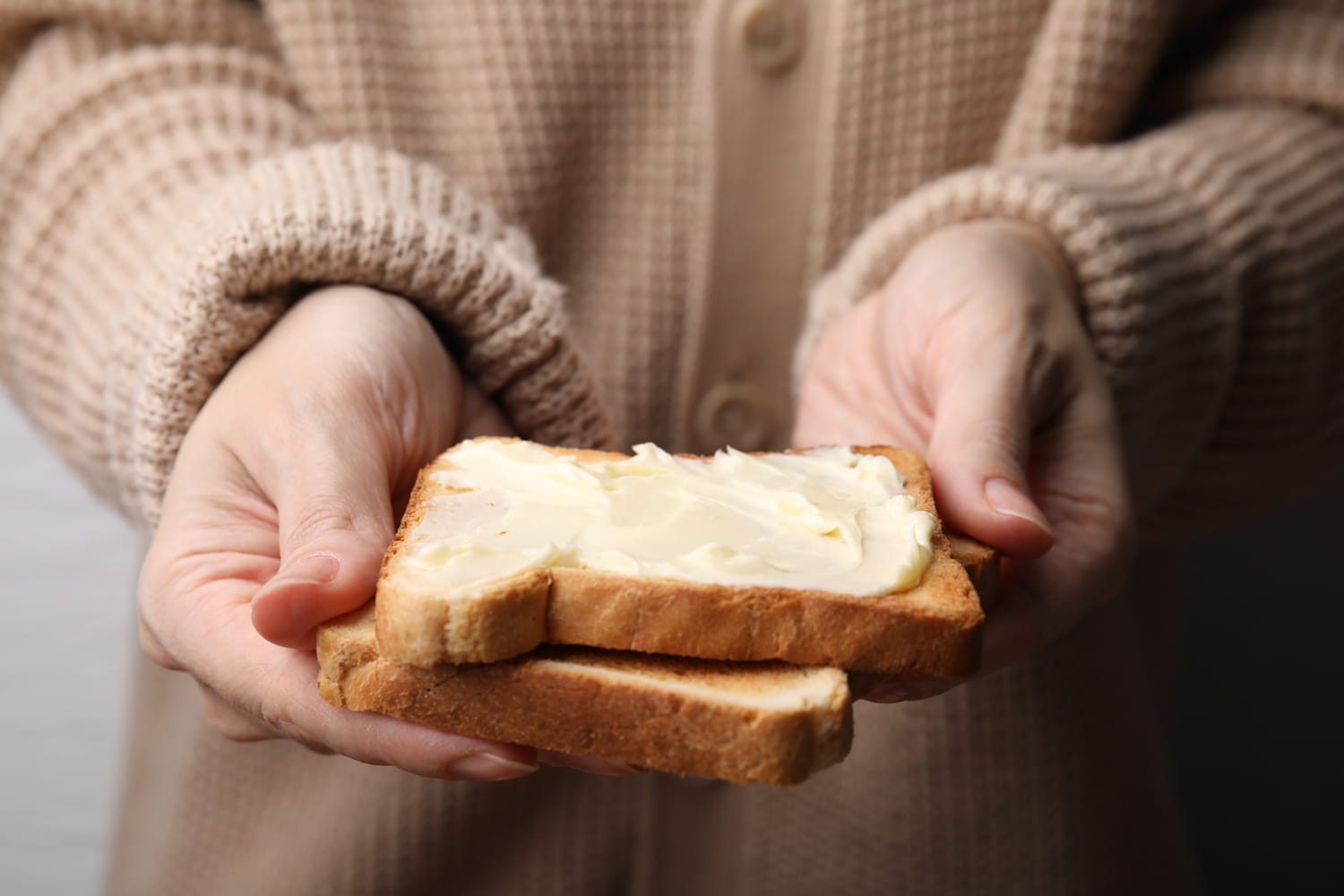
Result: eating fresh white bread is the worst for blood sugar, whether homemade or store-bought. Conversely, in the other forms proposed, it raised sugar levels less after the meal. The most efficient way is to freeze, defrost and toast the bread. According to the authors, this is the first time that a study has shown that a simple trip to the freezer or toaster can reduce the glycemic response of white bread. “If we look at the research, we find that freezing then thawing bread reduces the glycemic response by 30%, while freezing, thawing then toasting reduces it by 40%. So now is the time to buy bread that is nearing its expiration date, freeze it and defrost slices as you need them directly in the toaster.” explained the dietitian.
The principle behind this effect is that of starch retrogradation: when a food rich in starch is cooled (after cooking, or after freezing/thawing), part of its starch is reorganized in a less digestible form, called “resistant starch”. This starch then behaves like fiber: it is absorbed more slowly and causes blood sugar levels to rise less. This is how frozen then thawed bread, and even more so frozen then toasted bread, induces a lower glycemic response than fresh bread.
It’s the same with pasta, rice or potatoes. “Being a type 2 diabetic, I prepare my rice meals in advance and it doesn’t spike my blood sugar like it does when I eat them fresh. I cook my rice then put it in the fridge and reheat it as I go.” shared Erin in response to the dietitian. Please note: rice should not be kept in the refrigerator for more than 3 to 4 days to avoid the development of bacteria. Audrey favors potatoes in salad rather than hot, mashed, gratin or sautéed during her pregnancy to avoid blood sugar spikes since she suffers from gestational diabetes. The important message to remember here: that food alone does not impact blood sugar and digestion. His preparation also counts for a lot.