




Be careful not to confuse it with the total eclipse of August 12, 2026, which is much shorter.
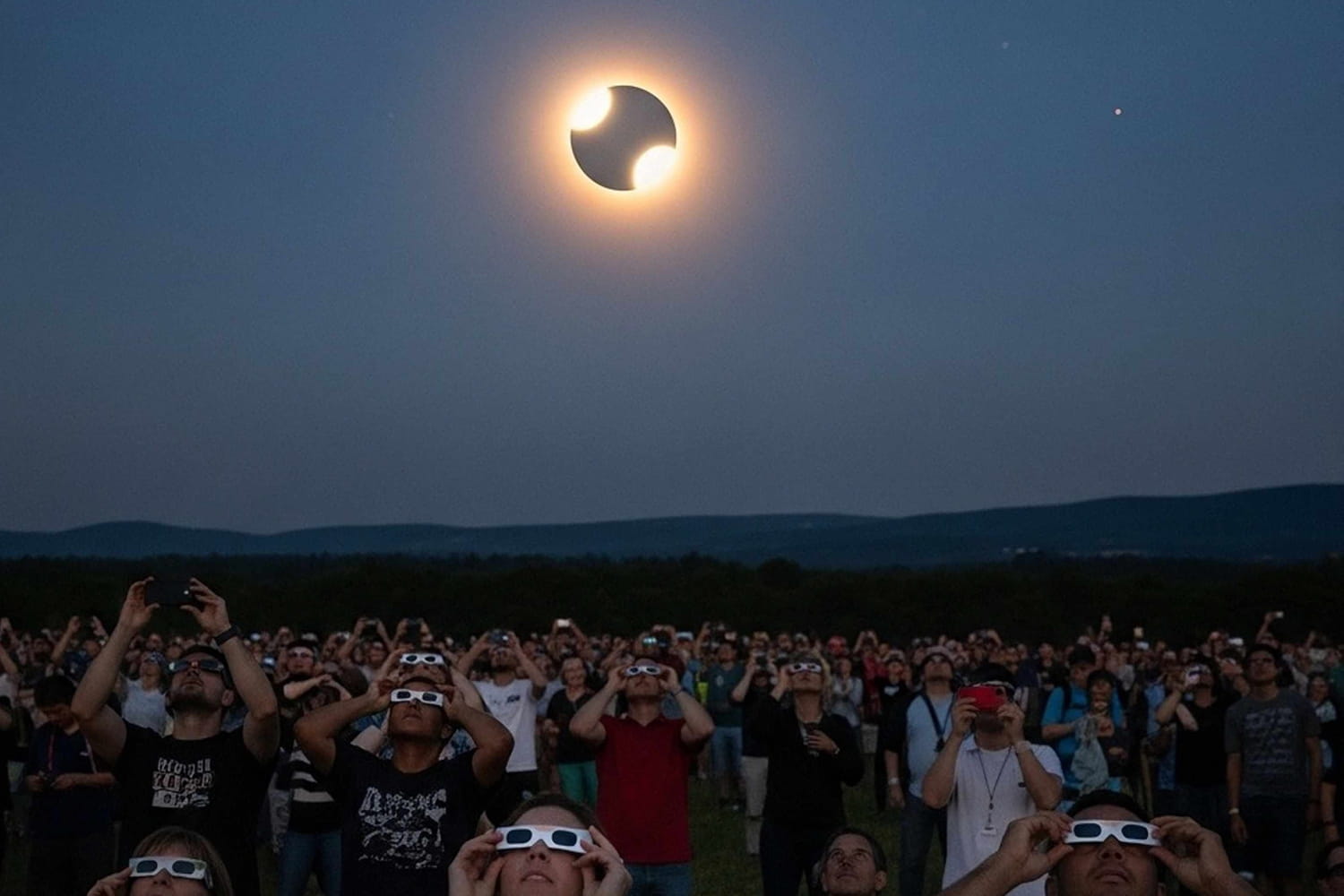
A celestial spectacle of historic magnitude is brewing. In some time, the Moon will align perfectly with the Earth and the Sun: it will cast a giant shadow that will completely hide the Sun in broad daylight. At the peak of the phenomenon, the sky will suddenly darken, temperatures will drop, and the mysterious solar corona will become visible to the naked eye. What makes this meeting absolutely unique is its exceptional duration: the total night phase will last more than 6 minutes, an absolute record for the 21st century.
Looking directly at the Sun, whether partially obscured or not, can cause irreversible burns to the retina. The use of classic sunglasses, x-ray films or “homemade” tinted lenses is completely ineffective. To observe it without risk, you must wear special new eclipse glasses, bearing ISO 12312-2 certification.
Be careful not to confuse it with the total eclipse of August 12, 2026, which is much shorter. The one we are talking about here will take place on Monday August 2, 2027. In France, the phenomenon will be visible in a partial form at the end of the morning. In Paris, the eclipse will begin precisely at 10:00 a.m., will reach its maximum at 11:01 a.m. (the Sun will then be slightly more than 51% hidden according to the French Astronomical Association), before ending at 12:05 p.m. (local time). The further you go towards the south of France, the more marked the darkness will be: in Marseille, the Sun will be reduced to almost 73% at 11:03 a.m., which will offer a veil of cold light and a surreal atmosphere in the middle of the day.
To experience total night and reach the famous 6-minute record, you will have to leave France and place yourself on the “totality band” (see the map). This shadow corridor crosses the Strait of Gibraltar, touching the extreme south of Spain and the north of Morocco (Tangier). The shadow then slides over North Africa (Algeria, Tunisia, Libya) to reach its peak in Egypt. It is near the city of Luxor that the eclipse is the longest and most spectacular in the world, offering precisely 6 minutes and 23 seconds of total darkness above the temples of the Pharaohs.
The very next total solar eclipse visible directly from mainland France will not occur before September 3, 2081, 54 years later. Such a gap reminds us of the extent to which the summer 2027 meeting constitutes the major astronomical event to include in your calendars now.