

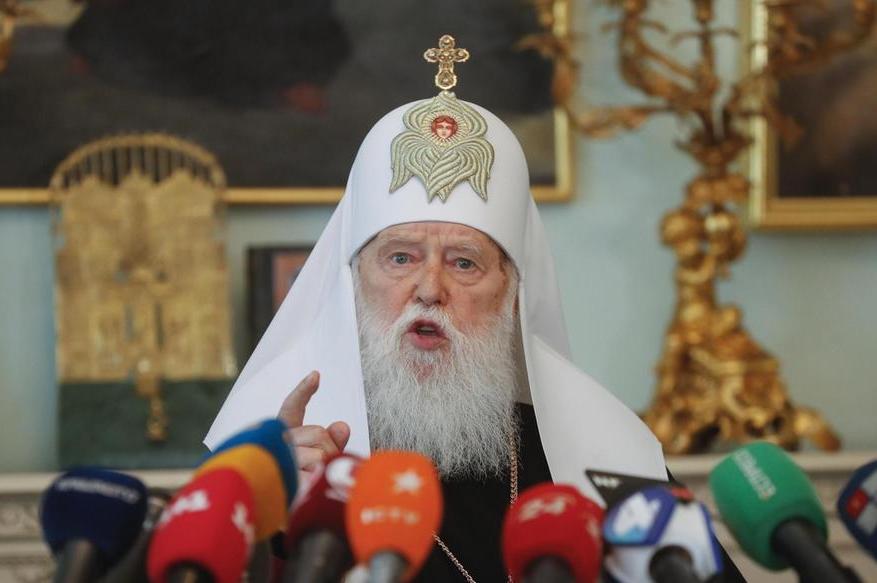


The Patriarch died on March 20 at the age of 97 Filaretborn Mykhailo Antonovyč Denysenko, the man who, with 77 years of monastic life and 65 of episcopal ministry, more than any other he embodied the schism between the Russian and Ukrainian Orthodox Churches. His life spans the entire history of the Soviet Union and independent Ukraine, and tells the story of power, religion and politics in Eastern Europe in the twentieth century and the new millennium, as Metropolitan Pzu of Kiev recognized in his message of condolence Epifanyj (Dumenko)long his secretary, who underlined how Filaret has «occupied a special place in the contemporary history of the Church and of the whole of Ukraine», starting in 1992 the separation from Moscow.

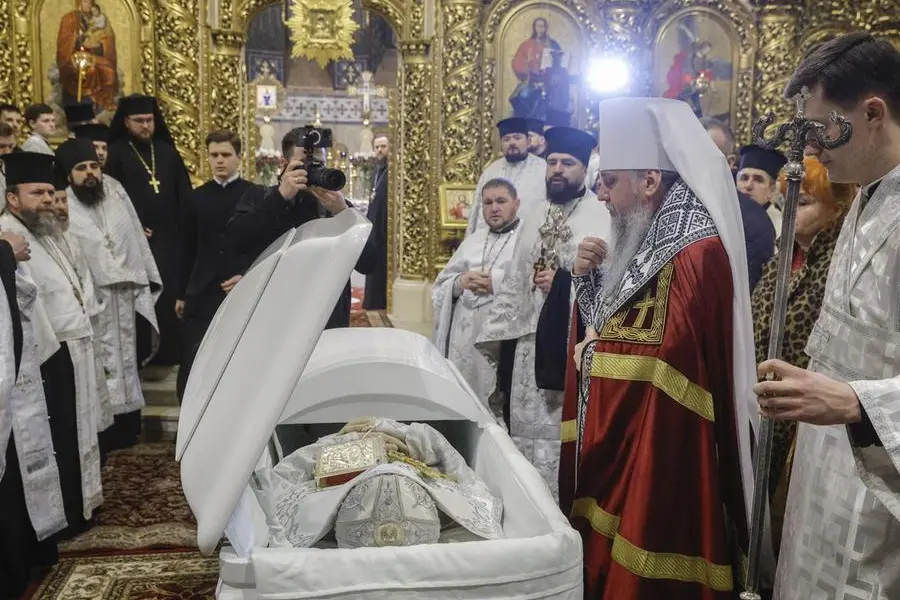
In Kyiv, Metropolitan Epifanyj pays homage to Patriarch Filaret, who passed away at the age of 97, protagonist of the schism that marked the Ukrainian Church and its recent history
(EPA)
The beginnings and rise in the Soviet Church
Born January 23, 1929 in the Ukrainian village of Blagodatnoe in what was then called Stalinsky Okrugthe “Stalin province”, in the Donetsk region, entered the seminary at a very young age and chose monastic life in the hardest years of Soviet repression.
His ecclesiastical career was very rapid: in 1962 he became bishop (as auxiliary of Leningrad) at just 33 years old and in 1966 he was appointed metropolitan of Kiev, one of the most important positions in the entire Russian Orthodox Church. In those years the life of the Church was strictly controlled by the political power, and Filaret was often described as one of the exponents closest to the Soviet system. He actively participated in the activities of the Council for Religious Affairs, the body with which the Soviet Communist Party controlled all religious confessions, and for this very reason he was defined by many observers as “the most Soviet of metropolitans”.
According to various reconstructions, Filaret counted on the support of the KGB to be elected patriarch of Moscow after Pimen’s death in 1990. For two months he was even regent of the patriarchate, a position that seemed to confirm his imminent election. But the choice, in the end, fell instead on Alexios II, who reigned from 1990 until his death in 2008, and that defeat marked a turning point in Filaret’s life.
The election of Alexy II, then Metropolitan of Leningrad, is said to have occurred through the intervention of Metropolitan Kirill (Gundjaev), the current patriarch of Moscow who then held the position of president of the Council for External Affairs of the patriarchate, and was the most influential figure also in relations with politics. Kirill was consecrated bishop in 1976 at just 29 years old, and Filaret was among the celebrants.
The break with Moscow and the commitment to autocephaly
With the collapse of the Soviet Union and the birth of independent Ukraine, Filaret completely changed his position: as a man of the Soviet system he became the main supporter of autocephaly, that is, the independence of the Ukrainian Church from Moscow. In 1992 he broke with the Russian patriarchate and created his own ecclesial structure, attracting a significant part of the clergy and faithful. It was a choice that transformed the religious question into a political symbol: for many Ukrainians the break with Moscow was not only ecclesiastical, but national and political.
The Russian response was harsh. In 1997 Filaret was excommunicated and anathemated, but he did not back down: in 1995 he proclaimed himself «patriarch of Kiev and all of Rus’-Ukraine» and continued for over twenty years to lead a Church not recognized by the rest of Orthodoxy. During this period the relationship with Kirill, the successor of Alexei II and current Patriarch of Moscow, became increasingly hostile. The two represented two opposing visions: Kirill defended (and still defends, as demonstrated by his pro-Putin positions in the ongoing war) the idea of a single Orthodox Church linked to the Russian world, while Filaret saw religion as an instrument of Ukrainian national identity.
During the years of Petro Poroshenko’s Ukrainian presidency (2015-2019), a decisive moment came. In the frantic negotiations between Kiev, Moscow and Constantinople, even in Russia there was no shortage of voices in favor of a negotiated solution: among these that of bishop Tikhon Ševkunov, considered the “spiritual father” of Vladimir Putin, who suggested directly granting autocephaly to avoid a definitive break. But Kirill refused, also due to the personal hostility he felt towards Filaret, who had been among the bishops who had consecrated him.
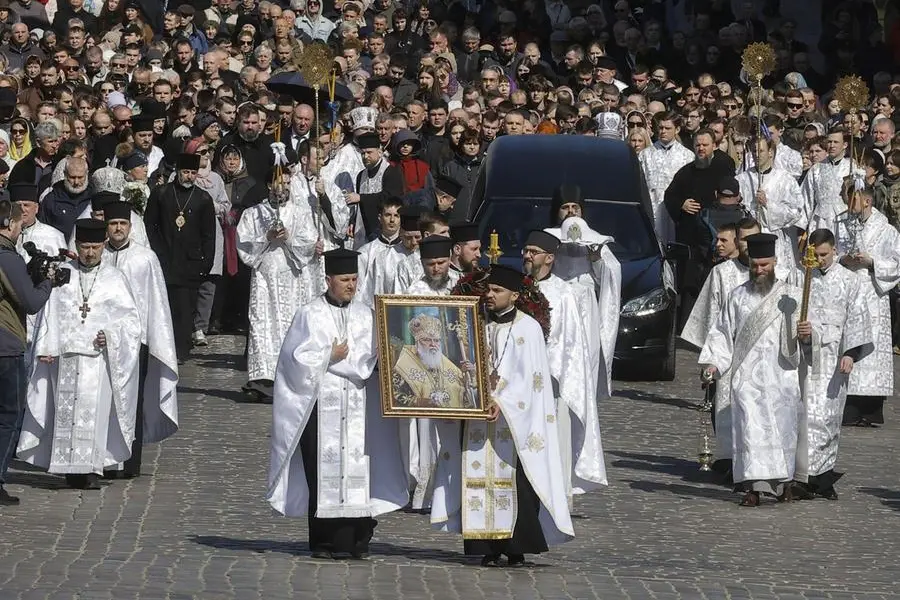
In Kyiv, on March 22, 2026, hundreds of Ukrainians participate in the funeral of Patriarch Filaret, who passed away at the age of 97, a symbol of the schism and independence of the Ukrainian Church
(EPA)
Canonical recognition and its role in contemporary schism
The turning point came in 2018, when iEcumenical Patriarch Bartholomew I canonically rehabilitated Filaret and paved the way for the official birth of the independent Orthodox Church of Ukraine in 2019. But even then Filaret remained an uncomfortable and isolated figure: he never fully accepted the role of simple “patriarch emeritus” and continued to consider himself the true founder of the Ukrainian Church.
The schism he helped cause was not just religious. Over the years it has become increasingly intertwined with the political and identity conflict between Russia and Ukraine, until it resulted in the war which has continued to dramatically impact the region since 2022. Filaret’s life, marked by the transition from the Soviet system to the birth of independent Ukraine, thus remains the reflection of a profound historical fracture: that between the Russian and Ukrainian worlds, also fought on the terrain of faith.