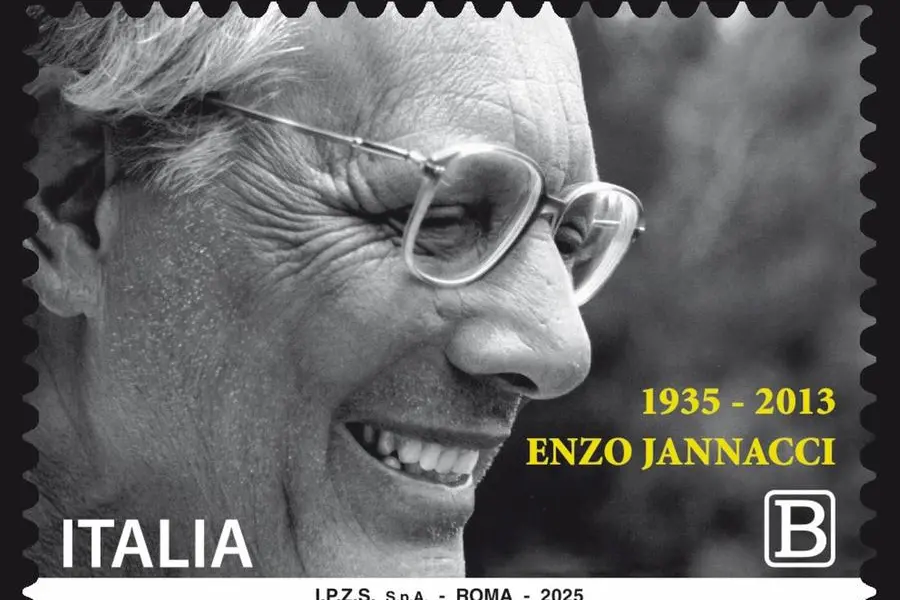

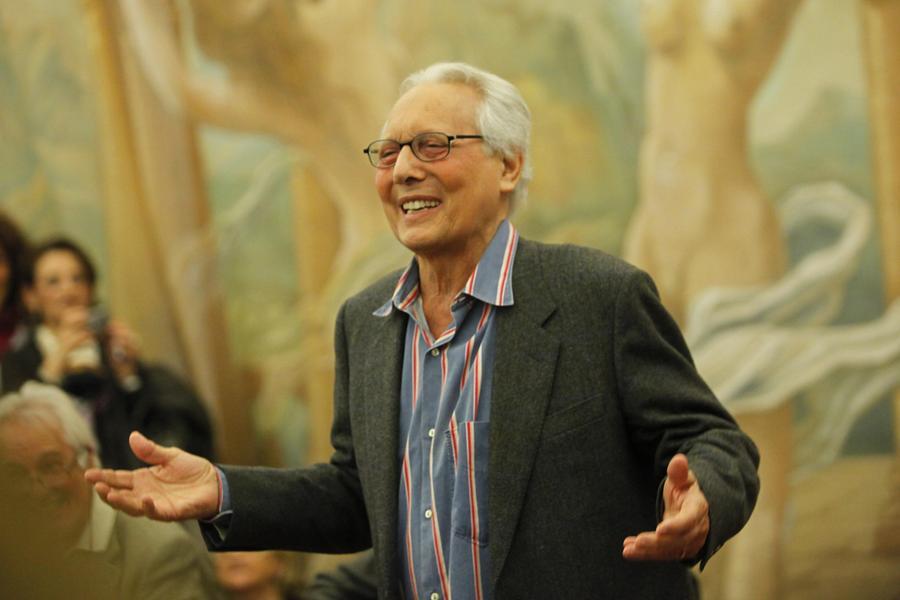



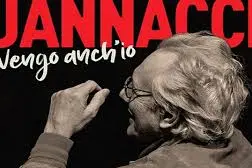
In 1990 they asked him how he managed to simultaneously practice the professions of surgeon at the Milan Polyclinic and singer-songwriter: «To go and sing I have to take holidays. This is how I spend my holidays. My colleagues go to conferences to have fun, talk about transplants and stuff like that. I, however, poor wretch, sing.” In this answer, there is all Enzo Jannacci, told in the documentary film Enzo Jannacci – I’m coming too, directed by Giorgio Verdelli broadcast tonight in prime time on Rai 3. A journey through Enzo’s artistic life with the testimony of his son Paolo and many other colleagues.

BETWEEN MUSIC AND MEDICINE
Born in Milan on 3 June 1935, classmate at Giorgio Gaber’s high school, a diploma from the Conservatory, in 1969, he graduated in medicine from the University of Milan. Then to obtain specialization in general surgery, he moved to South Africa, joining the team of Christiaan Barnard, the first cardiac surgeon to perform a heart transplant. His training also included studies at Columbia University in New York (where he also worked in intensive care and thoracic surgery) and later at Queens College. Although he graduated from the Conservatory and began publishing recordings even before graduating in medicine, Jannacci has always practiced the medical profession, both as a cardiologist and as a family doctor, alongside his musical activity, until his retirement. Among his first patients were colleagues and friends Teo Teocoli, Massimo Boldi and Renato Pozzetto.
On 23 November 1967 he married Giuliana Orefice. The couple’s only child, Paolo, was born on 5 September 1972. who will follow in his father’s footsteps by becoming a musician and composer.

JAZZ, ROCK AND CABARET
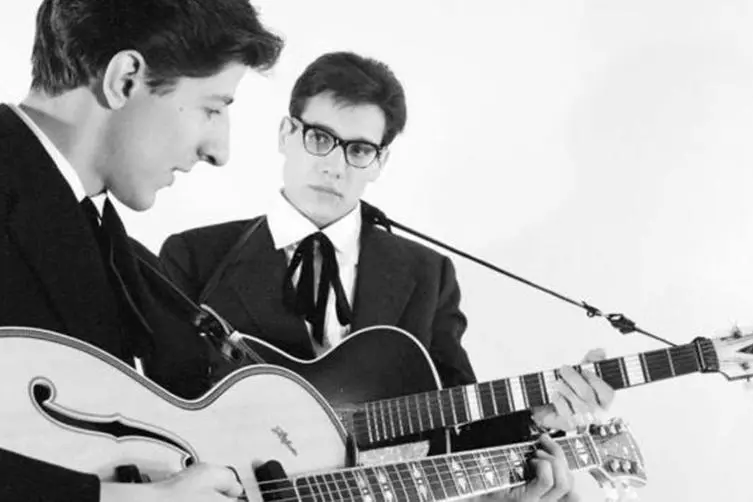
His career as a musician began in the fifties. After graduating in harmony, composition and orchestral conducting and eight years of piano at the Milan Conservatory with maestro Gian Luigi Centemeri, he began – at the age of twenty – to frequent cabaret circles, immediately showing off his skills as an entertainer and presenter. In the meantime, he approached jazz and began to play in some clubs in Milan, but at the same time he also discovered rock and roll, a new genre that was achieving great success in the United States of America with artists such as Chuck Berry, Bill Haley and Elvis Presley.
At the end of 1958 Jannacci, while continuing to play with the “Rock Boys”, forms a duo with Gaber, known as “I Due Corsari”which made its debut in 1959 with some 45s – including the famous ones Beer, Lemon slice And Moon tan – which were then collected about ten years later in the album Giorgio Gaber and Enzo Jannacci. In February 1961 Giorgio Gaber took part in the Sanremo Festival with a song written by Jannacci, Petrol and matcheswhich however did not have great success, being excluded from the final.
In 1963 he followed his friend Sergio Endrigo’s tour as pianist; always in the same year he began performing at the Derby Club, a cabaret venue in Milan, where he first met Dario Fo and then Cochi and Renato.


The following year Jannacci returns to the theater with the show 22 songs, co-written with Dario Fo. Among the songs played during the show, which is a great success and which is why it is repeated numerous times, the most curious is My girlfriend goes to the sourcebased on a 15th century melody that the very young Fabrizio De André would later use as a melodic accompaniment for one of his most famous songs, Via del Campo. In fact it was plagiarism and after a few years the two clarified and De André returned the musical paternity of the song to Jannacci.
Enzo Jannacci returns to the limelight two years later with a new album, made with the usual collaboration of Fo and together with Fiorenzo Fiorentini: I’m coming too. No, not you, driven by the single of the same name, he quickly became a sales champion and jumped to the top of the Italian charts. The singer-songwriter suddenly gained a large following, which earned him participation in several television shows.

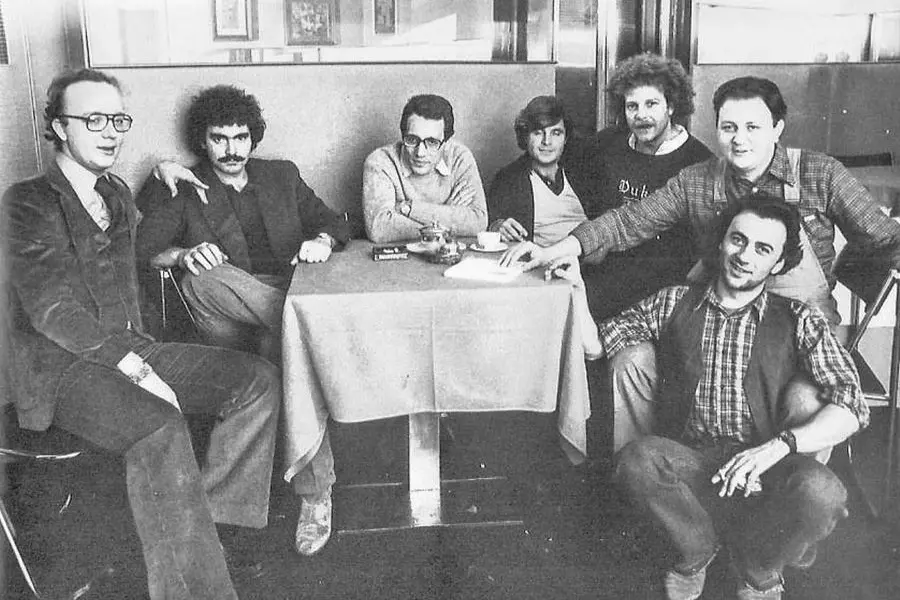
Critical praise also comes with I saw a kinga song sung together with Fo and an accompanying choir: the piece appears ironic and ironic at first listen nonsense but, in reality, it is infused with political metaphors. It is no coincidence that it became one of the symbolic songs of ’68,
He reaches the final of a Disco for the summer and would like to present for the direct clash with Gianni Morandi I saw a king but the Rai commission opposes it, considering it excessively imbued with political meaning. Then fold back up The gypsies, poignant and delicate song, and does not gain public appreciation. Deeply disappointed, Jannacci returned to dedicating himself to the medical profession with repeated stays in South Africa and then in the United States. In the African state he collaborates with the cardiologist Christiaan Barnard, thanks to whom he significantly deepens his knowledge in the medical field.
ACTOR AND SOUNDTRACK AUTHOR
After 4 years he returned to Italy permanently and successfully began composing soundtracks for cinema. The first in chronological order accompanies Popular novel by Mario Monicelli, In 1975, it was the turn of Pasqualino Settebellezzesigned by Lina Wertmüller. From 1975 to 1988 Jannacci provided the musical accompaniment for five other films: Italy has brokendirected by Steno, 1976; Sturmtruppen by Salvatore Samperi; Mauro’s great boiled meat Bolognini, in 1977; Saxophone by Renato Pozzetto, 1978; Small misunderstandings by Ricky Tognazzi, 1988. The cinema had already known him as an interpreter and during his life he participated in several films: the debut took place in 1964 with the film The harsh life by Carlo Lizzani where he sang sings You yourself if not in a place where the protagonist, played by Ugo Tognazzi, enters. At the cinema he was then the protagonist of an episode (The refrigerator) directed by Mario Monicelli for the film The couples (1970), and de The hearing by Marco Ferreri (1971). Two months later, he plays a small part in Ettore Scola’s film The new worldwith Marcello Mastroianni. He collaborates with Lina Wertmüller starring in her new film, Twist of fate lurking around the corner like a highway robberthe role of escaped terrorist Gigi Pedrinelli. In 2010 he was among the performers of The beauty of the donkeydirected by Sergio Castellitto, film in which he plays the role of the elderly boyfriend of the protagonists’ teenage daughter.

MORE MUSIC
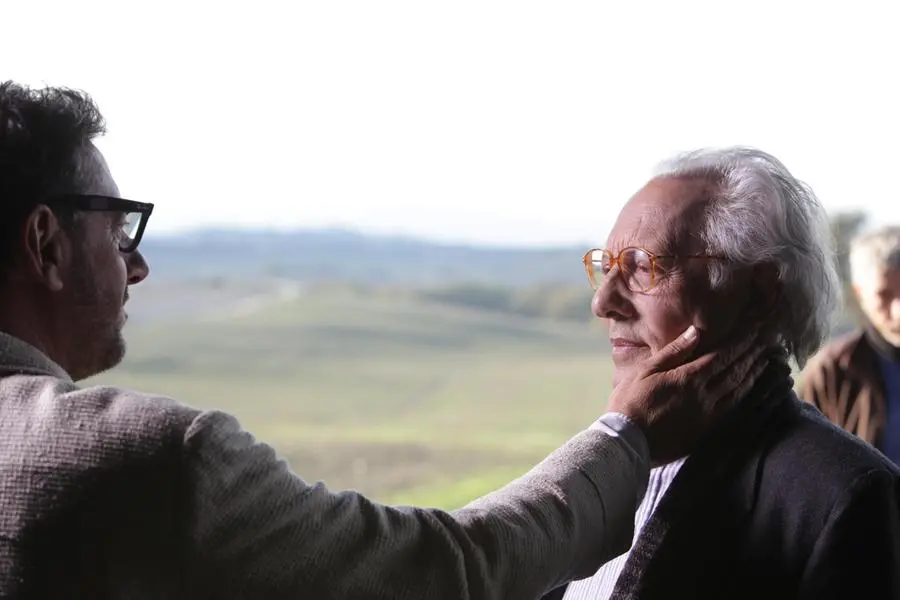
Enzo Jannacci’s musical career, after a long period of semi-obscurity, resumed successfully in 1979. Both for the new record release (Souvenir photo) and for his decision to return to making live music. In 1980, on the wave of success, he wrote in just over a year It takes an earwhich, driven by the great success of the title track, became Jannacci’s best-selling album since I’m coming too. No, not you. In 1984 he writes the AC Milan anthem, of which he declares himself a die-hard fan.

FOUR TIMES AT THE SANREMO FESTIVAL
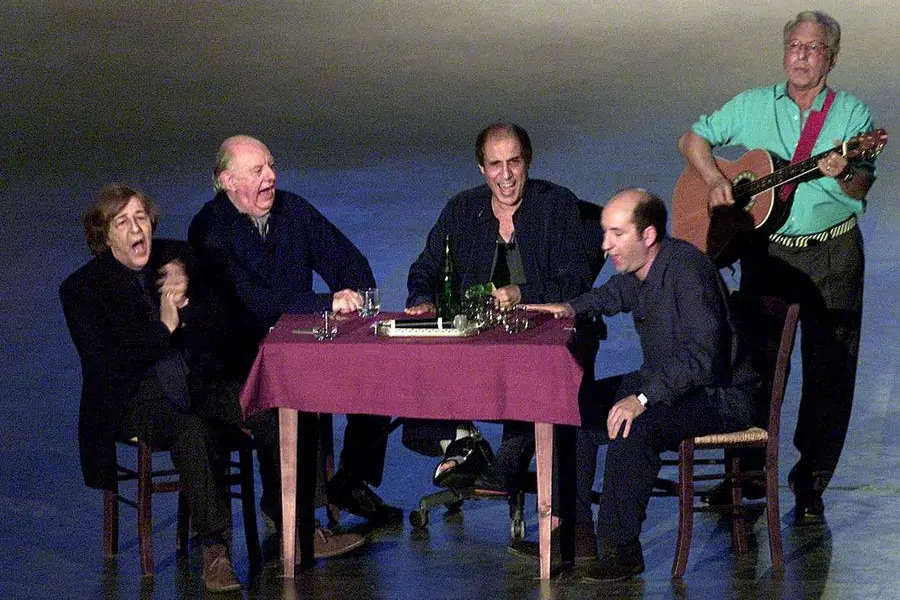
In 1989 he took part in the Sanremo Festival for the first time, without too much success, with If you told me beforeIn 1991 he returned to the Festival with the song Photography as a couple with Ute Lemper, and receives the Critics’ Award; In 1994 he appeared for the third time at the Sanremo Festival paired with Paolo Rossi with the song The usual dealsi, unusually irreverent for the event. In 1998 he took part in the Sanremo Festival for the fourth time with When a musician laughswhich again wins the Critics’ Award for best text. The collection The Best 2006 it is his latest double CD, containing the 35 most significant songs of the Milanese singer-songwriter’s forty-year career, rearranged and produced by his son Paolo Jannacci, who here Christian family had interviewed on the occasion of his participation in the Sanremo Festival in 2020.

THE LAST YEARS AND FABIO FAZIO’S TRIBUTE
However, he left the profession of doctor to retire on January 1, 2003, the same day his friend Giorgio Gaber died.
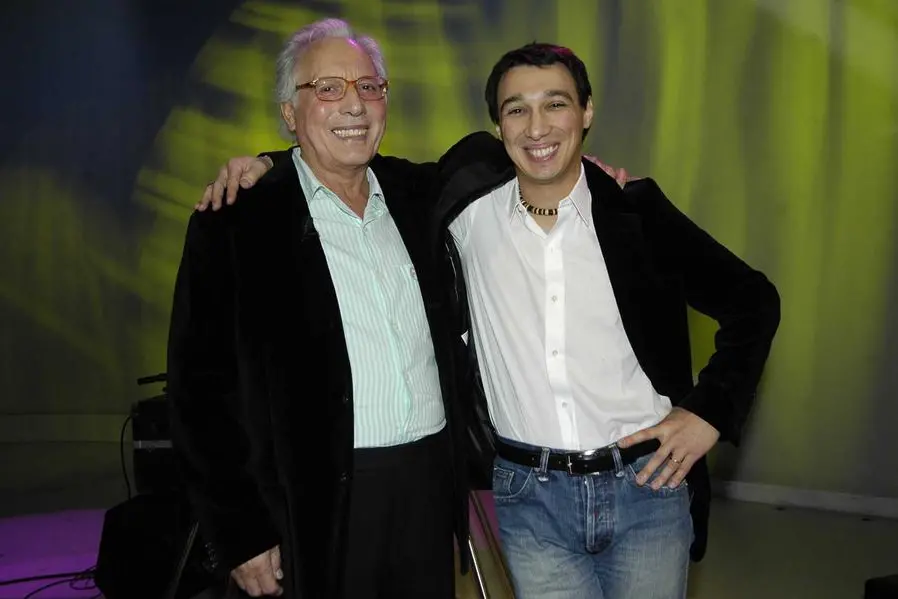
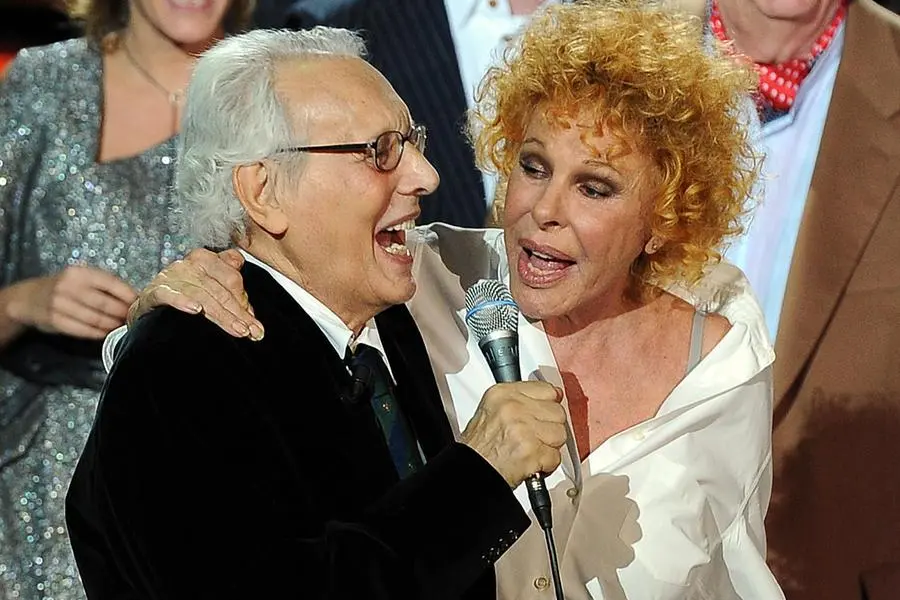
theOn 19 December 2011 Fabio Fazio hosts a special on Enzo Jannacci in which long-time friends of the Milanese musician, present in the studio with his son Paolo, pay homage to him by interpreting his songs; among them Dario Fo, Ornella VanoniFabio Fazio, Cochi and Renato, Paolo Rossi, Teo Teocoli, Roberto Vecchioni, Massimo Boldi, Antonio Albanese, J-Ax, Ale and Franz, Irene Grandi and others. Enzo Jannacci appears in the last part of the event singing two of his songs, including the very famous one Those who… revisited and updated for the occasion.

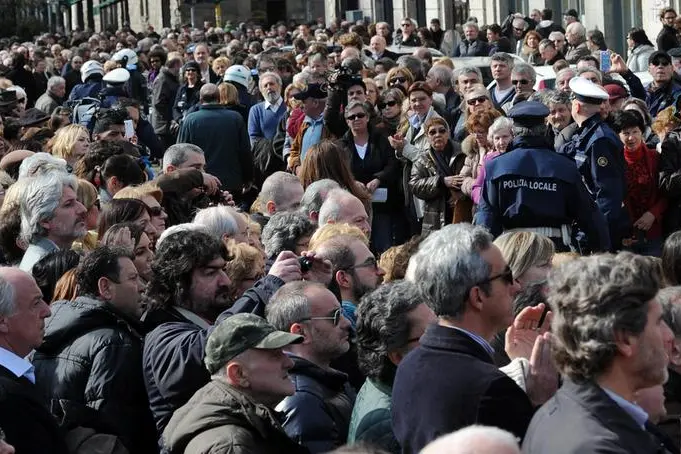
In the 2010s he began to reduce his number of concerts and public appearances. Jannacci died in Milan on 29 March 2013, at the age of 77, due to a tumor from which he had been suffering for some years, great condolences were expressed by people from the world of entertainment and sport. The funeral chapel is set up on 31 March and 1 April in the foyer of the Teatro Dal Verme, the funeral takes place on 2 April in the Basilica of Sant’Ambrogio and the body is buried in the crypt of the famedio of the monumental cemetery.

SPIRITUALITY
In recent years we have begun to be interested in religious issues and he approached Christian spiritualityalthough he sometimes defines himself as a “very imprudent secular atheist” and sometimes as a “believer”. In 2009, in an interview with Corriere della Sera, surprisingly enters into the debate on euthanasia, regarding the dramatic story of Eluana Englaro. His opinion on the request to suspend the girl’s treatment is heavily negative: “Life is important even when it is helpless and defenseless. If it were my son, a blink of an eye would be enough for me.” He ends the interview with the phrase: “If the Nazarene came back he would slap us all. We deserve it, all right, but we would need his caress so much.”