

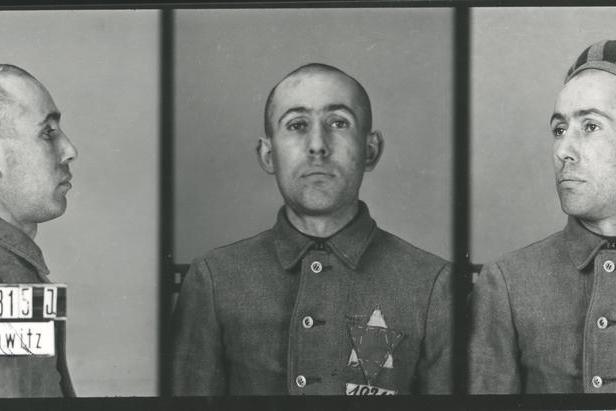


A threefold point of view on the extermination of the Jews: Perhaps never before had the Shoah been documented and told through a triple point of view as happens in the exhibition Seeing Auschwitzheld at the State Archives of Turin until the end of March, on the occasion of Remembrance Day. The selection of around one hundred shots taken between 1941 and 1944, fortunately found by the deportee to Auschwitz Lilly Jacob in 1945 when she was freed in Dora, was largely reproduced by the SS, but also by the prisoners themselves and the allies who flew over the area. A triple perspective that dramatically underlines very different emotional levels.
Paul Salmons, chief editor of the original edition and Holocaust expert, described it as a testimony that invites us to look beyond the gaze of the executioner: «Although the images created in Auschwitz are unequivocal evidence of the crimes committed there, they at the same time represent a great challenge for the viewer. These photographs are not neutral sources, we are observing a fragment of reality from the Nazi perspective. It is necessary to stop, analyze and really see what each image truly reveals.”

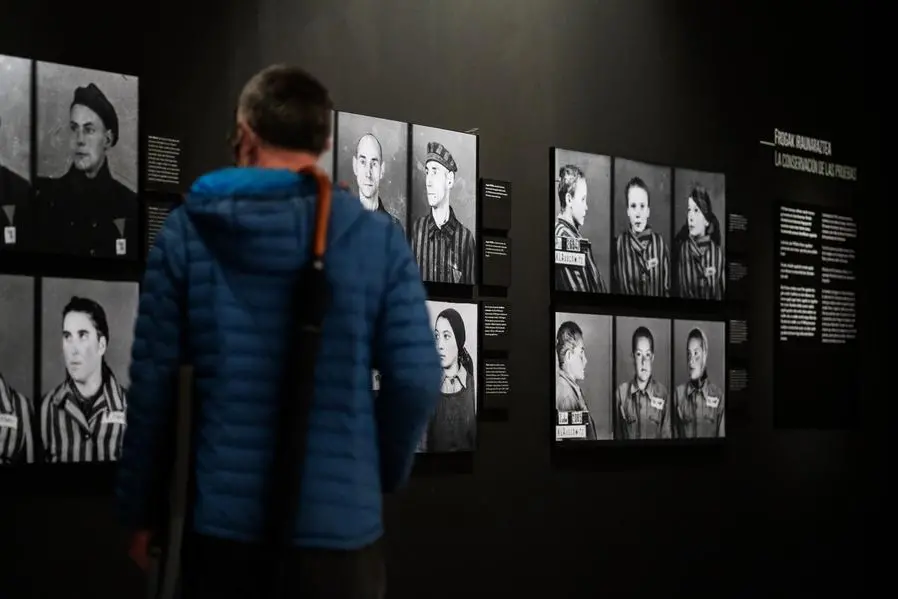
A visitor in front of one of the photographs on display.
Raw, shocking shots that drag the visitor into the here and now of the Nazi concentration and extermination camp of Auschwitz. The photo as a tool that documents the operational protocol of the extermination of the Jews from the entrance to the camp, to the filing, to the initiation to death, carried out by the SS are part of the “Auschwitz Album”. This photographic nucleus contrasts with the five rare images taken clandestinely by the prisoners themselves from inside the barracks, which are flanked by a couple of detailed sketches, taken live, from inside the gas chambers. The introduction of the camera that allowed this precious reportage was the work of the Polish resistance. To complete the reading of a dramatic historical page, the photos taken during the Allied aerial reconnaissance.
In the two and a half months of its opening, the exhibition will have an important program of educational activities for all age groups: from the last years of primary school to the University, involved with young students to support the visit. The primary objective is to inform through a tangible and realistic tool, such as photographic reporting, what happened to six million Jews and millions of Sinti, Roma, dissidents, homosexuals and disabled people in a program of mass atrocities developed by Nazi Germany.