



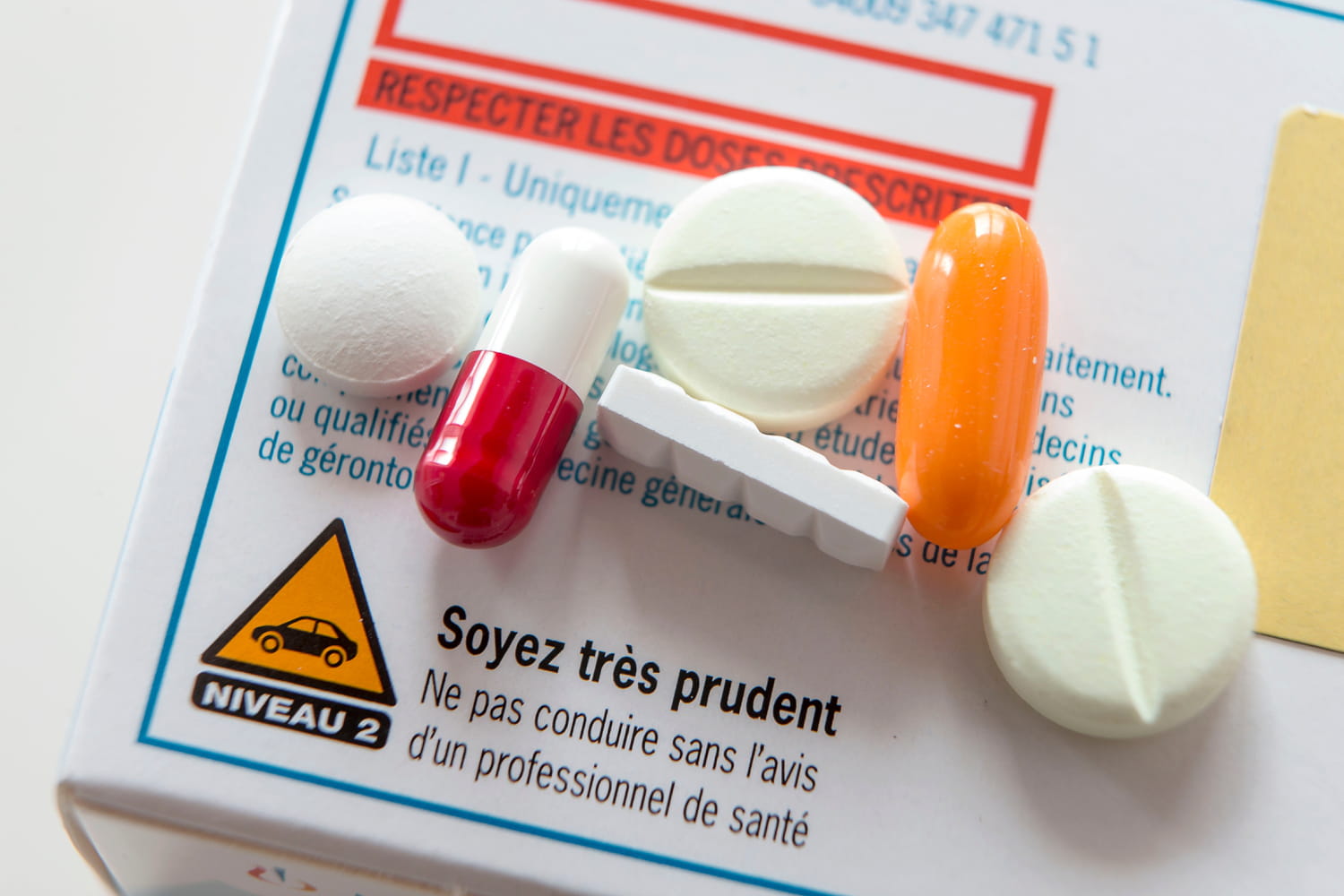


While health authorities seek to better regulate the use of everyday medications, an initiative has finally been put aside.
Concretely, the government’s project was simple: limit the first delivery of common painkillers such as paracetamol, ibuprofen or even aspirin to two boxes. Objective: reduce the risks of misuse and avoid the accumulation of medications at home. The authorities thus hoped to better control their consumption. These medications are seen as harmless, but they are not without danger: paracetamol, for example, is the leading cause of liver transplants in France in the event of an overdose.
But the system has not convinced pharmacists and the Ministry of Health is giving up, at this stage, capping the first delivery of level 1 painkillers at two boxes, according to Le Moniteur des Pharmacies. In the field, a uniform rule appears difficult to apply. “Two boxes do not correspond to the same quantity or the same treatment time”, underlines Guillaume Racle, national representative of the Union of Community Pharmacists Unions to our colleagues. A box can contain 8 tablets as well as 32: the limitation would therefore not have the same impact depending on the drug or the dosage.
Another sensitive point: patients suffering from chronic pain. Such a limitation would force them to go to the pharmacy more often to renew their treatment. Concretely, some patients may have to return every week, which poses a problem for the elderly, isolated or living far from a pharmacy. “We must allow patients to relieve themselves. We must not make access to treatments more complex”insists Philippe Besset, president of the Federation of Pharmaceutical Unions of France.
Representatives of the profession also warn of a possible carryover effect. Restricting access to certain molecules could push towards other treatments, sometimes less suitable. This phenomenon has already been observed with tramadol or codeine. Today, some are talking about the risk of seeing more people prescribing nefopam, the side effects of which raise questions, particularly in elderly patients.
Finally, pharmacists point out that regulation already exists. Prescription assistance software generally directs towards limited volumes, often one or two boxes. “Volumes are already falling without additional constraints”, advances Guillaume Racle. They also point out that misuse does not depend only on the quantity delivered: it includes, for example, the fact of accumulating several medications containing the same molecule, exceeding recommended doses or prolonging treatment without medical advice.
Faced with these criticisms, the government now seems to favor another approach, based on a dispensation adapted to each patient, rather than a uniform limit. The idea would be to adjust the quantities on a case-by-case basis, depending on the medical situation and real needs. In the meantime, nothing changes for patients. Concretely, it is still possible to buy these painkillers in pharmacies as today.