





Each year, the ranking of the happiest countries, published under the aegis of the UN, examines the well-being of populations across the world. The 2026 edition confirms the domination of certain countries…
“On a scale of 0 to 10, how satisfied are you with your life?” It is from this question, asked to thousands of people around the world, that the annual ranking of the happiest countries, published with the support of the UN, is based. And the 2026 version has just been released.
This ranking is not limited to a general impression. It is also based on an average calculated over three years. These results are then analyzed based on six main criteria: GDP per capita, healthy life expectancy, social support, freedom to make life choices, generosity and perception of corruption. The idea is therefore not only to measure the wealth of a country, but to evaluate more broadly the way in which the inhabitants live their daily lives and perceive their existence. The data comes from international surveys conducted by the Gallup Institute.
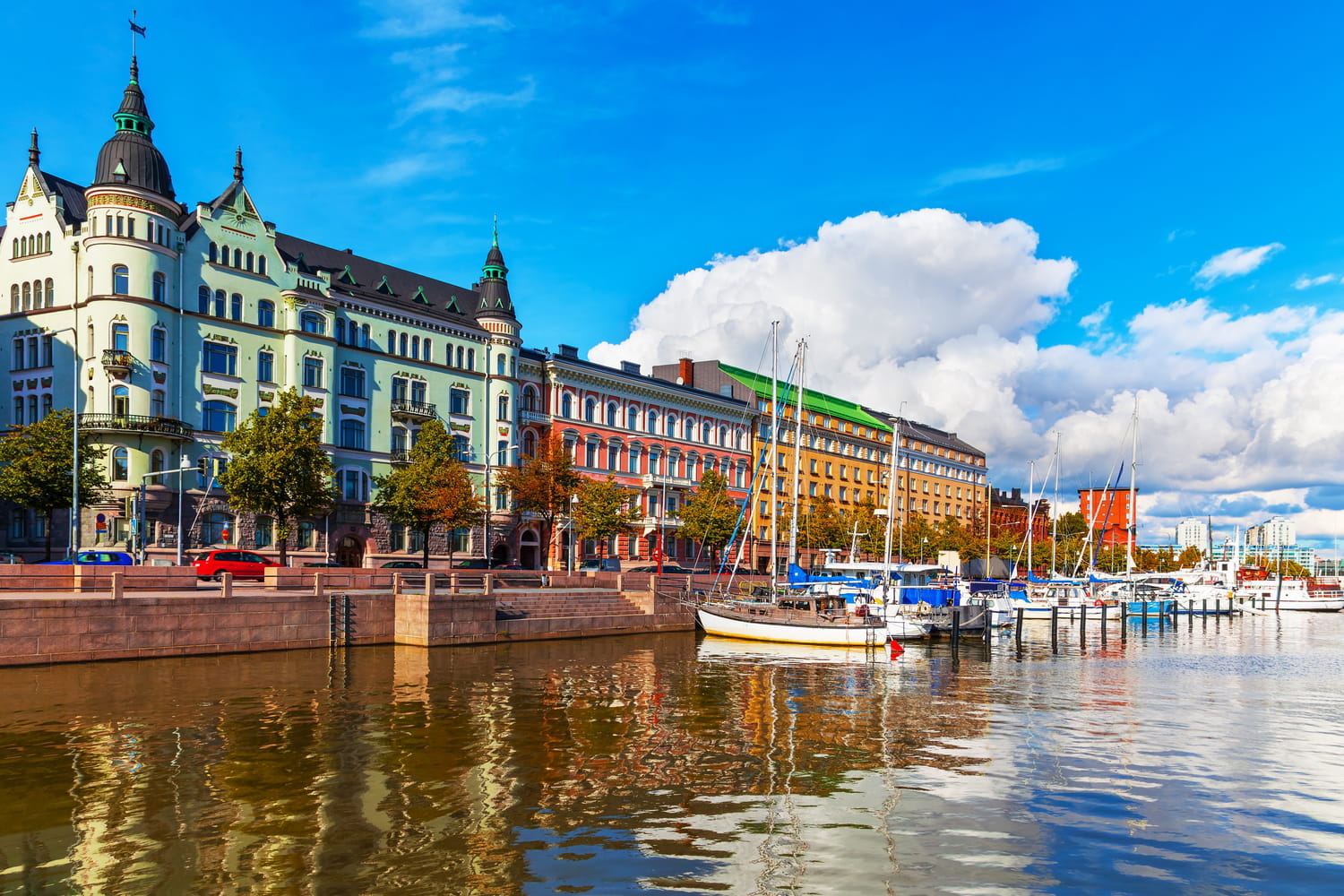
The 2026 edition confirms the domination of the Nordic countries, with Finland leading the countries where people are happiest in the world, for the ninth consecutive year, ahead of Denmark, Iceland and Sweden. Although Finland is not the richest country in the world, it has several advantages, just like its northern neighbors: strong confidence in institutions, a more limited level of inequality, a developed social protection system and a living environment often considered more balanced. So many elements that weigh in the perception of well-being.
France, on the other hand, is much further down in the ranking of the happiest countries in the world. She only ranks 35th, two places lower than last year. With an average rating of 6.6 out of 10, it finds itself behind several of its European neighbors, as well as countries such as Romania, Kosovo, Saudi Arabia and Kazakhstan. A result which may be surprising, given the French standard of living and the solidity of certain social protections.
In detail, France displays contrasting results. It is doing rather well economically, with a high GDP per capita, and also obtains a good score in terms of healthy life expectancy, estimated at just over 70 years. Social support is also well assessed. On the other hand, other indicators pull its rating down. This is particularly the case for the feeling of freedom, on which France is ranked lower, as well as, to a lesser extent, for generosity and the perception of corruption.
The report also highlights a worrying development in several Western countries: the decline in happiness among young people. The authors point in particular to the influence of social networks. The time spent on these platforms, the way in which they are used, but also certain social or economic factors can weigh on well-being, particularly among those under 25 and even more so among girls in certain countries. This ranking shows that happiness does not depend only on money or economic performance. Health, social connections, confidence, the freedom felt and the way of envisioning the future are just as important in the feeling of leading a satisfying life.