




In his first speech in Lebanon, where he landed on Sunday afternoon after three and a half days in Türkiye, Pope Leo XIV he turned to the authorities and delivered a strong and hopeful message to the country: «Peacemakers dare to stay, even when it costs sacrifice». An invitation not to give in to resignation, in a land which in the troubled Middle East continues to experience historical, economic and social wounds, but which retains a surprising ability to start again.

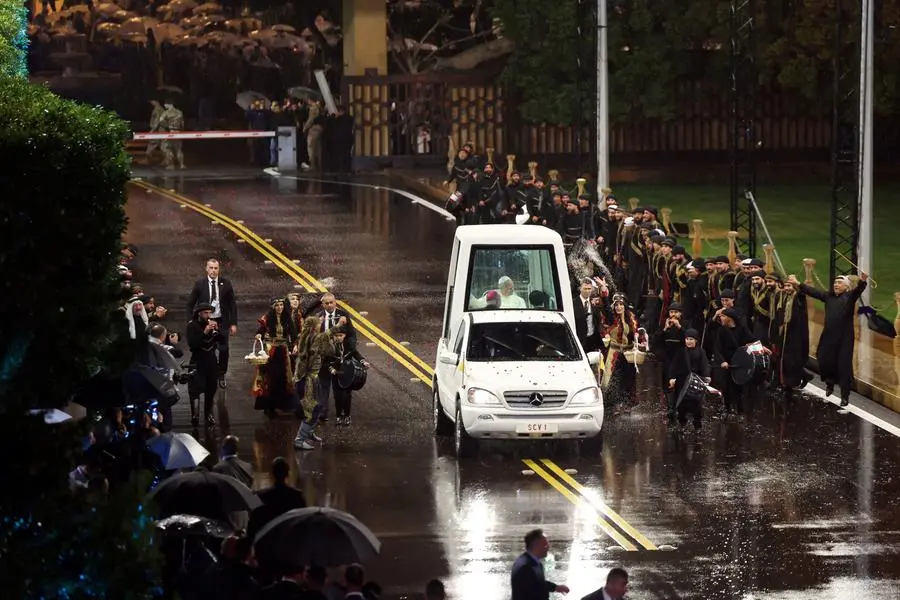
Artists perform Dabke, a traditional Levantine dance, as Pope Leo XIV arrives in a popemobile at the Presidential Palace in Baabda, Lebanon
(REUTERS)
The gift from the President’s little nephew
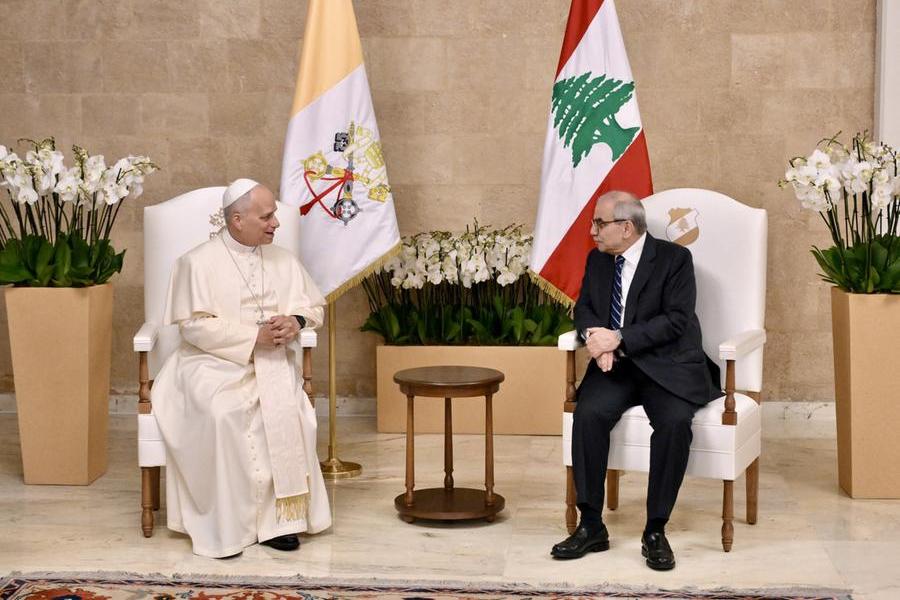
The official meeting between the Pontiff and the authorities opened with a simple and affectionate gesture: in Presidential Palace in Beirut, the Pope received a racket and some tennis balls as a gift, offered by the nephew of the President of the Republic Joseph Aoun. A relaxing moment welcomed with a smile by the Holy Father. Shortly before, a simple but significant ceremony: the planting of a “cedar of friendship”the sign of a shared and public will. The ceremony, in which the Cardinal Vatican Secretary of State also took part together with the Pope Pietro Parolin and the Patriarch of Antioch of the Maronites, introduced Leo XIV’s meeting with the authorities and representatives of civil society and the diplomatic corps of Lebanon, a land rich in this native variety which constitutes one of its peculiar natural beauties.
Aoun: «We will not die or despair. We will stay here”
In his initial greeting, President Aoun gave the Pope an intense photograph of his country: “In our land today there is a lot of oppression and many oppressed people,” he said. «Holy Father, we implore you to tell the world that we will not die, nor will we go away, nor will we despair, nor will we give up. We will stay here… we will invent joy, perfect love… and every day we will create a life worth living.” Lebanon, he added, “will remain the only place of dialogue in our region” and “what Lebanon unites, no force can divide”.
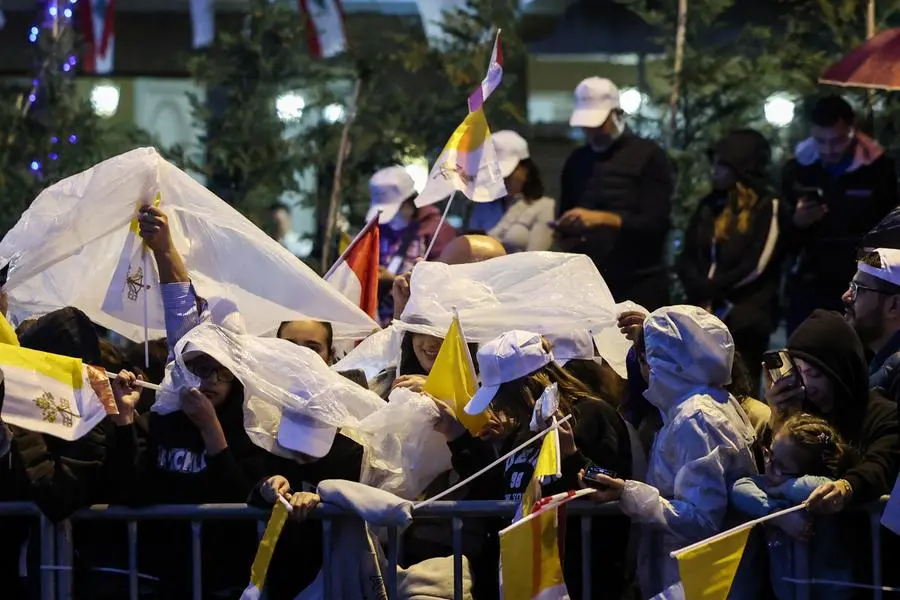
The Lebanese faithful in the rain with the Vatican flags await the passage of the Pope
(REUTERS)
«Let the world look to Lebanon»
The Pontiff echoed the president’s words, recognizing the universal value of Lebanese history. “The world should look to this Middle Eastern country as an example of resilience,” he said. In a time marked by global confusion, Pope Leo denounced «a sort of pessimism and feeling of impotence» that seems to paralyze people: «Big decisions seem to be made by a few and, often, to the detriment of the common good. It is what appears to many as an inevitable destiny». Despite everything, Lebanon was able to get back on its feet: “You have suffered greatly from the consequences of a killing economy, global instability and conflicts, but you have always wanted and known how to start again.”
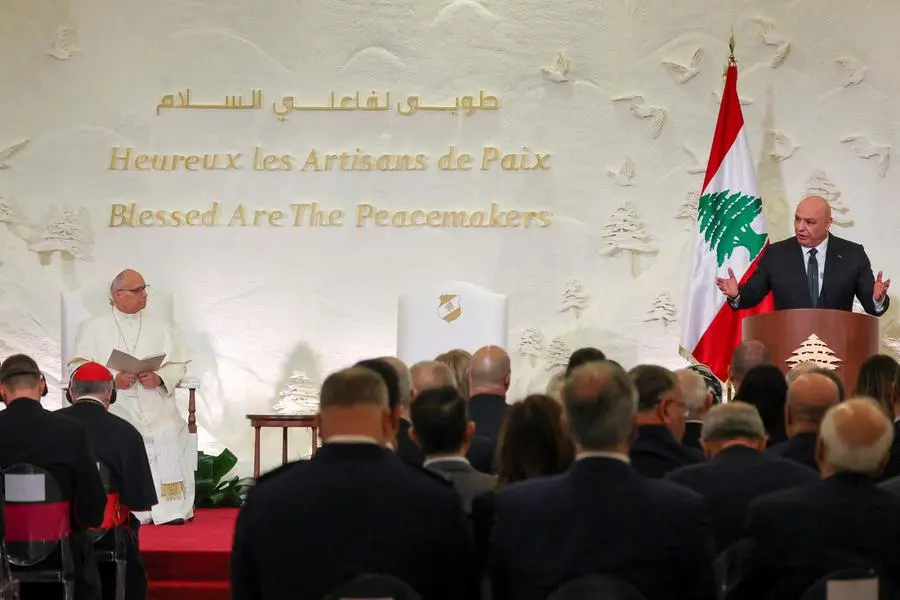
Pope Leo XIV listens to the speech of the President of the Lebanese Republic Joseph Aoun during the meeting with the authorities, civil society and the diplomatic corps at the Presidential Palace
(REUTERS)
«Peace is a continuous beginning again»
The Pope defined Lebanese resilience as a decisive quality for those who build peace: «The work of peace is a continuous beginning again. Commitment and love for peace know no fear in the face of apparent defeats… It takes tenacity to build peace.” And he launched an appeal against fleeing abroad, which impoverishes the country: “There come times when it is easier to escape… but staying or returning to one’s own country, deeming even difficult conditions worthy of love, remains something very appreciable.”
In his speech, the Holy Father then reserved particularly significant words for women: «They have a specific ability to make peace, because they know how to safeguard and develop deep connections with life and with people». And he added an encouragement to young Lebanese, often tempted by emigration: “Blessed are the peacemakers and blessed are the young people who remain or return, so that Lebanon is still a land full of life.”