






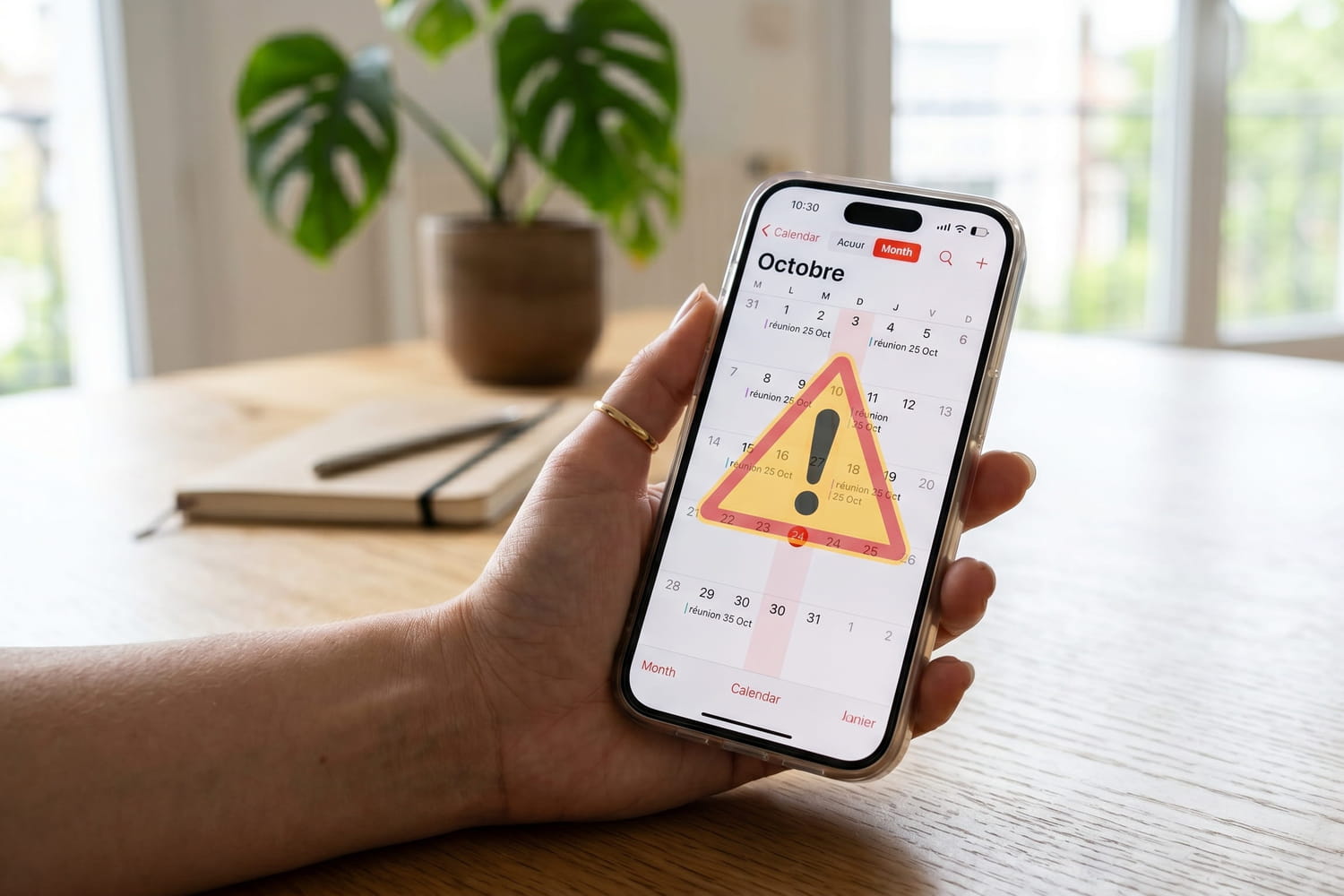
Beyond the wear and tear of the battery or screen, the lifespan of a smartphone depends above all on its security updates. Indeed, each model has a precise timetable from which it ceases to be protected against hacking.
We’ve all heard of the “planned obsolescence” of our electronic devices, but it’s not just a vague concept: there is a specific date from which our smartphones stop being updated. Of course, this does not mean that they no longer work, but that they no longer benefit from the latest security patches deployed by the manufacturer. In other words, once its “expiration” date has passed, your phone no longer protects your personal data as well. Users are therefore more exposed to online risks: a situation that should not be taken lightly, especially at a time when scams and data leaks are multiplying at breakneck speed, and where our smartphones literally contain our entire digital life.
Fortunately, it is possible to check in a few seconds if your smartphone is already “expired” or if it will be soon. Because if the oldest models are of course the first to be affected by this obsolescence, even the latest products will be one day. And we already know the date! In addition to the warranties which vary between 2 and 7 years depending on the brand, each existing model already has its own technical support expiry date: you can find yours directly via our search engine below, by typing the name of your phone, whether it is an iPhone, a Samsung, but also a Sony, a Huawei, a Xiaomi, an Honor, a Google Pixel, an LG, a Motorola, a Nokia, a OnePlus, or even an Oppo.
For example, users of the very recent iPhone 17 (as well as the 17Pro and 17Pro Max), as well as those who own the latest Samsung Galaxy S25 or S26 (and their + and Ultra derivatives) or the Google Pixel 10 or Oppo Reno 15 Pro, do not have to worry before 2032. On the other hand, beware of owners of an iPhone 12 who will no longer receive new software versions within a few months, starting of October 2026. For their part, those who have a Samsung Galaxy S21 have already no longer been supported since January 2026, as have many other models released at the same time or before.
All expiration dates depending on smartphone models

Sometimes brands continue to offer updates for a few weeks or months after these dates, but they usually don’t warn when it’s the last one. However, you can check it yourself in a few seconds, directly from your phone. In the settings, you can look for the date of the last “software update”: if it is more than six months old, it is very likely that your device no longer receives the latest security patches. And unfortunately, if your phone is no longer up to date, there are no 36 solutions.
No need to rush to the store to buy a new one immediately after its expiration date, but you will still have to think about changing it in the near future. Indeed, as the British consumer association Which? explains, “Without regular updates, your operating system is defenseless against new threats. Cybercriminals are constantly on the lookout for flaws in old software; if a brand stops providing these patches, those flaws won’t be fixed. Month after month, the gap between existing threats and your phone’s ability to protect against them grows.” Therefore, continuing to use your banking application, making online purchases or even reading your work emails could prove risky. But don’t panic, expensive smartphones are not the only ones that can protect your data: mid-range models are just as effective, as long as they are rather recent and therefore still updated regularly.