





Faced with a phone that has leaked, using rice has become automatic for many. But behind this popular tip lies in reality a false good idea: manufacturers and tech professionals are now sounding the alarm to put an end to a well-established myth.
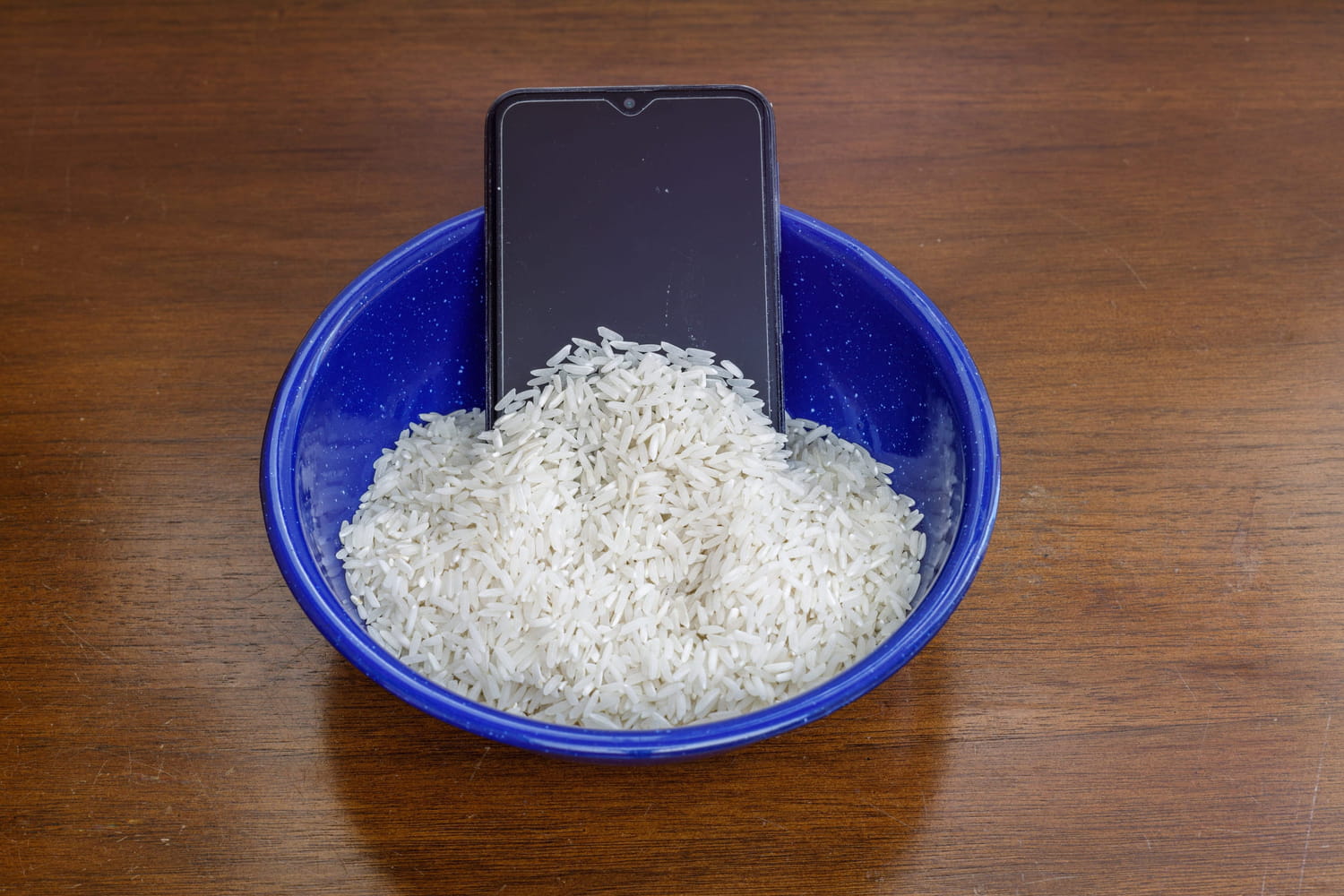
It’s an almost universal reflex. As soon as a smartphone drinks the cup or a glass spills on it, the first instinct is often to rush into the kitchen cupboard in search of the famous packet of rice. For years, this modern-day “grandmother’s tip” has been passed down as a miracle cure: the device is immersed in it for several hours, hoping that the raw rice will absorb all the moisture that has seeped inside. An emergency solution which has established itself in the collective imagination as the best lifeline to save a phone from drowning.
However, telephony experts are clear: this technique is ineffective… and even counterproductive. “I really recommend you forget the rice, because it won’t help your phone dry out any faster.”warns Kewin Charron, head of the Innovation Lab at BackMarket – a famous platform specializing in reconditioned products – in a YouTube video. Apple also confirms: “Don’t put your iPhone in a bag of rice”alerts the manufacturer on its support site. In fact, rice could even damage your smartphone even more.
First, grains could become lodged in the charging port and be very difficult to remove, especially when you know that rice swells when it absorbs water. But it’s the smallest particles that pose the real risk: a packet of rice contains many broken pieces and fine dust that can infiltrate the entire device. Also, the starch contained in rice reacts on contact with humidity, and this is what gives it a “sticky” effect… which we do not want to find in our phone. Moreover, it has been more than ten years since we had scientific proof that rice does not work, but this preconceived idea is hard to believe!
A study carried out in 2014 by the specialist site Gazelle compared the effectiveness of several everyday solutions for drying a damp device. The authors of the report tested different absorbent agents, including rice, couscous, cat litter, silica gel, oatmeal, or even simple air drying. The conclusions are clear: raw rice turned out to be the least effective of all. It certainly absorbs some water, but too slowly. By enclosing it in a bag with rice, you deprive the phone of air circulation (which helps water evaporate naturally), which keeps the device in a closed and humid atmosphere, accelerating the oxidation of the circuits. Cat litter or even instant rice (already pre-cooked) are more useful than classic white rice, but pose the same problems with particles or grains that can get stuck in the device’s ports.
The study also shows that letting the smartphone ventilate naturally allows humidity to escape more quickly than enclosing it in a bag of rice. And precisely, the first reflex that manufacturers and repairers recommend is above all to turn off the laptop, wipe it as much as possible, and let it dry in the open air for between 30 minutes and 24 hours depending on the humidity level. But to go faster while taking no risks, it is in reality sachets of silica gel – found in boxes of shoes or new appliances for example – which prove to be the best choice.
The next time your smartphone takes an involuntary dip, leave your packet of rice in the cupboard. Be patient: turn it off immediately and let it air dry, or surround it with silica gel packets if you have some at home, before trying to charge it after a few hours. If a warning message appears, you still have to wait. A simple reflex, free and validated by experts, which still remains the best way to avoid a costly trip to the repair shop.