



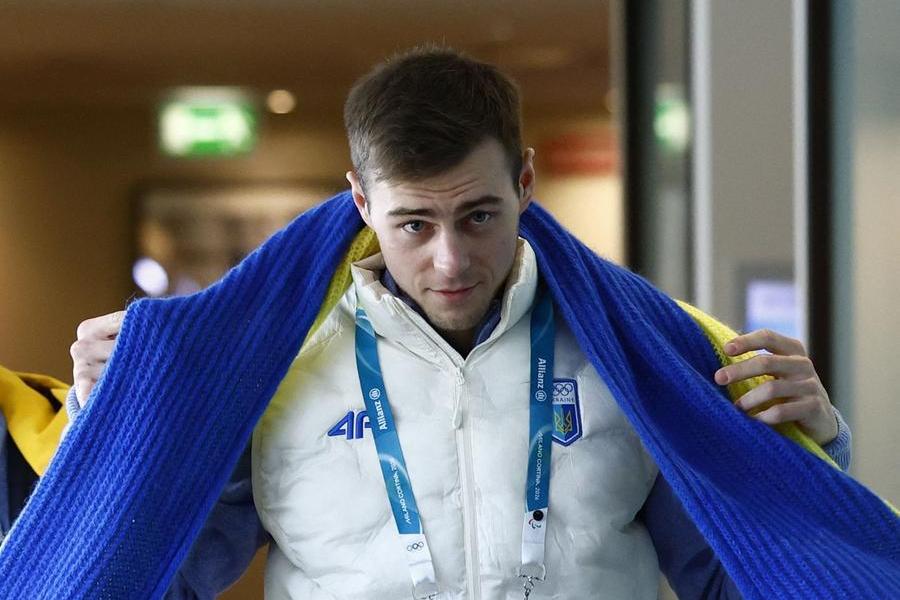
«This is the price of our dignity». These are the words posted on Instagram by Vladyslav Heraskevych shortly after receiving the IOC verdict that eliminated him from the Olympic Games. Yet, at home, he has already won. For Ukrainians he is a hero. The 27-year-old Ukrainian skeleton champion, standard-bearer of the Ukrainian team, now in his third Olympics, was supposed to compete on February 12, but was ousted from the Games for not agreeing to take to the track without wearing the “Memory Helmet”, imprinted with photos of the faces of twenty-four Ukrainian male and female athletes who were victims of the large-scale war. Among them, also civilians who died under Russian attacks, and former athletes who had left their sporting careers to join the Ukrainian armed forces after the Russian invasion.
«I didn’t want to create a scandal with the Olympic Committee, and I didn’t create it. The IOC created it with its interpretation of the rules, which many see as discriminatory.” These were the words spoken by Heraskevych, in a social video from Cortina d’Ampezzo, before the IOC’s decision, which had proposed that he compete with a black armband instead of the “Memory Helmet”.
But he didn’t want to compromise, knowing full well that he most likely risked finding himself out of the Games. And so it was. The Ukrainian athlete stated that his was not a political message, but a gesture to remember, to honor the memory of dead athletes. And he argued that, therefore, his would not have been a violation of rule 50 of the Olympic Charter, which prohibits “any type of political, religious or racial demonstration or propaganda”.

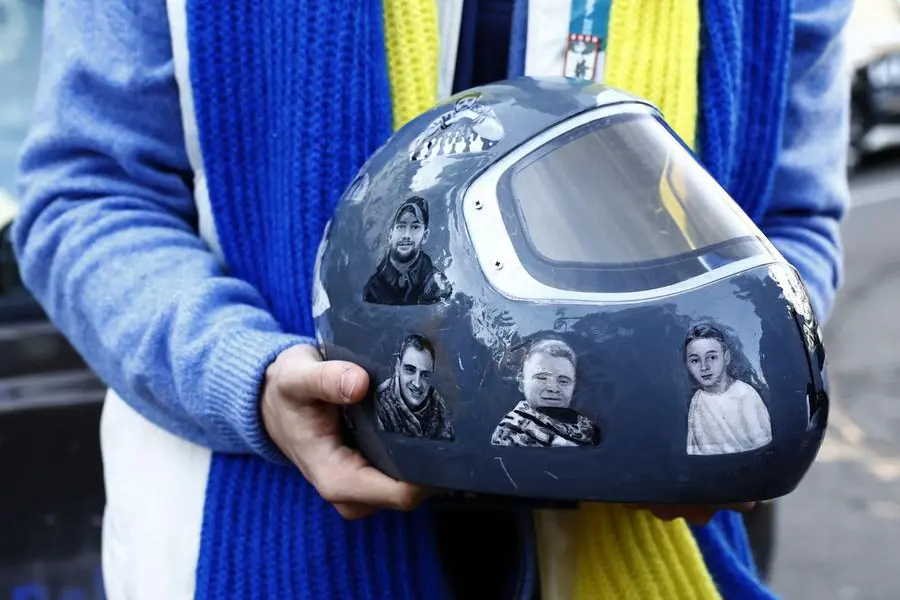
The “Helmet of Memory” shown by Vladyslav Heraskevych
(REUTERS)
The entire Ukrainian Olympic team supported the choice of their athlete, who today appeared before the Court of Arbitration for Sport in Milan to appeal against the IOC’s decision. Certainly, the Heraskevych affair has taken on a political dimension at home: Ukrainian president Volodymyr Zelensky defended the athlete, speaking of his helmet as «a sign of respect and memory. It is a warning to the whole world about what Russian aggression is and what the price of the struggle for independence is.” And he awarded him an important honor, the Order of Freedom.
Many companies in the country have launched fundraisers in favor of the champion. These days, on Ukrainian social media, his story is viral. «For me, the sacrifice of the people depicted on the helmet means much more than any medal, because they donated the most precious thing they had. And a clear and simple respect towards them is exactly what I want to give,” the athlete wrote on Instagram.
Beyond the discussions on whether his message had political implications or not, Heraskevych’s gesture and his moral firmness have acquired a strong symbolic value. In a particularly hard and painful moment for Ukraine, tormented by the severity of a relentless winter and by the incessant Russian bombings that continue to hit energy infrastructures throughout the country and cause victims – while the Milan-Cortina Games are taking place and in spite of the Olympic Truce -, The Heraskevych affair has become an example of courage, resistance and humanity for many Ukrainians.
And it allowed us to shine a spotlight on the difficult conditions of sport and athletes in Ukraine during the war. In his video on social media, Heraskevych made an appeal: as a sign of solidarity, provide power generators to Ukrainian sports facilities that are being bombed every day. In many areas of the country the war has made it impossible to practice sports. The Russian attacks have damaged or destroyed a large number of sports facilities and many athletes, those who have remained in the country, are forced to train among the rubble, in insecure and precarious conditions.

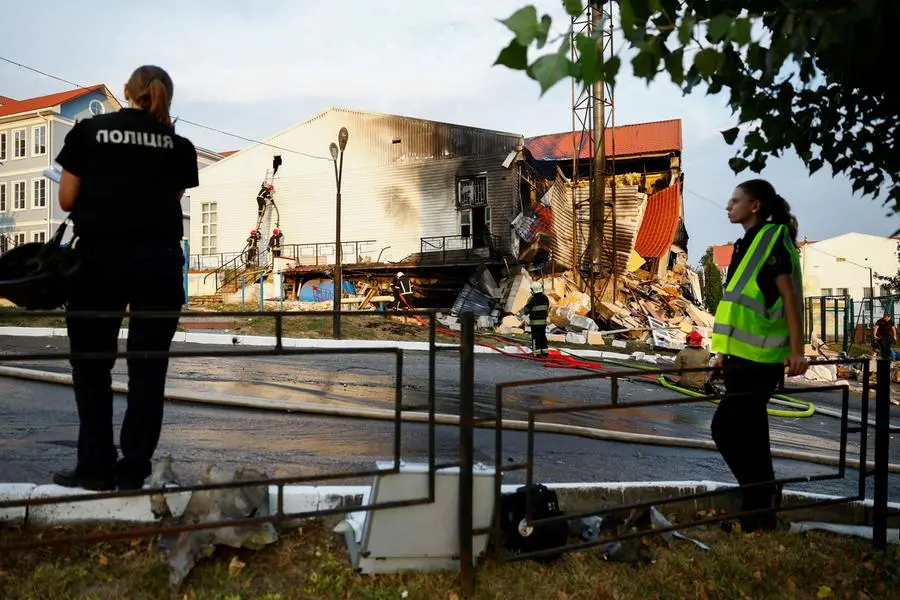
A university sports complex in Kyiv destroyed by bombing in 2024
(REUTERS)
The Ukrainian project “Angels of sport”, which was born as an online memorial created by the Sports Committee in Ukraine, collects more than 600 stories of male and female athletes and coaches – including world champions, European champions, multiple national champions of Olympic and non-Olympic sports – who died as a result of the war. As stated on the site, three thousand athletes are defending the country, fifteen are prisoners, 400 are active volunteers, eighty are children, children of the Angels of sport, left orphans.
Among the champions who were victims of the war, names like that of Yevhen Obedinskyi, former captain of the national water polo team, killed by a Russian soldier on March 17, 2022 in Mariupol, during the siege of the city. Also Makysm Kagal, A 30-year-old world kickboxing champion, he died in Mariupol, where he had joined the Azov battalion, five days after Obedinskyi. Athletes like Anastasia Honcharovaseveral times national cycling truck driver, killed on the road in Kharkiv during a bombing in May 2022. And again the footballer of the Ukrainian Premier League Victoria Kotlyarova, was killed in a massive Russian air raid on Kyiv on December 29, 2023. Thirty civilians died in the attack, including the athlete and her mother.