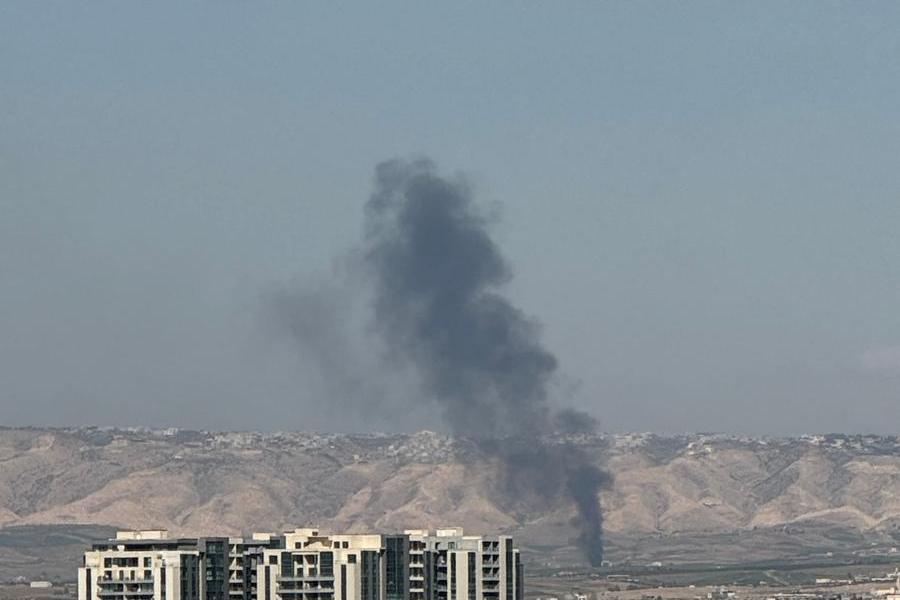



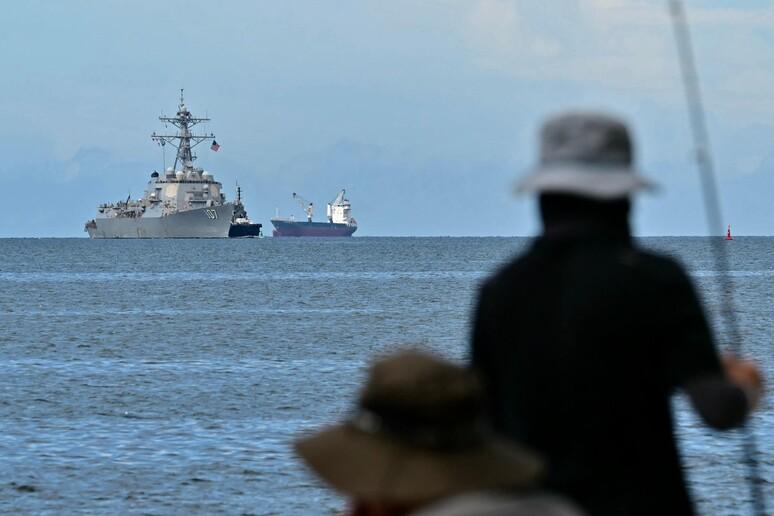
Last week, in complete media silence, it happened something unprecedented in the relations between the United States and Venezuela: For the first time, American forces hit a target on Venezuelan soil. According to US government sources, the CIA conducted a drone attack on a remote port installation on the coast of the Caribbean country, believed to be used by the Tren de Aragua criminal gang to store and ship drugs.
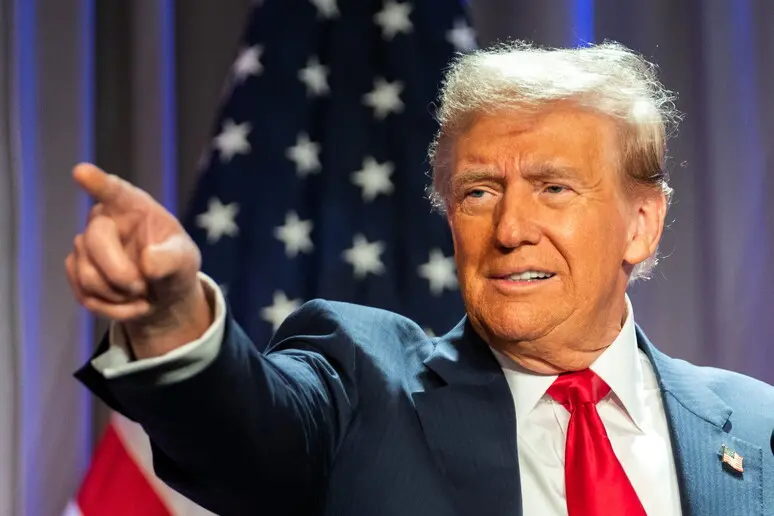
The operation, conducted in secret, was not made public by the Trump administration. It was the president himself who revealed it almost by chance, during a radio interview on December 26, speaking of a “large structure where ships arrive” hit “two nights before”. Only on Monday, pressed by journalists while he met Israeli Prime Minister Benjamin Netanyahu, Trump confirmed: «There was a loud explosion in the dock area where they load boats with drugs». But he refused to provide details on who had carried out the attack or where exactly the target was located.
According to CNN’s reconstructions, based on American intelligence sources, no one was in the structure at the time of the attack, so there would have been no victims. However, the episode marks a significant turning point: After months of bombings against suspected drug traffickers’ boats in international waters – which have caused over 107 deaths since last September – the United States has now moved operations to Venezuelan territory.

A controversial military campaign
Since September, the Trump administration has stepped up what it calls an “anti-drug campaign” in the Caribbean and Eastern Pacific. More than 30 vessels have been destroyed, hundreds of people have been killed, and Washington has deployed more than 15,000 troops to the regionwarships and drones. The official objectives vary: now there is talk of the fight against drug trafficking, now of pressure to overthrow the regime of Nicolás Maduro.
This last hypothesis seems increasingly plausible. As Trump himself declared, “Maduro’s days are numbered”, even if he ruled out an imminent war. Susie Wiles, White House chief of staff, admitted in an interview that the attacks on boats are aimed at making Maduro “give in”. Moreover, according to UN estimates, less than 5% of the cocaine arriving in the United States comes from Venezuela, making it difficult to believe that drug trafficking is the only reason for this massive military mobilization.
At the center of American interests is Venezuelan oil. The country has the largest oil reserves in the world, but is crushed by increasingly heavy economic sanctions. In recent weeks, the United States has seized three Venezuelan oil tankers and imposed a full naval blockade on sanctioned vessels. The message is clear: Washington wants to strangle Caracas economically, hit its relations with China and Iran, and push for regime change.
The Nobel Peace Prize goes to the Venezuelan resistance
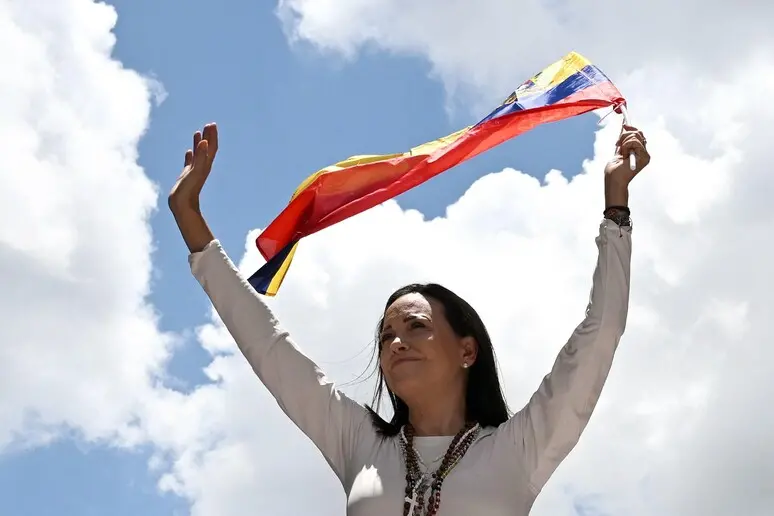
In this scenario of growing military tension, on 10 October the Norwegian Committee awarded the 2025 Nobel Peace Prize to María Corina Machado, leader of the Venezuelan opposition. The official motivation recognizes “his tireless work in promoting the democratic rights of the Venezuelan people and for a just and peaceful transition from dictatorship to democracy”.
Machado, 58 years old, industrial engineer and activist, represents the most intransigent wing of the opposition to the Maduro government. Founder of the Vente Venezuela party, she was a candidate for the 2024 presidential elections, but the regime prevented her from participating in the elections. He then supported Edmundo González Urrutia, and the opposition organized a widespread network of election observers – hundreds of thousands of volunteers – to document the results before they could be falsified. Despite evidence of an opposition victory, Maduro proclaimed himself the winner.
Since then, Machado has lived in hiding, hunted by the authorities. The Nobel Committee emphasized that “despite serious threats to her life, she remained in the countrya choice that has inspired millions of people”. On December 10, in Oslo, he was unable to personally collect the award: it was his daughter Ana Corina Sosa who received it, who read a speech written by her mother in which it was stated that Venezuela shows the world that “we must be willing to fight for freedom”.
The assignment of Nobel to Machado It was welcomed in the West, but it also sparked controversy. The Venezuelan leader has in fact repeatedly called for external interventions against her country and expressed support for Trump’s aggressive strategy. In his Oslo speech, without explicitly mentioning American operations, he mentioned “the leaders from around the world who have joined us and championed our cause.” Some observers interpret the award as a political signal from the West towards Caracas and, indirectly, an endorsement of Washington’s military pressure.
Alberto Trentini: the second Christmas in prison
While this geopolitical game is fought, an Italian continues to pay a very high price. Alberto Trentini, 46 years old, Venetian aid worker for Humanity & Inclusionhas been detained since 15 November 2024 in the El Rodeo I prison in Caracas. 405 days have passed and no charges have yet been formalized against him. This Christmas was the second he spent away from his family, locked up in a two meter by two meter cell, in difficult hygienic conditions, losing weight and deprived of everything: music, books, walks, the affection of his loved ones.
«I can’t resign myself to a second Christmas without my son. I’m waiting for it,” he said his mother Armanda Colusso in an interview with Chora News. «13 months without Alberto have been an ordeal, an interminable agony”. Mrs. Colusso wrote two letters to President Maduro, asking him to «grant freedom to Alberto and allow him to return home to those who love him». His words were delivered by Alberto López, UN ambassador who attempted mediation in Caracas, but to no avail.

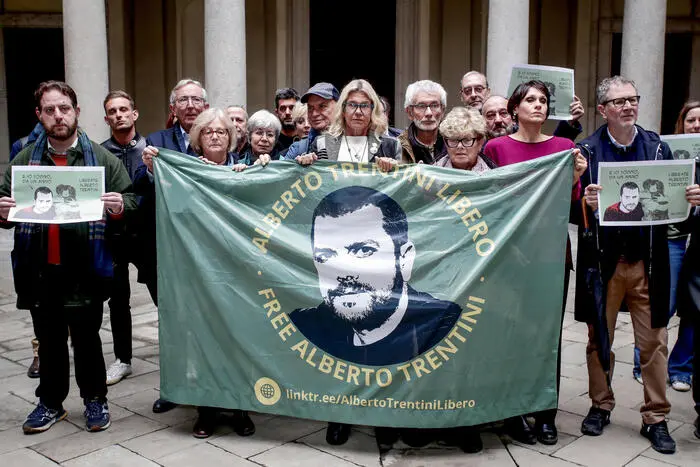
Alberto was stopped at a checkpoint while traveling from Caracas to Guasdualito, in southwestern Venezuela, on a humanitarian mission. For two months the family had no news from him. In these 13 months, he was only able to speak to his parents on the phone three times. In September, the Italian ambassador Giovanni Umberto De Vito visited him in prison, finding him “in overall good conditions”, although obviously exhausted.
The case of Alberto Trentini is part of a broader strategy of the Venezuelan regime: according to the association Criminal Courtthere are at least 853 political prisoners in the country’s prisons, of which 81 are foreigners. Many are being held without charge as bargaining chips with their governments. In recent months, Switzerland, France, the United States and Colombia have managed to secure the release of their citizens. Italy, however, has not yet obtained results.
On December 24, Maduro freed 99 prisoners arrested after the disputed 2024 elections. Alberto was not among them. The President of the Republic Sergio Mattarella telephoned Mrs Colusso to express his closeness and invite the family “not to lose hope”. But Alberto’s mother has repeatedly denounced the “not very incisive” action of the Italian government, complaining that other countries have acted with greater determination.
The roots of the current escalation lie in recent history. The Venezuela of Hugo Chávez first, and then of Nicolás Maduro, has built its foreign policy on an anti-imperialist and multipolar ideology, forming alliances with China, Russia and Iran. For Washington, Caracas represents a threat to American hegemony in the Western Hemisphere and a symbol of the challenge of the “Global South” to the “Global North”.
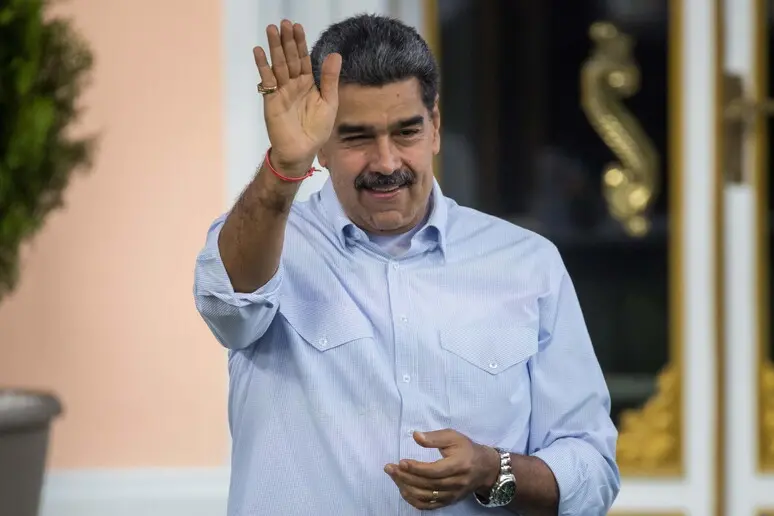
Donald Trump, who had already attempted to overthrow Maduro during his first term (supporting Juan Guaidó as “interim president”), has adopted a more aggressive strategy in his second term. Declared objectives: stop drug trafficking, block Venezuelan immigration (nearly nine million people have left the country in the last ten years), reaffirm American control over the region. Real objectives: to get their hands on Venezuelan oil and weaken Caracas’ alliances with rival powers.
The seizure of oil tankers, the naval blockade, attacks on boats and now the raid on Venezuelan territory show a strategy of increasing pressure. The risk is that we reach a point of no return. Experts rule out a large-scale invasion – at least 30,000 soldiers would be needed, while between 8,000 and 10,000 are deployed in the Caribbean – but Trump’s unpredictability and Maduro’s tenacity make every scenario possible.
What peace?
This story raises profound questions. While a leader is rewarded for her “peaceful fight” against the dictatorship in Oslo, military operations are being conducted in the Caribbean which have already caused over one hundred deaths, without concrete evidence that the victims were actually drug traffickers. While democracy and human rights are invoked, an Italian aid worker has remained in prison without charges for over a year, an innocent victim of a geopolitical game bigger than him.
Peace, the Gospel reminds us, is not simply the absence of war. It is justice, it is respect for human dignity, it is the search for the common good. The American attack in Venezuela, although conducted in secret and justified by the fight against drugs, opens a new phase of escalation in a region already marked by poverty, migration and violence. And meanwhile, Alberto Trentini waits in his cell for someone to remember him.
His mother Armanda said: “I imagine that in the morning, when the day begins, Alberto will think that his country has abandoned him.” This is the human price of international tensions: real people, with names and faces, who pay for strategies they did not choose. The hope is that diplomacy, dialogue and respect for international law will prevail over the logic of force. And that Alberto will soon be able to return home, to Venice, to his family who has never stopped waiting for him.