


In his studio a stone’s throw fromMolinette Hospital in Turin, the heart surgeon Guglielmo Actis Dato shakes a Codd bottle, used until the invention of modern crown caps to hold carbonated drinks.
A marble present in the narrowed neck of the bottle trapped the gas: by pressing it, the contents could be drunk. Then the doctor takes a heart valve: “My father made it using the same principle.”
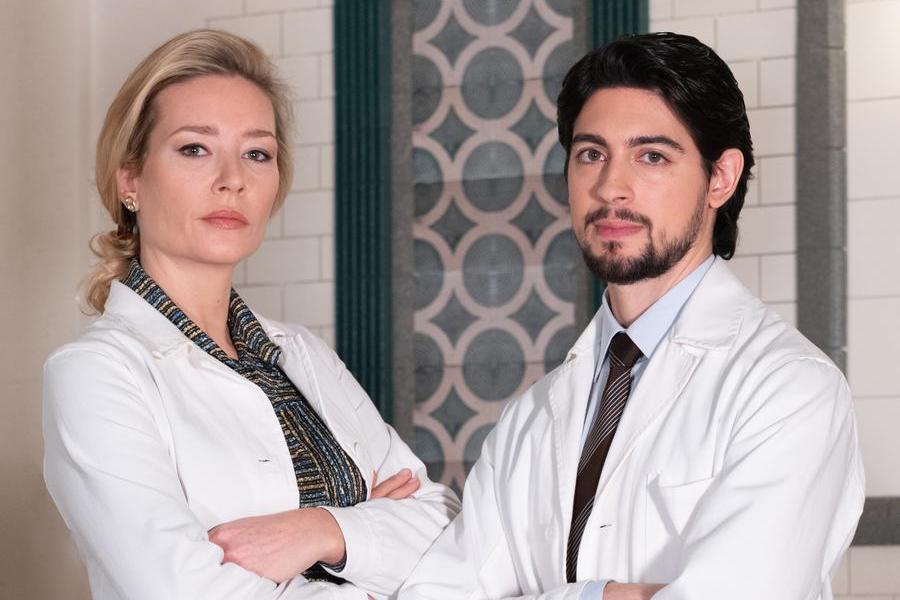
The father was called Angelo Actis Dato and the fiction is inspired by his story and that of the doctors who worked with him Hearts 3broadcast from 1 February on Rai 1. Doctor Guglielmo participated as a consultant and provided precious period material that belonged to his father.
Doctor Actis Dato now takes a large book in which his father, who died at almost ninety in 2002, traced his career. He shows us the photo that portrays a green object: «It’s another of his inventions: the hand-crank defibrillator. It was fundamental because it made this instrument portable everywhere.”
Doctor, how did your father become a luminary in cardiac surgery?
«He was the son of farmers. To make him study, my grandparents sent him to Cottolengo, a religious institute. He immediately understood that his vocation was not to become a priest but to become a doctor and, after graduating, with another young doctor like him, Pier Federico Angelino, he went to perfect his studies in Paris. At the time, cardiac surgery practically did not exist in Italy and the two of them were the first to perform cardiac catheterizations on children suffering from a congenital defect known as “blue disease”.

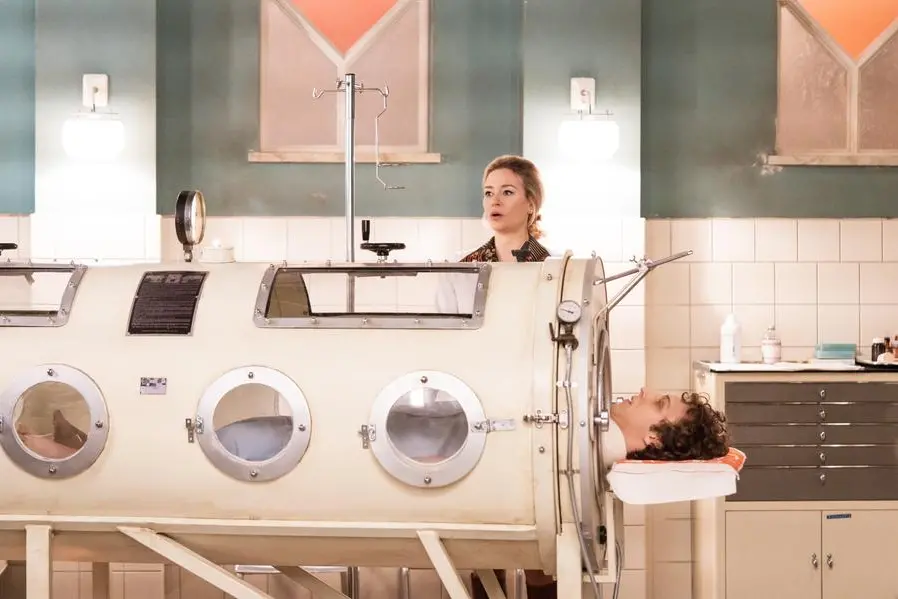
Another scene from Hearts 3.
In the wake of these successes, Achille Dogliotti, a luminary of surgery, wanted them as his assistants in the operating room. Thus was born the protagonist team of the fiction. A team that operated in the first cardiac surgery department opened in Italy at Molinette in Turin: 94 beds in an entire hospital floor.”
Turin in those years revolved around Fiat. Did he play a role in this story too?
«Fiat financed everything. He made a great impression, but he had his own interest in doing so. Nearly all of its workforce came from the South, where heart disease, especially congenital heart disease, was widespread and incurable. Infant mortality was therefore very high. Patients arrived at Molinette where they were examined with the most modern medical technologies and, when necessary, operated on. The average was 1,000 operations per year, which for that period was very high.”
In the fiction it is told how his father was the first in the world to patent an artificial heart.
«One evening he invited Cavaliere Bosio, an industrialist who produced pumps for Fiat diesel engines, to dinner. He explained to him that the heart is also a pump and that they could try to combine their skills. The knight talked about it with his son Roberto who was graduating in Engineering. He became passionate and started working with my father, until the machine that can also be seen in fiction came out and was used to help the heart restart after an operation by making the blood flow outside.”
Fiction Heartsthe third season of which is broadcast tonight on Rai 1, Is it faithful to reality?
«The first time I went on set, the director Riccardo Donna immediately warned me: “Doctor, we will tell a love story”. So viewers will see a whole series of intrigues that never happened. Even the climate that existed in the operating room back then was very different, more similar to the situation today. Surgeons, while operating, make jokes or even have moments of tension between each other. And music can be heard in the background. In reality, in my father’s time, the operating room was like a temple, run by nuns with an iron fist. Nobody could raise their voice, not even the head doctor.”
So why is this interesting?
«I have remained in contact with people operated on by my father when they were children like me and who are alive thanks to him. In all there are more than 30 thousand, and I think they will be moved by watching this fiction. My father told me about when these families arrived in Turin, after exhausting journeys, with their poor suitcases, relying on relatives who worked at Fiat. For him, patients came first, often including us family members. I understood this when I decided to continue his path. I identify with the drama that my patients and their families experience, but this experience was much stronger in my father’s time. As good as he was, he didn’t have all the techniques available today and the operations were often unsuccessful. For this reason, when he left the operating room, he went to his relatives and said a phrase that I also repeat: “If you have faith, pray”.