




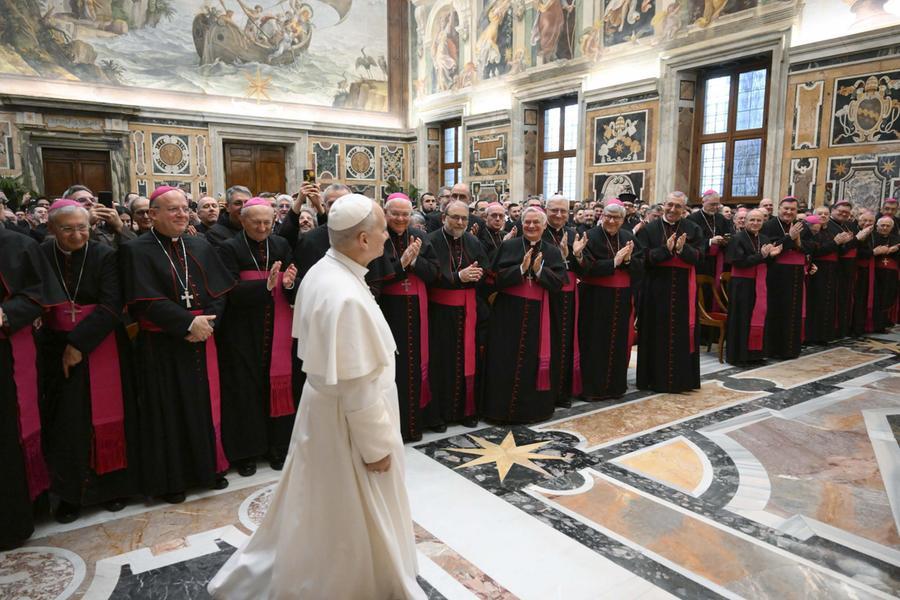
«Theology serves for the proclamation of the Gospel», because it is «an integral and fundamental part of the mission of the Church». With clear and passionate words, Pope Leo XIV received the communities of the Apulian Theological Faculty and the Theological Institute of Calabria on March 2, in the Clementine Hall of the Apostolic Palace, indicating that theological education is a responsibility that concerns the entire People of God.
For the Pontiff, in fact, “theological training” is “a call addressed to everyone”, not “a destiny for a few specialists”. It is not a question of accumulating knowledge to fulfill academic obligations, but of deepening the mystery of faith and equipping oneself with the necessary tools to passionately carry forward that “perseverant commitment to cultural and social mediation” required by the Good News. A theology, therefore, incarnate, capable of offering a broad gaze on reality and generating critical and prophetic thought, “a cultural investment for the future” capable of defusing resignation and indifference.

«Stay on the open sea»
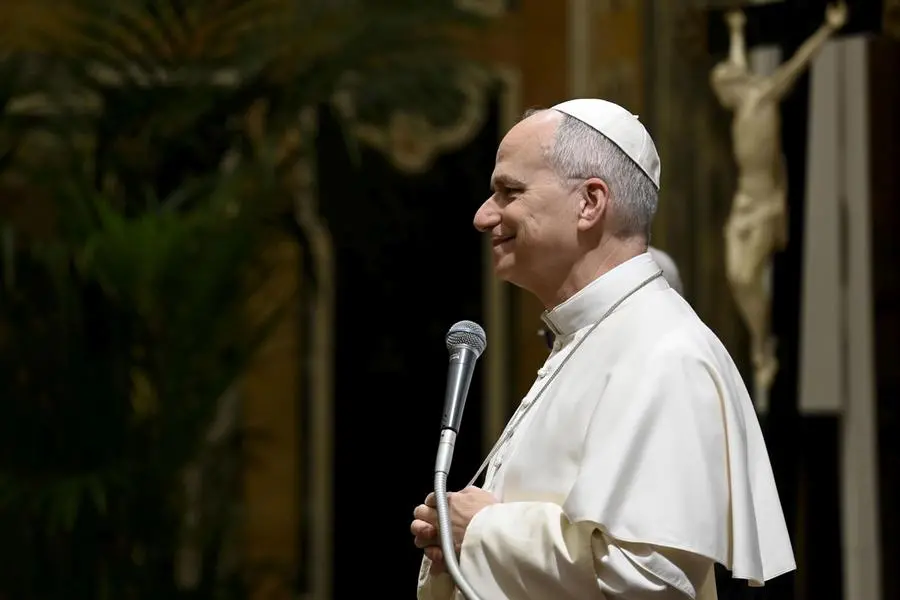
Addressing two institutions from southern regions, “washed by the beauty and vastness of the sea”, the Pope took up an expression dear to Pope Francis: “Stay on the open sea”. The Catholic, he explained, must not seek “the shelter of safe ports”, but have the courage to sail offshore, especially “in the contexts in which today the faith must be announced and inculturated”. Theology is a two-way “journey”: on the one hand it is necessary to “go deep, peering into the depths of the mystery of God and the different dimensions of the Christian faith”; on the other hand we must “go further, to scrutinize other horizons and thus find new forms and new languages in which to announce the Gospel in the different situations of history”. Loyalty and creativity are not opposed, but call upon each other.
Doing theology together
The heart of the speech was the invitation to “do theology together”. The Pope expressed appreciation for the path of unity started between the two institutions, a “really important synergy” which “promotes communion between the dioceses, favors the overcoming of ancient parochialisms and, above all, encourages an ecclesial path in the name of unity and brotherhood”.
Only in this way, he underlined, is it possible to build “a common horizon of thought and a convergence on pastoral challenges and the needs of evangelization”. Training at the service of proclamation is born from communion: we sail “on the open sea”, but not alone. It is necessary to “leave one’s safe haven”, go beyond territorial and ecclesial borders, grow in meeting, in mutual listening and in dialogue, in that “communion between the Churches which connects resources, skills and charisms”.
A commitment more embodied in the territory
«By doing theology together», continued Leo This allows us to renew styles and languages of faith in the real context in which we live and work. Not only that. Shared theology can become “a laboratory that prepares future priests and pastoral workers to live ecclesial relationships in the synodal style”, where ministries and charisms complement each other “overcoming any closure”. It is also a way to be “more capable of accepting the questions and challenges of the social and cultural context”. The Pope recalled in particular the problems affecting Calabria and Puglia: the labor crisis, emigration, the forms of oppression and injustice that “call for a new conscience and a bold commitment on the part of everyone”.
A mosaic of unity and communion
The final hope is that “an academic community” will grow in which candidates for the ordained ministry, consecrated men and women, lay men and women, are formed together, helping Christian communities to become “sign of the Gospel and yards of hope”. To those who are patiently building this collaboration, the Pope expressed sincere thanks for the “mosaic of unity and communion” that is taking shape. A mosaic that allows us to inhabit the world between “fidelity and creativity, tradition and novelty, unity and diversity”, always listening to what the Spirit continues to say to the Church today.