

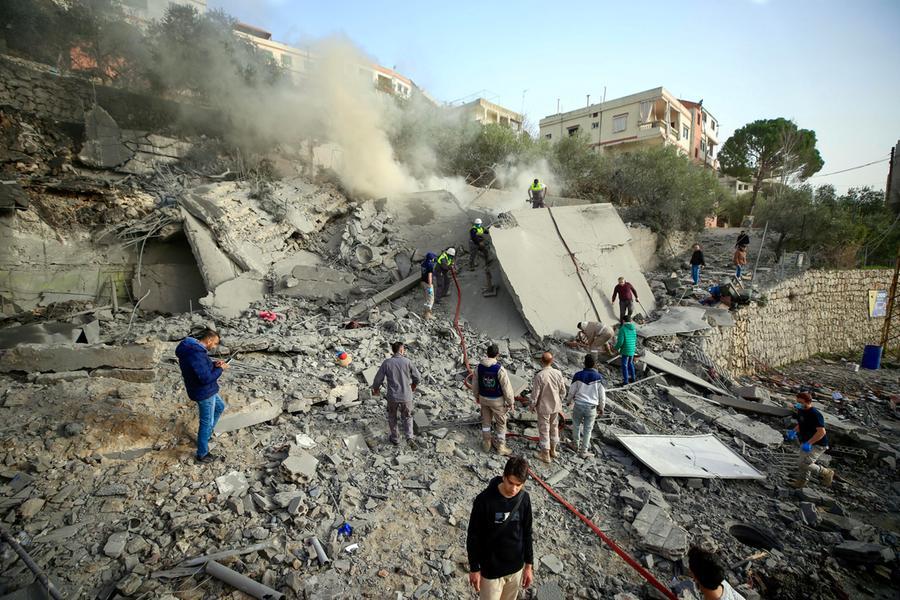
We arrive at Easter while the Middle East is on fire. Between missiles that set that tormented land on fire and diplomatic incidentsthis auspicious day comes again this year to tell us that there is life beyond death, hope beyond anguish, light beyond the darkness into which the world seems to be sinking due to a satanic desire for domination and money. The Lord rises again today to tell us that God has overcome the world and its perverse logiclike those who exploit his holy Name to kill innocents, destroy human communities, families, cities, villages.
Don Tonino Bello, prophet of peace, in another dark moment of humanity, wrote: «Don’t hold back even if you feel like you’re walking in darkness. It is at night that it is wonderful to wait for the light. We must force the dawn to be born, believe it. Friends, force the dawn. It is the only violence that is allowed».
There is a very strong question, then, that runs through this Easter and that reaches us in our somewhat distracted days: where do we really look for life? Because we risk chasing it in the wrong places: in consumption that promises immediate happiness, in fragile relationships, in the illusion of having everything under control. Nevertheless, how often do we find ourselves faced with “empty tombs”: experiences that disappoint, certainties that crumble, projects that don’t fill the heart.
Easter does not deny this effort. It doesn’t eliminate doubt, it doesn’t erase fear. On the contrary, in the Gospels he shows us lost men and women, incapable of understanding what happened. Faith is not born as evidence, but as a journey. It is not a starting point, but a destination that matures slowly, within the contradictions of life. And it is precisely here that a decisive window opens up: you can always start again. Even when everything seems lost and hope appears fragile. Even there, above all there, there is Light.
Easter tells us something even more radical: the meaning of existence is not only in our hands. There is a Presence that accompanies the story, even when we don’t recognize it. And this changes the look. Within the hardships of our time – social tensions, wars, widespread loneliness, fears for the future – we are not abandoned. Christian hope is not naive: it is a choice, often against the grain, to believe that good is stronger than evil, that life is stronger than death.
And then a responsibility also emerges. If we believe that life has won, we are called to make it visible. In families, often marked by fragility but still capable of authentic love. In young people, who are looking for new paths. In the elderly, who preserve memory and wisdom. In communities, called to be welcoming and human places. Today more than ever we need simple and concrete testimony. Not speeches, but lives that speak. Not ostentatious certainties, but lived hopes. Not perfection, but authenticity.