






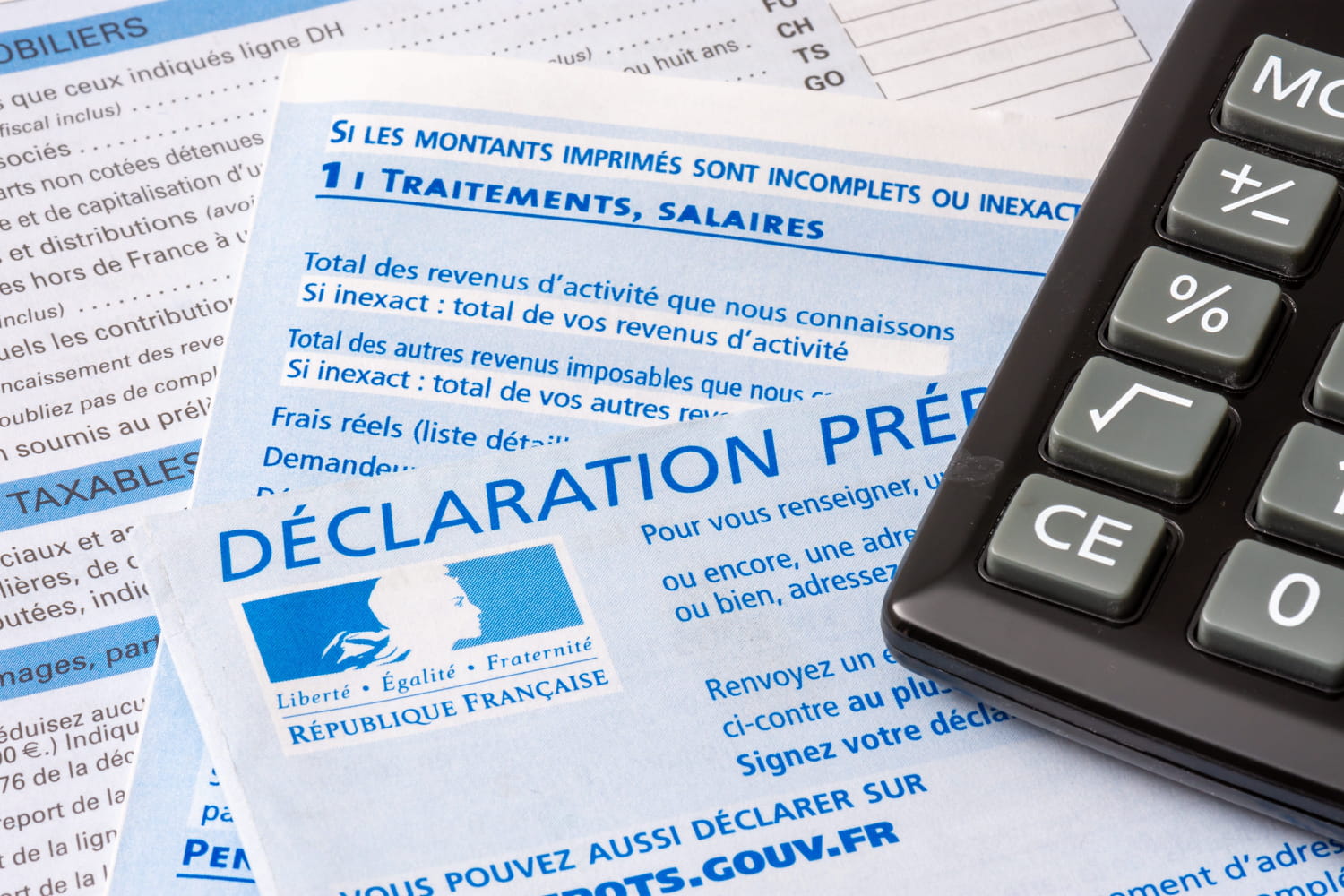
When you live alone, the tax return often holds an unpleasant surprise. For the same salary, taxes rise faster than for a couple. However, a few sections make it possible to limit the final grade.
Every year, it’s the same scene for many single taxpayers: when checking their tax notice, the discrepancy with two-part households is obvious. The family quotient mechanically favors married or civil partnership couples, since it distributes income over two parts, whereas a single person without children declares alone, with only one part. As a result, the move to the higher brackets happens sooner, and the tax follows the same slope.
The shock is even clearer for single parents when the children are no longer attached to the tax household. Half shares disappear, but daily expenses do not always disappear at the same pace. From one year to the next, the bill can increase without a change in income. It is precisely at these times that certain measures become particularly interesting, provided that you clearly distinguish what they actually produce in terms of the tax due.
In fact, one of the most concrete levers remains home employment. The scheme has been around for a long time, but it continues to be misused, often because it is wrongly associated with wealthy households. In reality, it concerns very common expenses: cleaning, small gardening, DIY, supporting an elderly relative or even educational support for a child attached to the household. The principle is clear: part of the expense entitles you to a significant tax advantage, with a rate of 50%. And with simplified declaration tools like Cesu, the system is particularly accessible.
The other useful avenue concerns donations to associations. Here again, this is not a tip reserved for a few profiles. It is a mechanism that can be activated even with modest amounts. When a donation is made to certain organizations helping people in difficulty, the tax reduction is particularly high.
Finally, there is a third way, strategic over several years: the Stock Savings Plan. Its interest is not to immediately reduce the tax for the year, but to prepare future gains less exposed to income tax. After five years, capital gains and dividends withdrawn within this framework escape this tax, with only social security contributions remaining due. For a single person, it is a way to build additional income without adding additional pressure to the scale. The three boxes to monitor are therefore those linked to these systems: box 7UD for donations to associations, as well as boxes 7DB and 7DL for home employment and personal services depending on the declared situation.
Clearly, it is not a question of becoming a tax specialist, but of not missing out on advantages linked to very common expenses or procedures. When you are single, taxes often increase faster. These three boxes at least allow you to verify that you are not paying more than necessary.