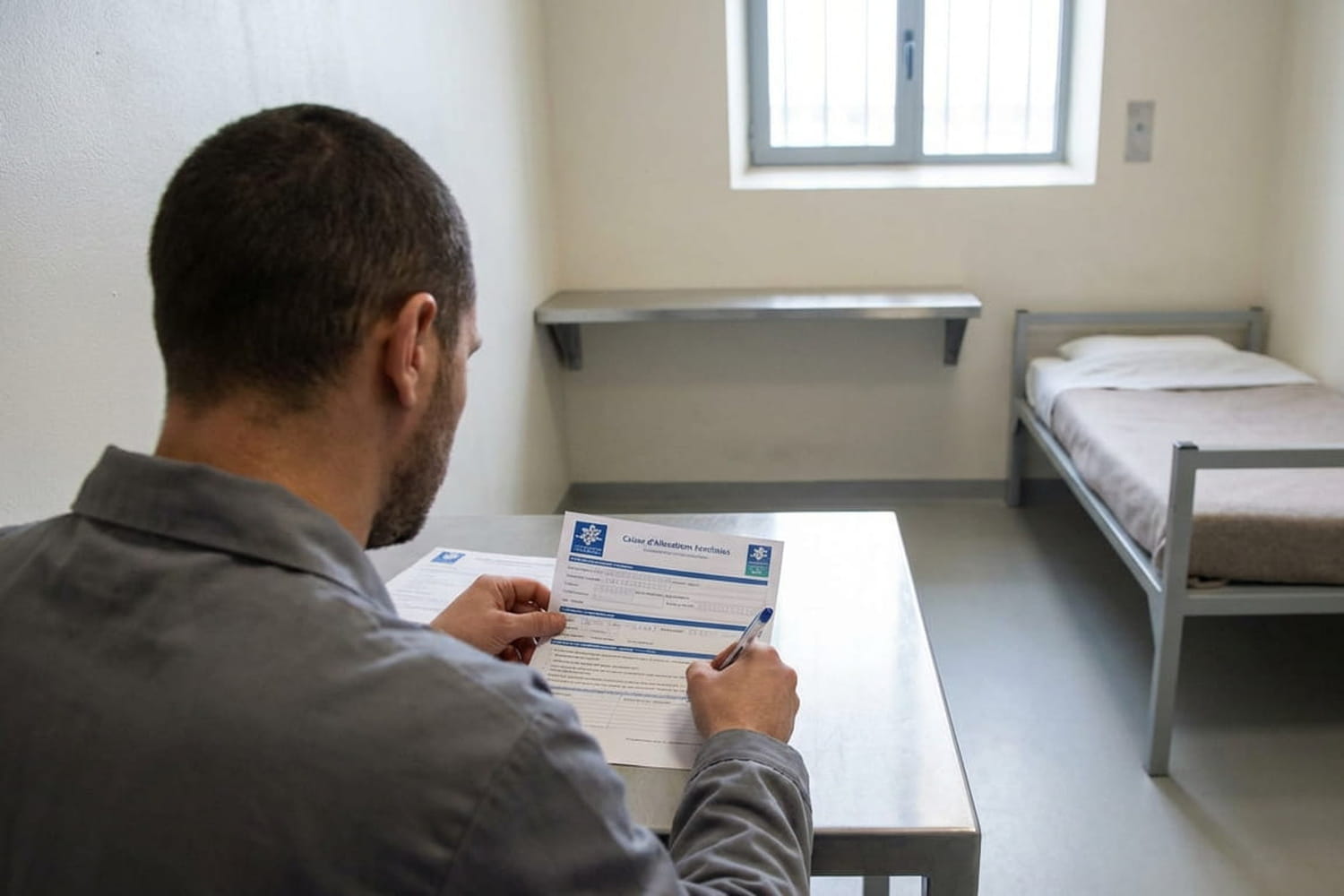





While incarcerated, detainees are deprived of their liberty, but not their rights. Even in prison, it is possible to continue to receive social benefits from Caf.
It is a debate that will never end, both in the political sphere and in public opinion: how far should the rights of prisoners extend? Since the end of the 1950s and the work carried out in particular by Simone Veil within the prison administration, France has guaranteed humane and dignified conditions of detention for all its prisoners. Because if incarceration means deprivation of liberty, it does not mean deprivation of fundamental rights. Everyone convicted and imprisoned continues to have their family, social, health and civic rights: this ranges from the right to marry, to found a family, to see their children, including the right to vote and to work, but also the right to access medical care… or social benefits.
Yes, although it may come as a surprise, prisoners have the right to receive social assistance in the same way as any other person. Because let’s not forget that, in the majority of cases, prison has two objectives: punishment, of course, but also reintegration into society. Indeed, unlike major, highly publicized criminals, the overwhelming majority of prisoners will not spend their lives behind bars: according to the latest figures from the Observatory of Disparities in Criminal Justice, the average length of detention in France is 12 months. And during this period, prisoners still benefit from their social rights, if they meet the necessary conditions to be eligible, in the same way as a free person.
Even in prison, any individual can receive benefits from the Family Allowance Fund such as housing assistance (APL), the family support allowance (ASF) or the disabled adult allowance (AAH), but also aid allocated by the prison administration itself, such as free supplies (hygiene products, clothing or food products) or financial aid for the most deprived. This amounts to 20 euros upon entry into prison, then 30 euros per month, provided that you have less than 60 euros available in your account over the last two months, and have spent less than 60 euros in total during the current month. Prisoners are also entitled to emergency accommodation if they have not found a solution when they leave prison.
Concerning Caf aid, the main condition is to declare incarceration as quickly as possible in order to be able to maintain your rights and “avoid the wrongful payment of certain benefits or the payment of incorrect amounts”. Then, the criteria vary depending on each service. For housing assistance, the right is maintained for one year if the detainee lives alone, keeps his accommodation and continues to pay the rent during his detention. Other aid is limited during incarceration, such as the AAH, reduced to 30% of its full rate from the third month spent in prison in the case of a single person. No reduction applies for prisoners with a dependent child or relative. The ASF, for its part, can be paid to the spouse or ex-spouse if he or she now assumes sole responsibility for the children.
But of course, some benefits stop being paid entirely while behind bars. For example, the free choice of activity supplement (CLCA) and the shared child education benefit (PreParE) are suspended from the first day of the month of incarceration, and will only resume upon release. “if the grant conditions are still met”. This is also the case for the RSA, interrupted “as of 2th quarterly review following incarceration” in the case of a single person, with or without children.