
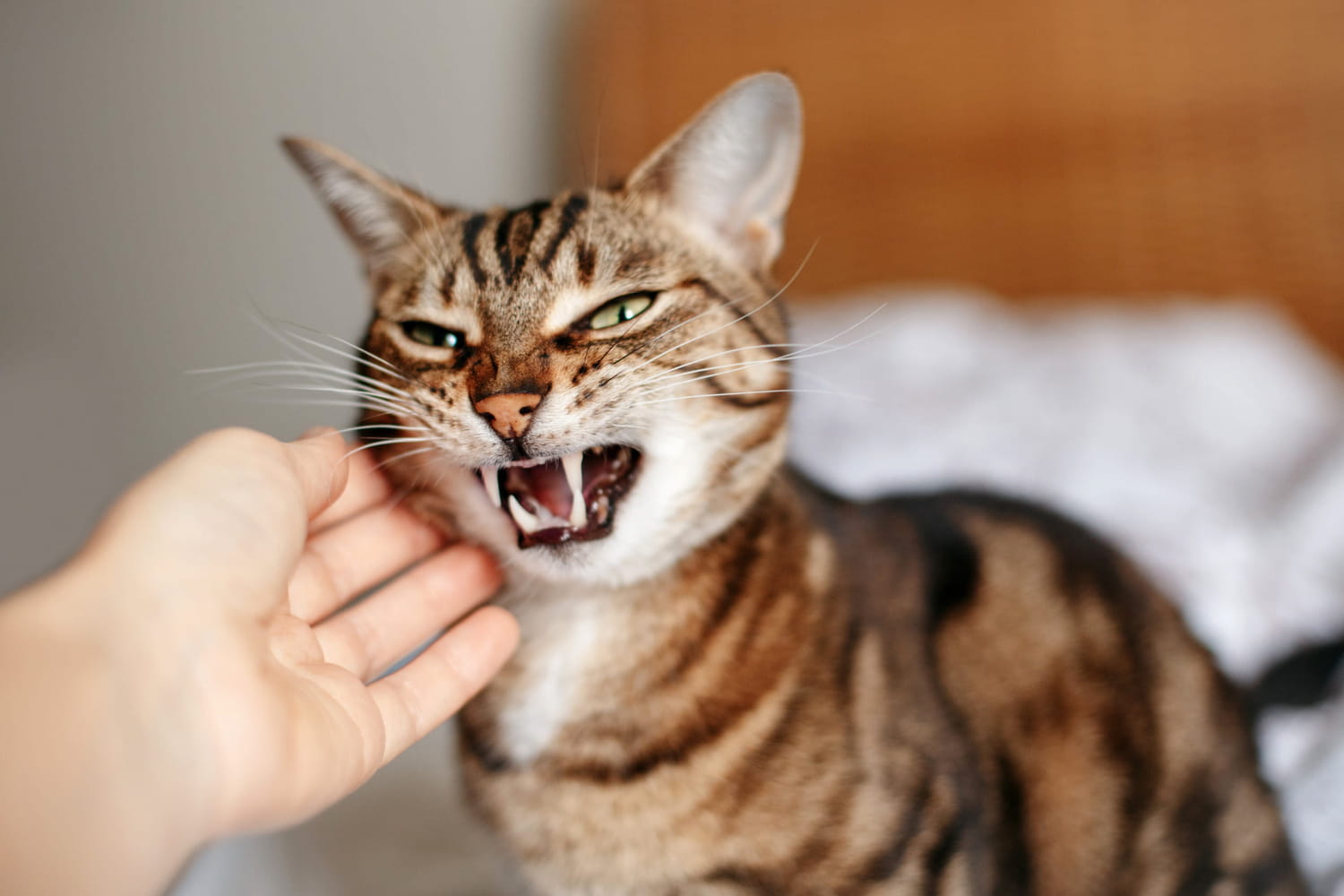




Just like us, each cat has its own personality. Some are gentle and sociable, while others are more solitary and sometimes even aggressive. One race in particular isn’t a big fan of humans, according to a scientific study.
Cat owners have already noticed this for a long time: cats all have different personalities. Cats are often portrayed as independent and territorial beings, but each animal has its own personality traits. Some are very playful and sociable, far from the image of loners that sticks to them, while others are more stubborn and temperamental, like true wild felines who are best not disturbed during their nap. But until now, these different types of personalities were primarily observed on a case-by-case basis by the owners themselves, and much less documented than those of dogs, for example.
This is why researchers from the University of Helsinki, in Finland, decided to look into the question. By studying as many as 4,300 cats from 26 different breeds, based on seven main behaviors – fear, activity, aggression towards humans, sociability towards humans, sociability towards other cats, excessive grooming and litter box problems – they were able to determine significant differences between the breeds. If each individual therefore has his or her own character, the results “suggest a genetic component of personality”. The study* thus concluded that a particular breed presented the greatest aggression towards humans, and also the lowest sociability towards other cats.
This is the Lake Van cat, also known as the Turk of Van. This large, majestic white cat was however renowned until now for its proximity to humans and its affectionate behavior, as we can read on many specialized sites. But “when comparing average scores by race” of the Finnish study, no doubt: the Turk of Van is well ahead. Conversely, it is the American Curl which obtained the lowest score for aggressiveness towards humans, with whom it is paradoxically not very sociable. In short, it is a relatively neutral cat: it will not attack you, but will not seek your company much either.
Researchers insist: knowing an animal’s personality is essential for its well-being, because not everyone will necessarily have the same needs on a daily basis. And of course, there is also the question of compatibility with the owner, which often comes up at the time of adoption from a shelter for example.
As with their canine comrades, cats are not suitable for all people and all family configurations. Given the results of this study, it may be better to avoid adopting a Turk from Van into a home with children. The Abyssinian cat seems to be a better choice for families, given that it is the least fearful of all, but also one of the least aggressive, one of the most playful, and has a good sociability score towards humans and very few litter box problems. Be careful, however, in homes with other cats: the Abyssinian may not like it.
* Study published in the journal Animals in 2021