




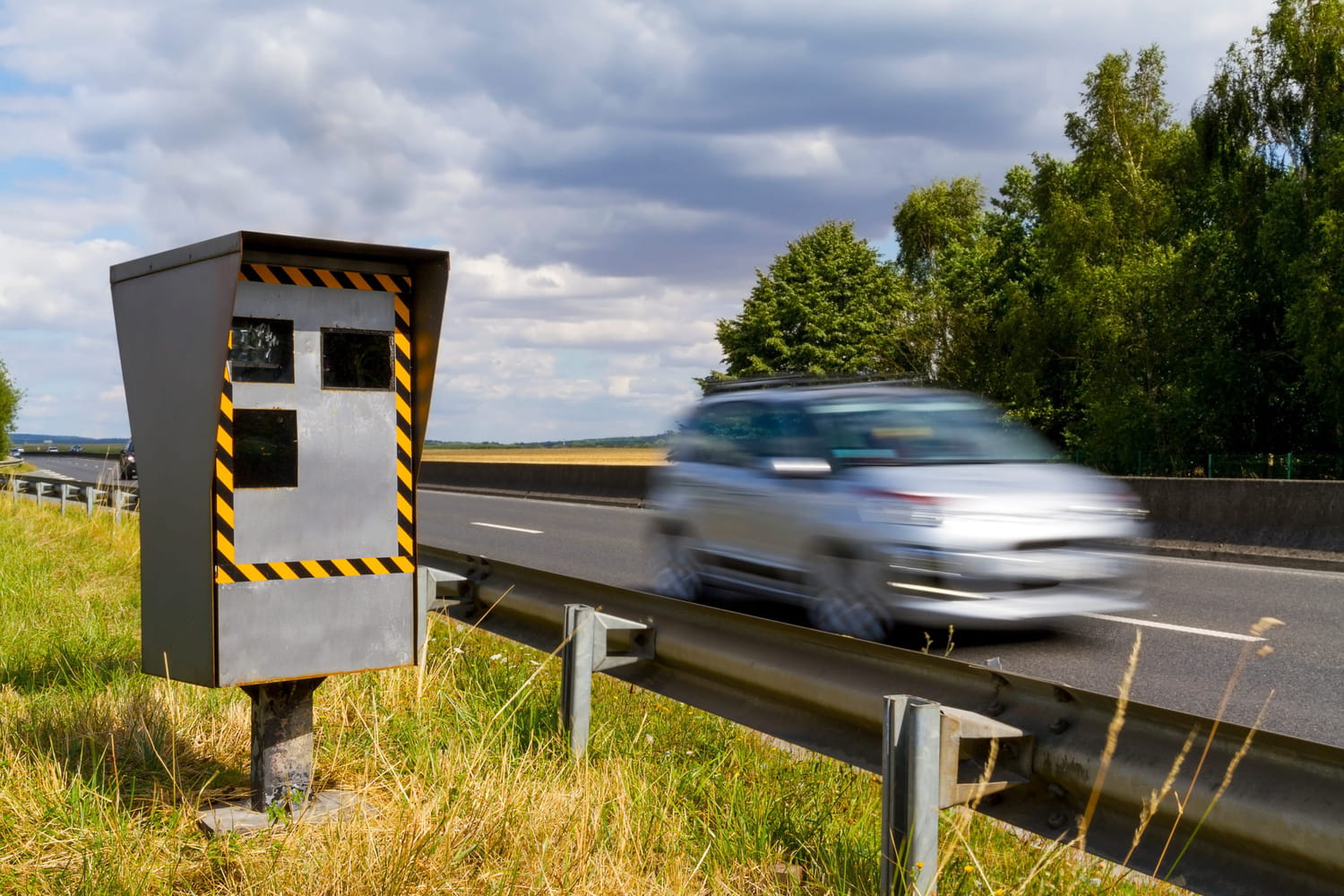
Numerous speed cameras monitor the speed of drivers on the roads of France and sanction them when they do not respect the limits. Here’s what will change…
In France, all types of roads are subject to speed limits, which are even lowered on some for young drivers. To enforce them, sanctions are imposed on those caught exceeding them. This mainly involves a fixed fine (in the amount of 68 euros to 3,750 euros depending on the situation) and a withdrawal of points on the driving license (from 1 to 6 points depending on the seriousness of the facts).
In certain cases, drivers who exceed the authorized speed limits also face a three-year suspension of their driving license and the obligation to complete a road safety awareness course. This can even go further for the most serious excesses, with possible confiscation of the vehicle if the driver is the owner, a suspension of the driving license or even a prison sentence of three months. Despite this, speeding is very common in France, and the Ministry of the Interior indicated in June 2025 that fixed radars and construction site radars had “flashed” more than 222 times between 2015 and 2024, reports The argus !
Since 2019, the radars which allow speeding to be detected and penalized no longer send the famous flash of light when a vehicle is traveling too fast. According to Le Figaroaround a quarter of them no longer do so and, while the Department of Automated Control (DCA), which reports to the Ministry of the Interior, has for many years advocated making control systems invisible so that drivers feel like they are constantly being monitored and are more careful, it seems to want to change tack. According to information from the specialist magazine Autoplushe wishes to reintroduce “a warning system, sufficiently visible and significant, which informs that an offense has just been noted.in order to put pedagogy back into the sanction.
Road Safety confirmed to Figaro that a reflection on the subject was underway, the State relying on an opinion survey demonstrating an interest in the return of “light notifiers”. She specifies that this will not concern all radars and that tests are planned in the coming months. This could therefore appear as early as 2026, but it is still necessary to determine in what form: we must avoid the spontaneous flash which could cause a surprise effect and a sudden braking which could be dangerous, both for the safety of the vehicle concerned and for others. Therefore, the light signal must also be sent after the infrared projector which detects the infraction, so as not to alter the image quality.