What if the secret to lightening your meals did not consist of eliminating foods, but of modifying a simple reflex in the kitchen?
Losing weight or simply adopting a more balanced diet does not necessarily require radical changes. Very often, it is everyday habits, repeated several times a day, that end up weighing heavily… literally and figuratively. And one of them is hidden in a gesture that we make while cooking.
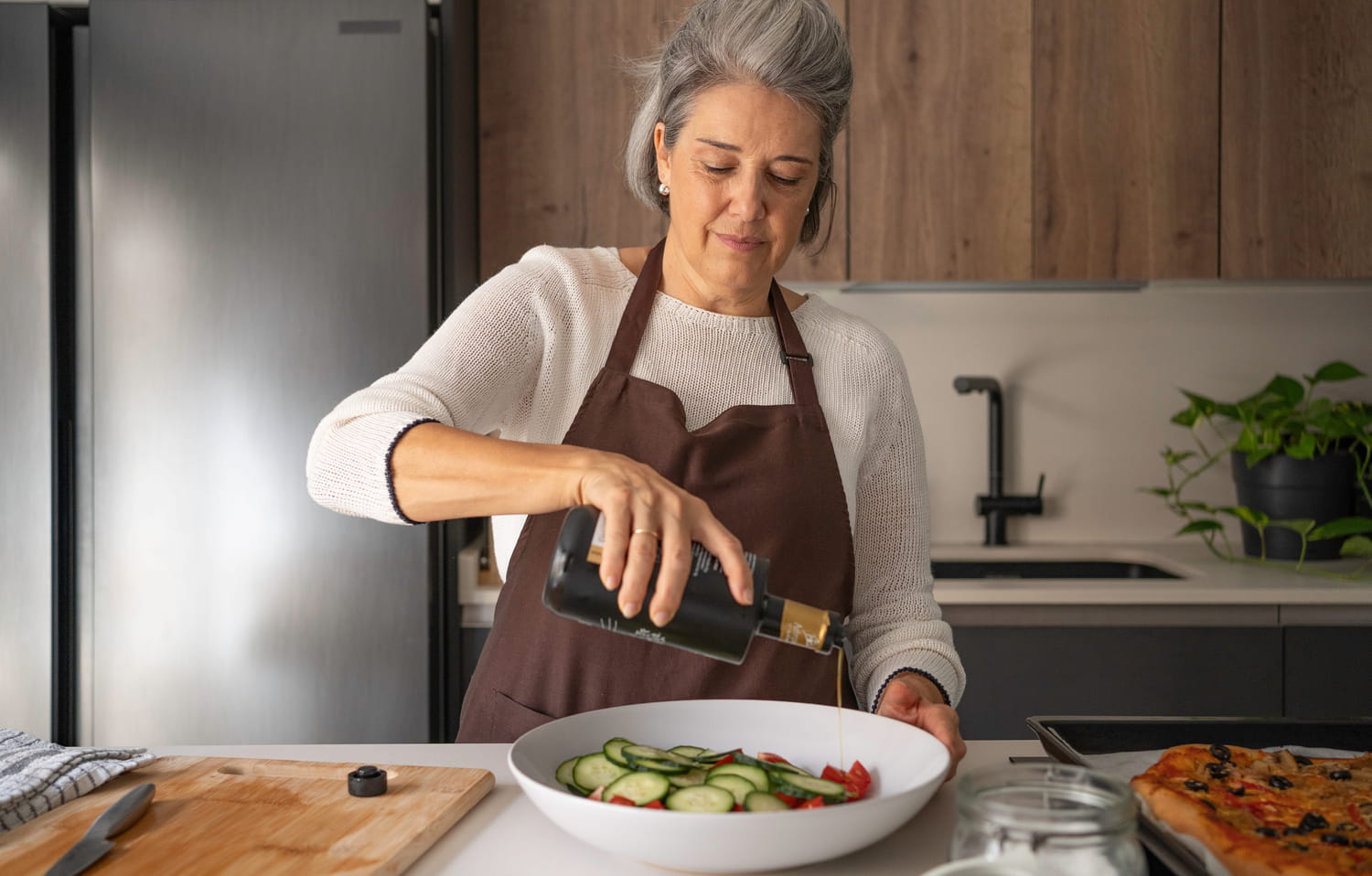
Whether it’s sautéing vegetables, cooking a fish fillet or dressing a salad, olive oil is one of the essentials in many kitchens. Renowned for its health benefits thanks to its richness in monounsaturated fatty acids and antioxidants, it is often considered the preferred fat. But if its nutritional quality is recognized, this does not mean that it is devoid of calories.
Like all vegetable oils, olive oil provides approximately 9 calories per gram. Result: a simple spoon can quickly increase the energy content of a dish, often without us realizing it. The problem is not so much with the oil itself as with the quantities used. By pouring “by eye”, it is common to add more fat than necessary, especially in everyday preparations. A trivial gesture which, repeated several times a week, can represent several thousand calories over a month.
To limit this excess without sacrificing the nutritional qualities of olive oil, there is a simple tip: replace the tablespoon with a teaspoon when cooking. An average tablespoon of olive oil contains 15 ml, or about 120 calories. Conversely, a teaspoon represents 5 ml, or approximately 40 calories. So the difference is about 80 calories per use. If this gesture is repeated once a day, this represents nearly 2,400 calories saved over a month. And this, without removing olive oil from your diet or changing the content of your meals.
However, reducing the quantity of oil does not mean giving up on taste. For cooking, a good quality non-stick pan is often enough to limit the fat requirement. It is also possible to spread the oil using a kitchen brush or a spray bottle to better control the quantities. For salads, fresh herbs, spices, lemon juice or even balsamic vinegar add lots of flavor while using less oil.
Ultimately, this little habit requires little effort but can have a real impact on calorie intake over the weeks. Proof that in nutrition, it is often the simplest actions that produce the most lasting effects.